


Vanya Hadzhieva
New Bulgarian University, Sofia, Bulgaria
https://doi.org/10.53656/igc-2025.03

Pages 32-43
Abstract. This paper provides a systematic historical analysis of public administration’s evolution, tracing its development from ancient civilizations to its contemporary interdisciplinary form. The study critiques existing macro-periodizations for their generalized nature and proposes a novel, detailed eight-stage historical framework. This framework aims to offer a deeper, more nuanced understanding of the causal relationships and driving forces behind institutional transformations and paradigm shifts. By analyzing the transition from traditional bureaucracy to New Public Management and, subsequently, to digital-era governance, the research highlights how each model adapts to societal needs, technological changes, and economic challenges. The findings underscore that effective public administration requires a continuous balance between efficiency, legality, accountability, and democratic values, with historical perspective serving as a vital analytical tool for addressing contemporary and future governance challenges.
Keywords: keyword one; keyword two; keyword three
JEL: H11, H83, O38
Introduction
Public administration represents a fundamental element of the modern social order, whose evolution is inextricably linked to the transformations in political, social, and economic structures over the centuries. From the ancient administrative systems of Mesopotamia, Egypt, and Rome to modern interdisciplinary models, it has developed as a science, practice, and institutional framework, constantly adapting to the dynamic needs of society. In the context of contemporary challenges such as digitalization, globalization, and the increased need for transparency and efficiency, the historical perspective becomes a valuable analytical tool for understanding the role and future development of public administration in the 21st century. The relevance of the present study is determined by the need to systematize the key stages in the historical development of public administration and to analyze the models, philosophical concepts, and institutional changes that have shaped modern management theory and practice. Existing periodizations, such as that of Prof. Arabadzhiyski, provide a valuable but highly generalized framework, identifying four macro-stages: classical bureaucracy, New Public Management, network governance, and global public administration. However, this high level of generalization creates limitations for an in-depth analysis of the driving forces and mechanisms of historical development. Aiming to achieve a more detailed and nuanced understanding, this article sets out to develop an enriched historical periodization that traces the development of public administration from its nascent forms in Antiquity to its contemporary dimensions. The research is based on the thesis that the evolution of management models results from a complex interplay of historical contexts, economic challenges, and social changes, which condition the transition from one stage to another. The structure of the article includes an analysis of existing periodizations, followed by the presentation of a detailed framework encompassing eight key periods. It will examine the formative ideas from Antiquity and the Middle Ages, the emergence of the scientific approach in the Early Modern period, the institutionalization in the 19th century, the consolidation of scientific paradigms in the 20th century, and the contemporary trends of interdisciplinarity and globalization. In conclusion, the main trends and lessons for the future development of public administration in the context of rapid global changes will be outlined.
Introduction to the Historical Development and Presentation of a General Periodization
Public administration has deep historical roots that can be traced back to ancient civilizations, where administrative structures existed to regulate public life and the distribution of resources. Although these early forms of governance were not systematized as a scientific concept, they laid the foundation for the concept of public administration. One established periodization of the historical development of public administration is provided by Prof. N. Arabadzhiyski, who distinguishes four stages in the evolution of the concept, as shown in Fig. 1 (Arabadzhiyski, 2014, p. 76).
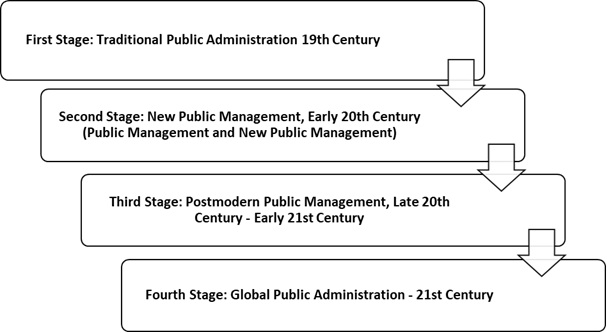
Figure 1. Periodization of the Development of Public Administration according to N. Arabadzhiyski
Source: Arabadzhiyski, 2014, p. 77, author’s visualization.
The first stage began in the 1830s when Henri Fayol1 presented the principles of general management, which were later developed further by Luther Gulick and Lyndall Urwick (1945). This period is known as the era of classical bureaucracy, when the modern state apparatuses in Europe and North America were formed. In the Bulgarian context, this can be attributed to the period after the Liberation and the building of the modern Bulgarian state.
The second stage is associated with the establishment of the New Public Management theory, which encompasses public management and New Public Management (Arabadzhiyski, 2014, p. 76). In Bulgarian scientific literature, the concept of public management is perceived as being composed of three managerial phases: policy, leadership, and service, resulting in the accumulation of public goods. New Public Management (NPM) emerged in the late 1970s and 1980s as a reaction against the inefficiency of traditional management models. This concept is based on the understanding that transferring management approaches from the private to the public sector would implement competition and market discipline, leading to a more efficient use of public resources (Arabadzhiyski, 2014, p. 81).
The third stage spans the late 20th century, introducing network governance, which is citizen-oriented and driven by digitalization, as a response to the limitations of NPM. The focus shifts to „good governance,“ transparency, and the offloading of state functions through the transfer of corporate practices into the public sector.
The fourth and final stage encompasses the 21st century, marked by discussions on Global Public Governance. This stage is characterized by a supranational dimension, where public administration is no longer confined within the borders of nation-states. In an era of pervasive interconnectedness, global public organizations play a key role in the process of creating global public services and policies. These global organizations are tasked with developing and implementing specific standards for applying common administrative approaches to achieve global public objectives (Arabadzhiyski, 2014, p. 86).
Critical Analysis of Arabadzhiyski’s Periodization and the Need for a More Detailed Approach
While Professor Arabadzhiyski’s periodization provides a valuable initial framework, its high level of generalization makes it a less effective tool for an in-depth analysis of the driving forces and mechanisms behind the historical development of public administration. To trace cause-and-effect relationships, a more detailed examination of the historical contexts, economic challenges, and social changes that precipitated the transitions from one stage to another is necessary. The presented framework successfully identifies the macro-stages in the evolution of public administration; however, its highly summarized nature creates certain limitations. To achieve a deeper understanding of the driving forces and causal relationships in this evolution, a more detailed and nuanced analysis is required. A detailed review of the development of scientific theory involves examining additional, intermediate phases, as well as the key historical and socio-economic contexts that conditioned the transitions between different managerial paradigms. Further research will focus on a detailed classification designed to enrich our understanding of the development of public administration.
Detailed Periodization of the Development of the Scientific Theory of Public Administration
To gain a more detailed historical perspective on the development of public administration, one must start from the emergence of the first ideas of public governance, as shown in Fig. 2.
First Period: Early Forms of Public Governance. The period of Antiquity is when the fundamental principles and structures that became the foundation of modern public administration were born. This stage encompasses individual examples of public management practices that formulated dilemmas such as centralization versus decentralization and autocracy versus civic participation. The contributions of ancient civilizations are foundational for the formation of public administration – from the Sumerian tax system and Egyptian centralization to Athenian democracy and Roman public law. Concepts like hierarchy, specialization, written accountability, and legality, which emerged in this period, demonstrate exceptional resilience and remain key elements in modern administrative practice. Ancient management models laid the groundwork for modern management systems.
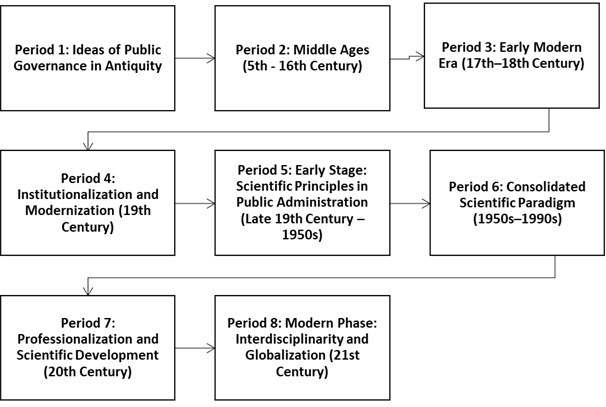
Figure 2. Historical Development of Public Administration Through the Centuries
Second Period: Middle Ages (5th – 16th Century) – Feudal Transformation and the Restoration of Public Authority. In the Early Middle Ages (5th – 11th century), authority was highly fragmented. As Shevchenko (2024) notes, „power was distributed among numerous local rulers, who exercised control through personal and often informal agreements“ (Shevchenko, 2024). The feudal system transformed the understanding of power – it was perceived as private property rather than a public function, leading to an absence of stable administrative institutions and the dominance of personal dependencies between the rulers and the ruled. The Late Middle Ages (12th – 16th century) marked the beginning of centralization processes. As Aguilera-Barchet emphasizes, the role of the church was a “stabilizing factor, aiding the restoration of public authority” (Aguilera-Barchet, 2015, p. 112). Royal power was consolidated through alliances with the clergy and the creation of new institutions – royal councils, courts, and taxation mechanisms. The development of trade and the rise of towns led to a restructuring of governance models. The emergence of a burgher class created the preconditions for more complex administrative systems. “The central political fact of the twelfth century was the survival of the idea of public authority. It was weakened by the development of feudal institutions, but it was never destroyed. Royal government never forgot that it was a public authority, and it never lost hope of restoring its full powers.” (Strayer, 1970, p. 15). A key theoretical contribution of the period was the concept of “pactism.” As Ullmann explains, it presented the idea of the „consent of the governed,“ countering the traditional top-down theory of the origin of power (which comes directly from God to the ruler) with a bottom-up theory (according to which power originates from the people and is transmitted upward to the ruler). This bottom-up theory is the essence of pactism, where power is exercised through a pact between the rulers and the ruled (Ullmann, 1975, p. 150). The idea that power requires the consent of the governed laid the foundations for the theory of the social contract and exerted a lasting influence on European constitutional thought.
Third Period: Early Modern Era (17th – 18th Century) – The Genesis of the Scientific Approach. The Early Modern Era marks a key stage in the development of public administration, as it began to take shape as a distinct scientific discipline. The theoretical foundation was laid by Johann Heinrich Gottlob von Justi, who, according to Shevchenko, „explored ‘police’ as a precursor to public administration“ (Shevchenko, 2024). The concept of „police science“ (Polizeiwissenschaft) he developed encompassed a broad spectrum of governance issues – from economic regulation to public order and social welfare. Parallel to theoretical progress, practical reforms were carried out to centralize state finances, introduce budgets, and implement financial control. According to Guerrero-Orozco (2020) and Bertelli (2020), these changes contributed to the professionalization of the administration and the creation of specialized public services. These transformations were linked to the rise of absolutism and mercantilism, which required a strong central administration and stimulated royal authorities to undertake ambitious economic and legal reforms. The centralized administrative structures that emerged during this period became the foundation of modern state apparatuses. During the Early Modern Era, the foundations of modern public administration were laid. These include not only the theoretical framework but also key financial instruments, institutional structures, and political objectives that reached their full development in the 19th century.
Fourth Period: 19th Century – Institutionalization and Modernization of Public Administration. Public administration became established as an independent scientific discipline and profession. According to Guerrero-Orozco, this period represents a „process of professionalization and theoretical consolidation that laid the foundations of modern public administration“ (Guerrero-Orozco, 2020). In Germany and France, the first systematic theories emerged, separating public administration from political philosophy and establishing it as an autonomous field of knowledge. Leading figures of this period include Lorenz von Stein and Charles-Jean Bonnin, who developed fundamental concepts such as the Rechtsstaat (meaning „legal state“ or „rule of law“ – a concept originating in the German legal tradition, which affirms the supremacy of the law over any form of power) and rational bureaucracy (Sunnqvist, 2023). These ideas introduced the principles of legality, hierarchy, and impartiality, which became foundational for modern governance. Public law was established as a separate legal field, and the principle of legality guaranteed transparency and predictability in administrative processes. Parallel to these theoretical developments, significant institutional reforms were implemented – centralized administrative systems were introduced, and a professional civil service based on competitive appointment and career development was created. These reforms provided the empirical basis for Max Weber’s later model of rational bureaucracy and laid the groundwork for the modern state administration. This period can be defined as the „golden age“ of the institutionalization of public administration. All key aspects – theoretical, conceptual, institutional, and legal – developed in synchrony, transforming administration into a science and profession based on clear principles, hierarchical structures, and the supremacy of law. Thus, this period serves as a bridge between the early ideas of the Enlightenment and the complex administrative systems of the 20th and 21st centuries.
Fifth Period: Late 19th Century – 1950s: Scientific Principles in Public Administration. This period marks the intensive scientific institutionalization of public administration, which took shape as an interdisciplinary synthesis of ideas borrowed from political science, law, economics, and the social sciences. As noted by Wagner and Raadschelders, Delić and Mehmedović, „during this period, the discipline lacked a clearly defined identity but developed by integrating concepts and methods from other social sciences“ (Wagner & Raadschelders 2025; Delić & Mehmedović, 2009). The primary focus was on building efficient administrative structures and applying scientific principles to management. Max Weber’s theory of rational bureaucracy and Frederick Taylor’s scientific management had a fundamental influence, introducing standardization, hierarchy, and performance evaluation. These approaches transformed administrative practice from a traditional art into a science based on systematic research and rational principles. Despite significant progress, the period was also marked by limitations. Kaufman emphasized that the mechanistic approach neglected the social and political aspects of governance, leading to debates about the balance between efficiency and the human factor (Kaufman, 1956). The pursuit of perfect structures and procedures often overshadowed the importance of employee motivation and engagement. This period not only laid the foundations of modern public administration by introducing key concepts like efficiency, standardization, and professionalism but also raised questions that subsequent generations of scholars and practitioners would strive to resolve – namely, how to reconcile rationality with human nature in management.
Sixth Period: 1950-1990: Consolidated Scientific Paradigm. This period marks the theoretical consolidation of public administration as an independent academic discipline, characterized by paradigm pluralism. Its development was based on three key theoretical directions that shaped modern managerial thought. The first direction was the formal theory of rational decision-making, developed by Simon (1947) and March & Simon (1958), which systematized the principles of administrative rationality. The second was network analysis, proposed by Powell (1990) and Castells (1996), which offered an alternative to classical hierarchical organization through flexible, decentralized structures. The third direction was the concept of New Public Management (NPM), formulated by Hood (1991) and Osborne & Gaebler (1992), which introduced market mechanisms and business techniques into the public sector. This theoretical pluralism led to significant organizational transformation – from classical bureaucratic models to network structures, with a reorientation of the state’s role from a direct service provider to a coordinator and regulator. The introduction of market principles and managerial tools changed the philosophy and practice of public administration on a global scale, creating the preconditions for more efficient and accountable governance. Despite positive effects – increased efficiency, accountability, and professionalism – the period also brought significant challenges. Kaufman (1956) warned of the risks of service fragmentation and the undermining of public values, as well as the need for a balance between efficiency and social equity. These criticisms laid the groundwork for the emergence of more humanistic approaches in the subsequent stages of public administration development, aimed at restoring trust in institutions and affirming public interests.
Seventh Period: 20th Century – Professionalization and Scientific Development. During the 20th century, public administration reached maturity as an academic discipline and professional practice. The discipline became institutionalized in universities with academic programs, research standards, and professional ethical norms. As noted by Shevchenko (2024) and Svara (2001), dynamic theoretical debates emerged regarding the role of administration relative to politics and the need for a balance between efficiency, accountability, and democratic principles. A key element of the professionalization process was the introduction of systems for appointment and career development, which enhanced the quality and independence of the state administration. This transformed public administration from a politically dependent structure into a modern, competent, and ethical service capable of effectively serving society. The theoretical debates during this period focused on the politics-administration dichotomy, as well as on the development of concepts of administrative autonomy and public value. The competition between the New Public Management (NPM) and Public Value Management approaches shaped contemporary governance models, demonstrating the complexity and multidimensionality of the discipline. It became a stable foundation for modern management practices and continues to shape discussions about the role of the state and public administration in the 21st century.
Eighth Period: 21st Century – Interdisciplinarity and Globalization. Public administration has established itself as a dynamic and interdisciplinary scientific field that integrates knowledge from other disciplines to address complex global challenges. As noted by Wagner and Raadschelders, Wenqi Wei, Wei Li, Anca Florentina Vățăman, Mihaela Tofan, the discipline is developing as a “bridging science,” uniting organizational, scientific, and social knowledge, and increasingly interacting with other fields through the exchange of ideas and citations (Raadschelders & Wagner, 2025; Wei et al., 2024). Globalization has expanded the scope of governance to include the analysis of transnational governance models and comparative administrative systems. The technological revolution is fundamentally changing the nature of governance. Digitalization, artificial intelligence, and big data are leading to the development of e-government, digital services, and smart cities. However, they also bring forth challenges such as the digital divide, personal data protection, cybersecurity, ethical dilemmas in algorithm use, dependence on technological platforms, and the need for continuous training and digital literacy for both citizens and the administration. Kadakure and Darko emphasize the significance of the New Public Governance and Public Value Management approaches, which direct attention towards creating public value, collaboration within networks, and balancing efficiency with social equity. These models reflect the transformation in the state’s role – from a direct service provider to a coordinator and guarantor of public values in an era of rapid global change (Kadakure & Twum-Darko, 2024, p. 22).
Results
Limitations of the Macro-Periodization: It was established that Arabadzhiyski’s periodization, while useful as a general framework, is too generalized and omits key formative stages (such as Antiquity and the Middle Ages), which laid the foundations for modern management concepts.
Proposed Detailed Periodization: As a result of the analysis, an enriched eight-stage periodization was developed:
– Period 1 (Antiquity): Genesis of principles (hierarchy, legality, accountability).
– Period 2 (Middle Ages): Fragmentation of power (feudalism) and subsequent restoration of public authority with the idea of “pactism”.
– Period 3 (Early Modern Era): The formation of public administration as a science (“police science”) and practice (centralization, financial control).
– Period 4 (19th Century): Institutionalization and establishment of the principles of the rule of law and rational bureaucracy.
– Period 5 (Late 19th Century – 1950s): Scientific institutionalization and the influence of the theories of Weber and Taylor.
– Period 6 (1950 – 1990): Paradigm consolidation (rational decision-making, network analysis, NPM).
– Period 7 (20th Century): Professionalization and the “politics versus administration” debate.
– Period 8 (21st Century): Globalization, digitalization, and interdisciplinarity.
Driving Forces of Development: The main factors for change were identified: economic challenges (need for resources), social movements (demand for participation), technological innovations (from printing to AI), and political ideologies (absolutism, liberalism).
Contemporary Trends: It was established that contemporary public administration is characterized by a holistic approach (New Public Governance), a focus on creating public value, and the need to address the “dark sides” of digitalization (inequality, cybersecurity, ethical dilemmas).
Discussion
The proposed detailed periodization allows for a deeper understanding of the cause-and-effect relationships in the development of public administration. It reveals that this development is not a linear process of “improvement,” but rather a series of adaptations and reactions to changing societal conditions. For example, NPM emerged as a reaction to the inefficiency of classical bureaucracy, while subsequent models (Public Value) responded to the excessive commercialization of NPM. The transformation of the state’s role – from a direct provider to a coordinator and guarantor of values in a networked society – is a key outcome of this evolution. The discussion emphasizes that historical analysis is not merely an academic exercise; it provides valuable lessons for addressing contemporary challenges by showing that successful management models have always balanced efficiency, legality, accountability, and fairness.
Conclusion
The present study confirms that public administration is a dynamic and interdisciplinary field whose historical development is the result of a complex interplay of political, economic, social, and technological factors. Through a critical analysis of existing periodizations and by proposing an enriched, detailed historical framework, the research contributes to a deeper and more nuanced understanding of the evolution of management thought and practice. The main conclusion is that no single management model is a universal solution. Classical bureaucracy, NPM, good governance, and public value management each have their strengths and weaknesses, and their applicability depends on the specific historical and social context. For the future development of public administration, its ability to integrate knowledge from different disciplines, adapt to rapid technological changes, and preserve its core function – efficiently and responsibly serving the public interest on a national and global scale – is essential. The lesson from history is that the success of public administration is measured not only by its efficiency but also by its ability to capture and respond to changing societal values and expectations.
NOTES
- https://www.novavizia.com/anri-fayol/
References
Aguilera-Barchet, B. (2015). A history of Western public law: Between nation and state. Springer.
Arabadzhiyski, N. (2014). Darzhavno i publichno upravlenie. NBU. [In Bulgarian]
Bertelli, A. M. (2020). Public administration and the modern state: Theories and practices. Cambridge University Press.
Caldwell, L. K. (1964). The administrative theories of Hamilton and Jefferson: Their contribution to thought on public administration. Russell & Russell.
Castells, M. (1996). The rise of the network society. Blackwell.
Delić, A., & Mehmedović, A. (2009). Public administration as a multidisciplinary field. International Review, 1(1), 25 – 32.
Guerrero-Orozco, O. (2020). The evolution of public administration: Historical and comparative perspectives. Routledge.
Hood, C. (1991). A public management for all seasons? Public Administration, 69(1), 3 – 19. https://doi.org/10.1111/j.1467-9299.1991.tb00779.x.
Kadakure, A. & Twum-Darko, M. (2024). Evolution of public administration and its implication to management and business education. Journal of Management and Business Education, 7(3), 463 – 476. https://doi.org/10.35564/jmbe.2024.0026.
Kaufman, H. (1956). Emerging conflicts in the doctrines of public administration. American Political Science Review, 50(4), 1057 – 1073.
March, J. G., & Simon, H. A. (1958). Organizations. Wiley.
Osborne, D., & Gaebler, T. (1992). Reinventing government: How the entrepreneurial spirit is transforming the public sector. Addison-Wesley.
Powell, W. W. (1990). Neither market nor hierarchy: Network forms of organization. Research in Organizational Behavior, 12, 295 – 336.
Shevchenko, A. (2024). Medieval governance and the rise of public institutions. Historical Sociology Review, 18(1), 33 – 48.
Simon, H. A. (1947). Administrative behavior: A study of decision-making processes in administrative organizations. Macmillan.
Strayer, J. R. (1970). On the medieval origins of the modern state. Princeton University Press.
Sunnqvist, M. (2023). Rechtsstaat and bureaucracy: German legal traditions in public administration. European Journal of Administrative Law, 15(3), 77 – 89.
Svara, J. H. (2001). The myth of the dichotomy: Complementarity of politics and administration in the past and future of public administration. Public Administration Review, 61(2), 176 – 183.
Ullmann, W. (1975). Medieval political thought. Penguin Books.
Urwick, L. F. (1945). The making of scientific management. Management Publications Trust.
Wagner, C. S. & Raadschelders, J. C. N. (2025). From disciplinary depth to interdisciplinary breadth: The case of public administration. The American Review of Public Administration, 55(4). https://doi.org/10.1177/02750740241303106.
Wei, W., Li, W., Vatamanu, A. F., & Tofan, M. (2024). Interdisciplinary trends in public administration: A bibliometric analysis. Journal of Governance and Innovation, 10(1), 55 – 72.
Assist. Prof. Vanya Hadzhieva, PhD
Administration and Management Department
New Bulgarian University
21, Montevideo Str.
1618 Sofia, Bulgaria
E-mail: vhadjieva@nbu.bg



