


Simeon Kolyandov
University of National and World Economy, Sofia, Bulgaria
Kaloyan Dimitrov
University of National and World Economy, Sofia, Bulgaria
https://doi.org/10.53656/igc-2025.09

Pages 100-110
Abstract.
Advanced technologies such as Artificial Intelligent (AI) and Extended Reality (XR) are causing major changes in B2B companies. AI, XR and digital twins enable businesses to utilize data to personalize experiences, engage customers, and virtualize processes. This paper explores the significance of these technologies in the context of business-to-business (B2B) marketing. The purpose is to examine the current state and the development of digital marketing and industrial metaverse in B2B marketing systems. The results of the study identify and outline the key benefits of implementation of digital tools and industrial metaverse stuff to build strong B2B marketing systems. This allows to address these challenges and prepare B2B companies for imminent developments.
Keywords: digital marketing; industrial metaverse; industrial marketing; immersive technologies; B2B marketing
JEL: A22, I25, O31
Introduction
The authors explore the significance of digital marketing and the industrial metaverse in the landscape of B2B marketing. New technologies like AI, XR (augmented reality – AR), virtual reality – VR, mixed reality – MR) and digital twins are causing big changes in B2B companies. They’re moving away from just doing deals to creating valuable experiences. Digital marketing helps companies get noticed, customizes content using data, and gets customers involved on different platforms. Tech advances like AI and XR are creating new ways to reach customers and refining how things are handled for customers. The industrial metaverse appears to be the future for B2B stuff. It mixes physical and digital parts, which lets companies test, refine, and customize products and processes in digital environments. This mix of tech lets companies create flexible strategies that put customers first, which boosts efficiency and innovation, and helps them stay competitive.
The paper puts together insights from studies and real-world applications, giving a rundown of what’s possible and what’s tricky with digital changes in B2B markets. It ends by suggesting an approach for using digital tools and industrial metaverse stuff to build strong B2B marketing systems that can change with the times.
Digital marketing in B2B marketing
Digital marketing, within the context of B2B marketing, can be conceptualized as the strategic integration of Internet technologies, platforms, and tools for the purpose of fostering and sustaining relationships between businesses that engage in the exchange of products, services, or solutions. In contrast to the focus of business-to-consumer (B2C) marketing on emotional impulses that prompt immediate purchases, B2B marketing communication emphasizes the establishment of long-term partnerships through sound business arguments, with the purchase decision being made by multiple stakeholders (Neumann et al., 2023). This paradigm shift necessitates a multifaceted approach to the formulation of digital marketing campaigns, wherein content, communication channels, and technologies are meticulously curated to address the intricate information requirements and facilitate rational decision-making processes.
A distinguishing feature of digital B2B and B2C marketing is the website, which serves as a primary platform for business and consumer interactions, respectively. It has become a pivotal platform for facilitating communication between sellers and buyers, showcasing corporate identity, product catalogs, technical documentation, and a variety of customer case studies (Smith, 2024). The site functions not only as a repository for information but also as a platform for generating leads through forms, downloadable resources, and integration with CRM systems. The vast majority of B2B purchases commence with online research, thus underscoring the significance of search engine optimization (SEO) strategies and the optimization of search engines. A primary focus should be placed on niche keywords that accurately describe specific industry solutions, in addition to the creation of unique content that is characterized by its high expert value. This content should effectively position the company as a leader within its respective sector (Hawaldar et al., 2022; Biolcheva & Sterev, 2024).
In the B2B digital environment, content marketing functions as a medium for audience education through the use of white papers, technical guides, webinars, and video demonstrations. This approach fosters trust and facilitates informed decision-making among customers. This approach has been found to be particularly effective for technically complex products and services, where buyers are seeking detailed research on added value, integration capabilities, and return on investment (Han et al., 2021). Digital channels have been shown to shorten the sales cycle by allowing customers to access this information in a format that suits them at any time.
Social networks, particularly LinkedIn, have emerged as pivotal instruments in the realm of digital B2B marketing. These platforms offer a specialized medium for targeted advertising directed towards specific industries and experts, in addition to facilitating active engagement in professional groups and discussions. The maintenance of brand visibility and the cultivation of a network of potential customers and partners are achieved through the sharing of relevant content and active participation in online conversations (Smith, 2024). Digital B2B marketing employs email advertising campaigns that are both automated and personalized, ensuring continuous communication with each customer throughout the various stages of the purchasing process.
The integration of marketing platforms and CRM systems ensures that every interaction is tracked and conversion opportunities are more accurately assessed. Technological advances in areas such as AI, XR, machine learning, big data and other analytics are altering the manner in which B2B companies employ digital marketing strategies (Wang, 2024).
AI algorithms are employed to analyze and predict purchase intentions, automatically segment audiences, and recommend content that is likely to lead to engagement. Real-time analysis enables the adaptation of marketing campaigns to consumer behavior, thereby enhancing efficiency and facilitating a rational optimization of advertising budgets (Han et al., 2021).
The implementation of augmented and virtual reality technologies is also beginning to find application in B2B marketing, especially in industries where demonstrating a product or process in a real environment is expensive or complex. The utilization of virtual and augmented reality in the marketing of complex machinery facilitates the education of potential customers regarding the functionality of said machinery (Zhao et al., 2023). Moreover, it enables the provision of virtual tours of production facilities and the demonstration of the integration of a solution into the customer’s workflow. These experiences not only facilitate a more profound comprehension of the product but also engender a more robust emotional connection with the brand.
Another pivotal element in this paradigm shift is the transition towards more sustainable and efficient forms of interaction through virtual and hybrid events. The advent of online conferences, virtual trade shows, and interactive product presentations has engendered a paradigm shift in the manner in which businesses can reach a global audience, thereby circumventing the limitations of physical presence. This enables B2B companies to curtail expenditures related to travel and logistics while concurrently augmenting the number of contacts and opportunities to generate leads (Zeng et al., 2023).
In the context of B2B digital marketing, the integration of data from multiple sources – including web analytics, social media, email campaigns, customer relationship management (CRM), and even Internet of Things (IoT) devices – yields a comprehensive view of customer behaviour (Milev, 2023). This information enables more informed decisions, optimization of marketing efforts, and personalization of communication (Zhao et al., 2023).
The industrial metaverse – the future for B2B products
The industrial sector has emerged as a pivotal factor in the future of B2B products and services. The objective is to establish a physical and chemical equilibrium in an overall environment for simulation, testing, and optimization. The utilization of virtual products and business ecosystems enables the optimization of processes prior to commercialization, thereby reducing risks and expenses (Larbi et al., 2025).
The present approach is predicated on digital technologies, the Internet of Things (IoT), commercial transactions, and virtual or augmented reality. Digital twins are currently being utilized in real-time applications, while VR/AR is poised to play a pivotal role in the near future, offering a virtual factory or a detailed simulation of products (Işık, 2025). This results in the acceleration of the development process and the reduction of time to market entry. Additionally, it enhances the degree of functionality in comparison to the functionality of the competitors.
Personalization, or the process of customizing the content or services provided to an individual user, is a significant advantage. The customers’ active involvement in the project and configuration processes fosters the establishment of a foundation for trust and stable partnerships. The accumulation of data by artificial intelligence (AI) enhances the quality of the data, thereby facilitating the identification of trends in the market, as well as the procurement of goods and services by regulatory authorities. It has been demonstrated that such compounds exhibit both reactivity and proactivity (Wang et al., 2025).
The central issue is the identification of the client’s learning curve, which is the process of evaluating and providing feedback. This is a dynamic process that can be measured in real time, and its purpose is to reduce errors and accelerate the attainment of goals. Concurrently, the environment is conducive to the implementation of innovations, where teams are developing and implementing new ideas without the need for frequent operational interruptions (Işık, 2025).
The success of the corporation has been accompanied by a transformation in its culture, marked by a shift from a hierarchical to a lateral structure and from a centralized to a decentralized model. It is imperative to possess the necessary skills for operating with the latest technologies, as well as the ability to perform complex financial analyses. Corporations that demonstrate an ability to align their practices with the principles of good corporate governance will reap substantial benefits (Wang et al., 2025; Khatib et al., 2023; Minkov & Ivanov, 2023).
In the long term, the global industrial landscape will undergo a transformation that will profoundly impact businesses across all sectors. The products are no longer static; they are dynamic, and they are being developed in conjunction with the client. The interplay among providers, partners, and clients will be instrumental in determining the value of their interactions. The aforementioned factors will likely result in the establishment of more integrated supply chains, which will in turn lead to the utilization of resources in a more efficient manner (Larbi et al., 2025).
Consequently, the industrial globalization is not merely a theoretical concept; it is a strategic framework that delineates the future of the B2B sector. The establishment of a customer in the centre of the business not only ensures the presence of customers but also fosters innovation and competitive advantage.
Digital B2B marketing in the industrial metaverse
Digital B2B marketing in the industrial metaverse is a new area in business, with special chances and problems that are changing how companies connect. As more businesses use digital marketing in the metaverse, it’s because of technological progress and a focus on new ways to get customers involved. The idea of B2B marketing in the metaverse shows how different groups interact, pointing out chances to better connect with customers and grow in global markets, along with problems like technology differences and following rules (Hindolia et al., 2024).
Using digital tech in B2B marketing lets brands be more seen through new ways, like virtual showrooms and working with influencers, which are different from old methods (Aydın, 2024). These new technologies help create communities and experiences that get users more involved than old platforms can (Hayes & Kelliher, 2022). As B2B marketing keeps changing, digital channels let brands improve their customer’s process and make interactions better at different points of buying. Digitalizing the B2B customer process lets businesses create awareness and make buying easier through personal selling and specific digital marketing solutions (Andersson et al., 2024).
Recent studies say that businesses using digital marketing platforms do better because they understand customers and use data tools to make smart choices (Kobets & Nezdorovin, 2023; Wilson & Stephens, 2022). The special parts of the industrial B2B world also change marketing plans. Because industrial products are complex and technical, they need special digital marketing, like content marketing and managing relationships, that meet the needs of business clients (Shashi et al., 2025). B2B brands need to change to fit today’s market by using many channels, targeting groups, and using digital tools to get people involved (Chygryn & Honcharov, 2025).
As businesses add digital marketing to how they work, they must also handle problems like not everyone having the same technology and business customers changing what they want (Xu, 2024). Also, the growth of AI, big data, and customer management tools has made it more important to really connect with customers in B2B (Girimurugan et al., 2024). Focusing on specific content and experiences has been key in affecting what B2B customers want to buy (Girimurugan et al., 2024). Basically, how digital marketing and the industrial metaverse work together sets a standard for how B2B companies can connect, grow, and make lasting relationships in a competitive market.
Table 1 presents a comparative analysis based on nine key aspects between traditional digital B2B marketing and digital B2B marketing in the industrial metaverse. It includes market research & segmentation, content strategy, channel selection, lead generation, lead nurturing, sales alignment, conversion & closing, customer retention & upselling, analytics & optimization, clearly highlighting the advantages and opportunities offered by the industrial metaverse.
Table 1. Comparative analysis between „traditional digital B2B marketing“ and „digital B2B marketing in the industrial metaverse“
| Stage of the process | Brief description | Traditional B2B marketing | B2B marketing in the industrial metaverse |
| 1. Market Research & Segmentation | Market analysis and customer segmentation | Use of questionnaires, industry reports, personal meetings, and competitive analysis | Virtual market research in 3D environments, simulations of consumer behavior through digital twins and IoT data |
| 2. Content Strategy | Creating a content plan suitable for the target groups | White papers, brochures, case studies, and presentations distributed via email or at events | Interactive VR/AR product demonstrations, virtual factory tours, process simulations |
| 3. Channel Selection | Choosing channels to reach the target audience | LinkedIn, email marketing, trade shows, corporate websites | Metaverse platforms, virtual showrooms, hybrid exhibitions with XR integration |
| 4. Lead Generation | Attracting potential customers | Forms on the website, participation in conferences, cold calls | Lead generation through interactive virtual events, gamified product tests in the metaverse |
| 5. Lead Nurturing | Maintaining contact and providing relevant information until the moment of purchase | Email campaigns, newsletters, regular meetings | Personalized VR/AR meetings in which the customer interacts with the product in real time |
| 6. Sales Alignment | Synchronization between marketing and sales | CRM integration, regular meetings between departments | Shared virtual workspaces for teams, shared 3D product models for better understanding |
| 7. Conversion & Closing | Finalizing the deal | Signing contracts in person or by email | Completing a transaction in a secure VR environment with blockchain-certified contracts |
| 8. Customer Retention & Upselling | Customer retention and additional sales | Annual meetings, discounts, loyalty programs | Virtual training, co-design of new solutions with the client in the metaverse |
| 9. Analytics & Optimization | Analysis of results and optimization of strategy | Standard KPIs (number of leads, conversions, ROI) | Integrated physical and virtual KPIs – including data from behavior in a 3D environment, engagement, and interactive metrics |
Source: Author’s summary.
Key benefits of implementation the model “Digital B2B Marketing in the Industrial Metaverse”
Following a thorough examination of digital B2B marketing in the industrial metaverse, it is anticipated that the model will be presented. The integration of business clients into the financial system is achieved through the combination of the financial and physical environment. The objective of the study is to compile a comprehensive set of data, including both primary and secondary data, as well as to analyse the existing relationships and to assess the effectiveness of the current practices. The integration of physical and financial systems into a unified economic structure is a crucial aspect for achieving sustainable economic growth, particularly in the context of balancing macroeconomic factors with individual economic interests. The central issue is the idea of pre-emptive dissolution, which is defined as the capacity for both marketability and competitiveness in dynamic marketplaces.
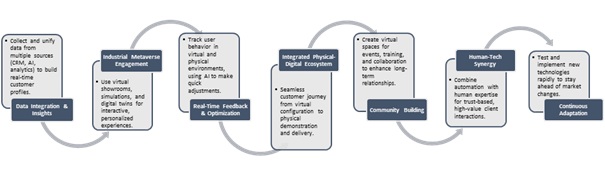
Figure 1. The model “Digital B2B Marketing in the Industrial Metaverse”
Source: author’s own work Kolyandov and Dimitrov.
Key benefits of implementation:
– Better customer understanding – the integration of external data sources is a crucial aspect of the process, as it facilitates the acquisition of additional information.
– Higher engagement – thanks to virtual showrooms, simulations, and digital twins that offer personalized experiences.
– Rapid optimization – ability to respond immediately to customer behavior in real time.
– Flexible customer journey – seamless transition from virtual to real-life demonstrations and deliveries.
– Sustainable partnerships – through community building and long-term relationships.
– Human-technology balance – combining automation with trust based on human expertise.
– Competitive advantage – thanks to continuous adaptation and implementation of new technologies.
Conclusion
The rapid advancements in technology and the shifting market dynamics pose a significant challenge to the academic community focused on business-to-business (B2B) marketing. This challenge is twofold, as it not only affects the relevance of academic research in this field but also the practical applications of B2B marketing strategies.
This paper examines the evolution of the research problem and explores future research directions shaped by the industrial metaverse. The field of B2B marketing has undergone significant evolution, with scholars shifting their focus from a transaction-based paradigm to one that emphasizes relationships, business networks, and, ultimately, virtual business ecosystems. The industrial metaverse, through the implementation of business virtualization, dynamic strategizing, and enhanced stakeholder centricity, exerts a fundamental influence on the management of business-to-business transactions and relationships. The adoption of the industrial metaverse has been posited as a strategy to ensure the continued relevance and enhanced impact of scholarly research in the domain of B2B marketing. This approach involves the tracking of industry advancements and the more effective addressing of challenges that are of particular relevance to managers.
In this regard, the paper expounds on the substantial shifts precipitated by the industrial metaverse and advances promising research prospects. It advocates for academics to embrace these changes to align with practitioner needs and contemporary market dynamics.
Acknowledgement
This work was financially supported by UNWE Research Programme (Research Grand No. 26/2025).
References
Andersson, S., Aagerup, U., Svensson, L., & Eriksson, S. (2024). Challenges and opportunities in the digitalization of the b2b customer journey. Journal of Business and Industrial Marketing, 39(13), 160 – 174. https://doi.org/10.1108/jbim-12-2023-0714.
Aydin, S. (2024). The importance of digital marketing and technologies in b2b marketing. Trakya Üniversitesi Sosyal Bilimler Dergisi, 26(1), 119 – 136. https://doi.org/10.26468/trakyasobed.1460110.
Biolcheva, P., & Sterev, N. (2024) A model for calculating the indirect added value of AI for business. Strategies for Policy in Science and Education, 32(3s), 9 – 17. https://doi.org/10.53656/str2024-3s-1-mod.
Chygryn, O., & Honcharov, V. (2025). Multichannel digital strategy for b2b brands: adaptation of marketing communications to modern market. Galician economic journal, 93(2), 105 – 112. https://doi.org/10.33108/galicianvisnyk_tntu2025.02.105.
Girimurugan, B., D., Kumar, G. C., Nagendra, K. R., Reddy, B., & Krishna, M. (2024). Impact of digital marketing transformation on purchase intentions in b2b consumers: The moderating influence of brand awareness. Quest Journals, 12(10), 155 – 158. https://doi.org/10.35629/3002-1210155158.
Han, R., Lam, H. K. S., Zhan, Y., Wang, Y., Dwivedi, Y. K., & Tan, K. H. (2021). Artificial intelligence in business-to-business marketing: a bibliometric analysis of current research status, development and future directions. Industrial Management & Data Systems, 121(12), 2467 – 2497. https://doi.org/10.1108/imds-05-2021-0300.
Hawaldar, I., T., Ullal, M., S., Sarea, A., Mathukutti, R. T., & Joseph, N. (2022). The study on digital marketing influences on sales for B2B start-ups in South Asia. Journal of Open Innovation Technology Market and Complexity, 8(1), 23. https://doi.org/10.3390/joitmc8010023.
Hayes, Ó. & Kelliher, F. (2022). The emergence of B2B omni-channel marketing in the digital era: A systematic literature review. Journal of Business and Industrial Marketing, 37(11), 2156 – 2168. https://doi.org/10.1108/jbim-02-2021-0127.
Hindolia, A., Arya, J., Pathak, R., & Kazmi, A. (2024). Halal B2B marketing in the metaverse: Crafting a conceptual framework to pinpoint opportunities and challenges, outlining the agenda for future research. Journal of Islamic Marketing, 17(2), 610 – 630. https://doi.org/10.1108/jima-02-2024-0054.
Isik, M. (2025). Prospects and challenges of the metaverse in pursuing sustainable development. Journal of operations intelligence, 3(1), 251 – 261. https://doi.org/10.31181/jopi31202547.
Khatib, M., Ali, S, Alharam, I, Alhajeri, A, Peneva, G., Angelova, J., & Shanaa, M. (2023). Drafting a digital transformation strategy for project management sector – empirical study on UAE. Strategies for Policy in Science and Education, 31(6s), 31 – 47. https://doi.org/10.53656/str2023-6s-3-dra.
Kobets, D. & Nezdorovin, O. (2023). The influence of digitalization on the building of marketing strategies on the B2B market. Eastern Europe Economy Business and Management, 38 – 43. https://doi.org/10.32782/easterneurope.38-6.
Larbi, S., Bello, A., Boakye, K., Assumang, D., Akubilla, J., & Umar, M. (2025). Quantifying environmental impact reductions through metaverse technologies in transportation: Metrics, methodologies and sustainability outcomes. Magna Scientia Advanced Research and Reviews, 13(2), 25 – 36. https://doi.org/10.30574/msarr.2025.13.2.0041.
Milev, P. (2023). The role of data visualization in enhancing textual analysis. Trakia Journal of Sciences, 21(1), 248 – 253.
Minkov, I., & Ivanov, Y. (2023). Impact of the publicization of corporate culture on the internet on the financial and economic indicators of courier companies in Bulgaria. Strategies for Policy in Science and Education, 31(6s), 94 – 102. https://doi.org/10.53656/str2023-6s-8-imp.
Neumann, N., Tucker, C., Subramanyam, K., & Marshall, J. (2023). Is first- or third-party audience data more effective for reaching the ‘right’ customers? The case of it decision-makers. Quantitative Marketing and Economics, 21(4), 519 – 571. https://doi.org/10.1007/s11129-023-09268-7.
Shashi, S., Ertz, M., Cerchione, R., & Kumar, V. (2025). Transforming business-to-business marketing from tradition to digitalization: a taxonomic review of current trends, methodologies and future paths. Journal of Business and Industrial Marketing, 40(6), 1335 – 1354. https://doi.org/10.1108/jbim-02-2024-0074.
Smith, J. (2024). The impact of technology on sales performance in B2B companies. Journal of Artificial Intelligence General Science, 3(1), 86 – 102. https://doi.org/10.60087/jaigs.vol03.issue01.p102.
Wang, D., Wang, J., Yan, A., Li, T., Zhou, Y., Tu, Q., Zhu, J., & Yang, Y. (2025). Survey of blockchain‐based industrial metaverse in SMMEs. Transactions on Emerging Telecommunications Technologies, 36(4). e70109. https://doi.org/10.1002/ett.70109.
Wang, S. (2024). Analyzing the strategic importance of customer relationship management in the digital marketing era. Frontiers in Business Economics and Management, 15(3), 130 – 135. https://doi.org/10.54097/aqj2tg79.
Wilson, R. & Stephens, A. (2022). The challenges of B2B innovation: Using marketing analytics to plan and implement a successful digital catalog adoption. Journal of Business and Industrial Marketing, 38(2), 290 – 302. https://doi.org/10.1108/jbim-12-2021-0598.
Xu, B. (2024). Digital marketing strategies for promoting radar product in B2B market. Advances in Economics Management and Political Sciences, 135(1), 7 – 12. https://doi.org/10.54254/2754-1169/2024.18677.
Zeng, J., Xing, Y., & Jin, C. (2023). The impact of VR/AR-based consumers’ brand experience on consumer–brand relationships. Sustainability, 15(9), 7278. https://doi.org/10.3390/su15097278.
Zhao, W., Zhang, S., & Li, X. (2023). Impact of virtual reality technology on digital media in the context of big data and artificial intelligence. Journal of Computational Methods in Sciences and Engineering, 23(2), 605 – 615. https://doi.org/10.3233/jcm-226611.
Chief Assist. Prof. Simeon Kolyandov, PhD
ORCID iD: 0009-0001-1775-7283
Department Industrial Business
University of National and World Economy
19, December 8th St.
1700 Sofia, Bulgaria
E-mail: simeon.kolyandov@unwe.bg
Assoc. Prof. Kaloyan Dimitrov, PhD
ORCID iD: 0009-0006-3752-3413
Department Industrial Business
University of National and World Economy
19, December 8th St.
1700 Sofia, Bulgaria
E-mail: kdimittrov@unwe.bg

Свързани статии:
 CONSUMER BEHAVIOUR IN THE DIGITAL AGE AND ADOPTION OF MODERN MARKETING APPROACHES
ROLE AND PLACE OF THE COMPANY MOTTO IN THE OFFICIAL CULTURE OF BUSINESS ORGANIZATIONS IN BULGARIA
TECHNOLOGICAL INNOVATIONS AND SUSTAINABLE DEVELOPMENT OF EUROPEAN SMALL AND MEDIUM-SIZED ENTERPRISES IN THE FOOD INDUSTRY
PUBLIC ADMINISTRATION THROUGH THE AGES: HISTORICAL MODELS, INSTITUTIONAL TRANSFORMATIONS, AND CONTEMPORARY PARADIGMS

