


Kiril Dimitrov
University of National and World Economy – Sofia, Bulgaria
https://doi.org/10.53656/igc-2025.11

Pages 121-136
Abstract. This paper is created to explore the accumulating nuances in the meaning of the emerging construct of agile talent. Systematic literature review, critical analysis, bibliometric analysis and content analysis of selected publications as scientific articles and a book (review) are implemented as research methods here. The identified important nuances and characteristics of agile talent are classified and summarized which allowed the grounded formulation of a useful definition for this construct. Directions for future research in the sphere of agile talent are also outlined.
Keywords: agile talent; talent agility; talent; agile; business organizations
JEL: M12, J24, M50
Introduction
The unexpected geopolitical tensions, intertwined with local wars, the impacts of social innovations and disruptive technologies imposed a continuous search, creative (co-)creation and implementation by managers, business consultants and scientists of new organizational strategies (Volberda et al., 2024; Martínez-Falcó et al., 2023), business models (Hedén, 2024; Montgomery & Van Clieaf, 2023), management methods (Moovala, 2024; Temur & Bolat, 2019), appropriate and contextualized culture change interventions (Akande, 2025; Zeitoun, 2024) in order to pursue not only the survival of the entities, but also their successful development, bearing in mind its incarnated non-linearity and dissonance. These unique managerial experiences, embedded in diverse series of organizational successes and failures, reflect the specific basic assumptions of respective decision-makers (Schein & Schein, 2017) in relation to detecting, realizing, interpreting and acting of/on potential company-related issues, originating from the business environment factors (Mack et al., 2015; Nataliia & Olena, 2023) or the manifestations of entrepreneurial spirit in the companies (Stănescu & Romașcanu, 2022; VUCA world 4.0, 2020). For this reason the healthy mix of management and leadership of people, contributing the most to organizational success, especially under the unfavorable conditions of hyper pluralism in the adoption of different, incongruent and in some aspects even colliding people related theories and practices as human resource management, human-centered management, human capital management, personnel management, people management, exponential human resource management and talent management (Hamid, 2019; Lepeley, 2023; Hanine & Dinar, 2022; Popova & Shynkarenko, 2016; Zhang-Zhang et al., 2022; Diamandis & Kotler, 2015; Ismail et al., 2014; Younger & Smallwood, 2016; Zhivkova, 2025; Aguinis & Burgi-Tian, 2021; Groenewald, et al, 2024; Venkatesh, 2016; Geshkov, 2025) comes of greatest importance, and especially when business leaders are oriented to build agile organizations (Brosseau et al., 2019). That is why surveying the essence and characteristics of an emerging construct of “agile talent” is chosen as the subject of this article. Secondary sources are selected as the object of survey, i.e. scientific articles and a book (review), indexed in Web of Science (2025).
Methodology
The forming construct of “agile talent” is explored here by outlining an accumulating array of nuances in its meaning. This is accomplished by the use of systematic literature review, bibliometric analysis, content analysis and critical analysis (Snyder, 2023; Paul, et al., 2023; van Wee & Banister, 2023; Aria & Cuccurullo, 2017; Moher et al., 2009; Ellegaard & Wallin, 2015) for a group of publications, found in Web of Science (2025). The initial search there evidenced an existence of an iteration to “agile talent” – a close construct, called “talent agility”. That is why the exploration continues, based on the already identified two keywords and English as a working language. Two items behind a paywall are identified in generated list. The content of the final list of open access scientific publications (seven in number) is intended to be analyzed deeper here. The observed number of items to be investigated by the chosen set of selection criteria is very low, that seems to be a clear sign of the existence of underinvestigated subarea in the field of contemporary people management. The consecutive steps in selecting the group of items from the aforementioned search engines and academic databases are shown on fig. 1.
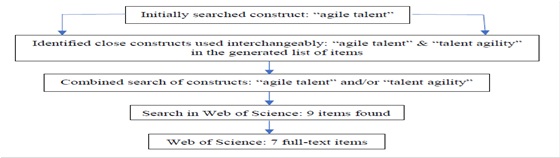
Figure 1. The selection steps in exploring the construct of agile talent
The conducted bibliometric analysis is oriented to discovering veracious answers to research questions as: (a) How has the emergence and evolution of agile talent (talent agility) proceeded up to the current moment of investigation and which are the scientific publications with greatest impact in this sphere? (b) Who are the leading authors in the field of agile talent (talent agility), characterized by their affiliations (i.e. universities, companies or municipalities) and countries of origin? (c) Which are the scientific journals whose editorial boards demonstrated keen interest in this sphere, and to what publishers do they belong?
This paper also abides to several research limitations. First, the core survey activities are concentrated in Web of Science core collection (2025) as primary academic databases where only two keywords are chosen for the accomplishment of the research – “agile talent” and “talent agility”, because of the observed similarity and simultaneous appearance in the generated list of results. Second, due to possible attribution to diverse people management theories that may provoke some underlying analytical contradictions and confusion among unbiased researchers, the use of other identified potential keywords is avoided, i.e. “workforce agility”, “agile workforce”, “employee agility”, “human resource agility”, “HR agility” and “people agility” (Gouda & Tiwari, 2022a). Third, two items from the generated list in Web of Science core collection (2025) were not deeply and critically analyzed because they lacked full-texts (Gouda & Tiwari, 2024a; Silkunas, 2016).
Theoretical review of agile talent
The performed search for “agile talent” and/or “talent agility”, accomplished in the core collection of Web of Science (2025) returned only seven full-text items, one book review and a paper behind a paywall that are to be critically analyzed for the purpose of outlining key nuances in their meanings. Some of these items are reviewed and analyzed partially in this paper because of lacking open access to them or pretty broad, undisciplined and ungrounded choice of aggregates of related key words, embedding diverse and even conflicting people-related theories for the business world, thus inappropriately enlarging the scope and questioning the meaningfulness of the received results and for this reason considered inacceptable for simultaneous use in this field. In order to gain a deep dive into the realm of agile talent and talent agility the systematic literature review is implemented, disclosing that: (a) insufficient attention is paid to agile talent in favor of talent agility or positioning them as elements (variables) in wider research frameworks; (b) theoretical review, bibliometric analysis, in some cases interviews and questionnaires (analyzed by structural equation modelling) are applied as research methodology; (c) the applied samples in empirical research are not representative; (d) the surveyed categories of organizational contributors include employees, managers, industrial experts and academicians; (e) survey results reveal publication trends, influential authors, articles, journals, countries, important keywords, intellectual structure etc., target frameworks, and relationships among variables; (f) concentration of empirical research in automobile industry and food processing sector; (g) concentration of empirical research in countries as India, Bangladesh, USA and Thailand.
For example, Gouda & Tiwari (2022a) perceive talent agility as a notion, consisting of aspects, grounded by a concrete theory, and containing a set of human behaviors (table 1). Any difference between talent agility and agile talent is not explicitly pointed out. In fact, agile talent is left undefined, and simply associated with necessary support for innovations in business organizations. Inherently here talent agility may be assumed as a desired personnel characteristic, shaping due to managerial orientation to obtaining and developing agile talent in the company. When reflecting on agile talent or talent agility Gouda & Tiwari (2022a) consider the employees in the company, while from the book review of Younger & Smallwood (2016) by Silkunas (2016) it becomes evident that these constructs are associated mainly with sourcing and managing of outside experts. In this way agile talent may be viewed as a desired state of being for the people, contributing for a target company, while talent agility may be accepted as “the price” the business organization has to pay, expressed in devoted time, managerial efforts, and associated expenses, in order to achieve the aforementioned state of being. The additionally performed content analysis in the book by Younger & Smallwood (2016) discloses agile talent as: (a) an enabler of non-traditional employment relationships, and (b) an array of company contributors as full-time employees, and outside experts, external staff, contingent workers, free agents, contractors and “gigsters”, hired for specific projects and strengthening firm’s flexibility.
Table 1. The views to talent agility by Gouda & Tiwari
| Talent agility attributes | Description |
| Embedded employee abilities… | (a) quickly responding to rapid occurring changes
(b) perceiving and maximizing opportunities full of challenges |
| Underlying theory | dynamic person-environment fit (P-E fit) |
| A set of employee behaviors oriented to… | Proactivity – demonstrating initiatives toward resolving change-related issues. Adaptability – adopting fast technological changes.
Resilience – having a positive attitude to work under challenging conditions. |
| A critical success factor for the achievement of… | organizational agility, sustainable performance, quality improvement and better customer services |
| Source: (Gouda & Tiwari, 2022a). | |
In their next scientific paper Gouda & Tiwari (2022b) prescribe to talent agility only a role of one element in a conceptual framework on innovation adoption for the companies from the Indian automobile industry. By means of literature review and results from conducted empirical study Gouda & Tiwari (2022b) successfully enlarge their scope of accumulating nuances in the meaning of talent agility that is viewed and analyzed from three perspectives: (a) a set of key enablers (ambidextrous leadership, knowledge management, climate for innovation, learning agility and internal corporate communication); (b) one of two most important dimensions (incl. innovation adoption) to master pending fast technological changes, thus positively influencing the occurring corporate transition from Industry 3.0 to Industry 4.0; and (c) the pursuit of talent agility is considered as an appropriate functional strategy, intended to foster the organizational adoption of innovations. But it should not be omitted that the construct of agile talent is simultaneously applied in the same scientific article although less times and predominantly in the performed literature review (Gouda & Tiwari, 2022b). In this way new characteristics of agile talent may be identified: (a) quick adapters of innovative practices, oriented to accomplishment of desired results; (b) complex problem solvers, demonstrating a positive attitude; (c) possessors of excellent data analytics skills; (d) self-developers even through continuous demonstration of readiness to accept new responsibilities; (e) successful survivors in a hyper-competitive business environment, dominated by highly customized products and/or services.
In a consecutive penetration into the sphere of agile talent and talent agility Gouda & Tiwari (2024b) tried to identify a hierarchical set of important barriers, including the strength of interrelationship among them, to developing in-house agile talent within the automobile sector in India under the conditions of ongoing COVID-19 pandemic, thus associating the aforementioned scientific sphere with crisis management and the rising wave of digital transformation, labeled as Industry 4.0. The set of the aforementioned barriers includes shortages, shortcomings or lack of skills and competencies, information technology infrastructure, ambidextrous leaders, smart human resource management technologies and practices, reward system/career management, training and development, state of industry, institute interface and financial constraints. It seems even implied that ambidextrous leadership is in some way attributed a more important role, regarding the potential and desired increase in talent agility or development of agile talent in business organizations, because not only the lack of ambidextrous leadership is positioned as one of the barriers to talent agility (Gouda & Tiwari, 2024b), but also the persistent adhering to its principles is accepted as a means of achieving desired state of being (Gouda & Tiwari, 2024a). Furthermore, through the performed theoretical research here Gouda & Tiwari (2024b) also provide evidence to their assuming of agile talent and talent agility as a basic means of organizational survival and achievement of a competitive advantage. Now Gouda & Tiwari (2024b) characterize agile talent not only through demonstrated behaviors, but also through attitudes, skills and intelligent satisfiers of three basic psychological needs. In this way agile talents acquire the image of highly proactive and responsive ones towards change, advanced technology and innovation, knowledge-sharing, quick and efficient performers of work tasks, autonomous, competent and team-oriented contributors.
A bit surprisingly, agile talent is not directly researched by Shahriar (2025), Moh’d et al. (2024), Pathomphatthaphan, Das & Jena (2024) and Nigam & Chavla (2022). Although it is mentioned sporadically in the respective text bodies of the analyzed scientific papers without being defined, it predominantly constitutes a part of larger related constructs as “agile talent management”, “agile talent management practices”, “agile talent management strategy”, “agile talent acquisition” and “agile talent management models”. The last complex constructs are not directly defined or dwelled on, and frequently outlined as an under-researched area.
The image of agile talent through bibliometric analysis
The search for “agile talent” and/or “talent agility” in “All fields” option, accomplished in the core collection of Web of Science (2025) returned small number of results, associated with three research areas as “Business Economics” (7 items), “Information Science, Library Science” (2 items) and “Psychology” (1 item) or four categories of attribution as “Management” (7 items), “Information Science, Library Science (2 items), “Business” (1 item) and “Psychology Applied” (1 item). In both categorizations the number of classified items is higher than the number of the items from the list, because of unequivocal attribution. Such distribution of the items in research areas or categories of attribution indicates the availability of dominating researchers’ orientation to (re-)solving pending organizational challenges, originating from business environment dynamics and/or implementation of ambitious managerial endeavors.
The initial year of publication for an item that belongs to this scientific sphere (e.g. the year of 2016) is located five years before other items start to be issued and it represents a succinct book review (Silkunas, 2016) of an already existing breakthrough monography, composed by Younger & Smallwood (2016). In fact, a stable tendency in growing of the expressed interest by researchers to this field cannot be evidenced, based on the observed annual scientific production, although considerable consecutive increases in citations from the previous two years are also detected (figure 2-A). The last ones may serve in the near future as a prerequisite to potential increases in the published items in this emerging field. It should be also noted that the current year of 2025 has not yet finished.
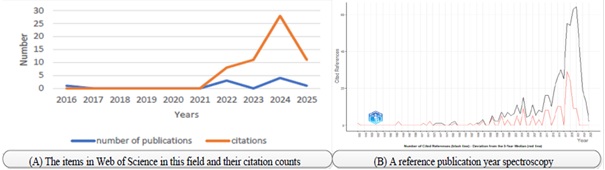
Figure 2. Scientific publications in Web of Science in this field – numbers, citation counts & references
The accumulated popularity of the scientific publications from the generated list in the research community is presented in table 2. A clue that this represents an emerging research topic is implied by the inclusion of the records to the respective Web of Science Index – Emerging Sources Citation Index (ESCI, 6 items) and Social Sciences Citation Index (SSCI, 3 items), oriented to heralding and discussing scientific newness. Furthermore, the articles logically are the most cited types of publications from this list, in a case this is an emerging research topic, rather than (text)books, typical for largely established and already deeper explored fields (table 2).
Table 2. Accumulated citations of the identified scientific publications
| Sources (authors, publication year & headings) | Local Citations | Global Citations | Types of docu-ments | Agile talent(s) (#) |
Talent agility (#) |
| (1) | (2) | (3) | (4) | (5) | (6) |
| Gouda & Tiwari (2022b) Talent agility, innovation adoption and sustainable business performance: empirical evidences from Indian automobile industry | 3 | 25 | Article | 5+2 | 29 |
| Gouda & Tiwari (2024a) Ambidextrous leadership: a distinct pathway to build talent agility and engagement | 1 | 14 | Article | 1+0 | 2 |
Table 2a. Accumulated citations of the identified scientific publications (cont’d)
| (1) | (2) | (3) | (4) | (5) | (6) |
| Gouda & Tiwari (2022a) Mapping talent agility: a bibliometric analysis and future research agenda | 0 | 8 | Article | 6+2 | 105 |
| Moh’d, Gregory, Barroca & Sharp (2024) Agile human resource management: A systematic mapping study | 0 | 6 | Article | 4 (agile talent acquisition-2; agile talent management-2) | 0 |
| Pathomphatthaphan, Das & Jena (2024) Agile SHRM practices and employee-organisational outcomes during new normal: evidence from India and Thailand | 0 | 2 | Article | 1 (agile talent acquisition) | 0 |
| Nigam & Chavla (2022) Agile Talent Management: Mediating the Relationship Between Agile Competency and Organizational Agility | 0 | 2 | Article | 43+0 (agile ta-lent management -20; agile talent management practices-22) |
0 |
| Gouda & Tiwari (2024b) Modelling the barriers of talent agility in Indian automobile industry in the era of Industry 4.0 | 0 | 2 | Article | 0+8 | 63 |
| Shahriar (2025) Future of work and talent development realities: a qualitative analysis from a developing country perspective | 0 | 0 | Article | 3 | 0 |
| Silkunas (2016) Agile Talent: How To Source and Manage Outside Experts | 0 | 0 | Book review | 1+0 | 0 |
As far as the citation topics are concerned “management” at meso level and especially “organizational behavior” at micro level dominate which seems in congruence with dominating pragmatic determination of contemporary business-related leaders (e.g. managers, consultants & researchers) to undertake deliberately change interventions, when possible in a proactive manner (retrieval from the analytical tools, Web of Science, 2025).
The community of authors, at least partially committed to this research field, encompasses thirteen scientists and at first glance eleven of them produced their deliverables as teams. But in fact, only Shahriar (2025) worked alone, while Silkunas (2016) in reality made a book review
of a collective monograph by Younger & Smallwood (2016), both from the USA. Furthermore, the International co-authorships account just for 11.1%. That is why the leading researcher position within this topic may be regarded as a dual tandem structure, shared between – on one hand, Gouda and Tiwari who authored four articles, demonstrating their sustainable scientific interest in the field, and on the other hand, Younger and Smallwood, who authored a whole and fundamental book, although their deliverable is presented only through a book review in these databases (Silkunas, 2016). After performing a preliminary and external manual check for citations of the monography (Younger & Smallwood, 2016) in Google Scholar (23 citations, 2025), it becomes evident that Gouda and Tiwari are the only locally cited authors among the group of identified scientific publications in this sphere (i.e. four citations of two articles of theirs up to the moment). Again, the papers, created by Gouda and Tiwari, attracted greatest numbers of global citations (table 2). If identified citations are classified by countries of origin, it proves that India is associated with 53 of them, while the United Kingdom – with 6 of them, considering that the bibliography of the monograph by Younger & Smallwood (2016) is not included in the databases. A performed manual check in Web of Science databases (2025) reveals that the aforementioned book may be considered as a global cited document too, since it is referenced in 5 journal articles and another book after 2019 up to the current moment. That is why the presented country rank of observed global citations is not only changed, but also enriched, as the second place is shared between the United Kingdom and the USA.
Additionally, the International Journal of Human Resource Management (15 citations), IIE Transactions (new journal’s title: IISE Transactions, 10 citations), Journal of Business Research (10 citations), International Journal of Production Economics (9 citations), International Journal of Production Research (9 citations), Management Decision (9 citations), International Journal of Productivity and Performance Management (8 citations), Human Resource Management (7 citations), International Journal of Organizational Analysis (7 citations) and Personnel Review (7 citations) are the scientific journals that most provided supportive evidences in the realization of the creativity processes by the authors, contributing to this field, by means of retrieved through the databases (Web of science, 2025; Aria & Cuccurullo, 2017) respective research papers to cite in the references for the purpose of grounding their ideas or points of view and disclosing relationships among explored variables. In general, the most actively applied references in the analyzed group of items, devoted to agile talent and/or talent agility, belong to the first two decades of the 21st century that is supported by the reference publication year spectroscopy (figure 2-B), especially in the interval 2014 – 2023 year.
Without any hesitation it can be inferred that the major interest to agile talent originates from India as a number of scientific articles, which even provides us with the respective local scientific institutions from where it emerged (i.e. most relevant affiliations for the authors) – National Institute of Technology (NIT SYSTEM), National Institute of Technology Rourkela, Indian Institute of Technology (IIT) – Kharagpur, and Indian Institute of Technology System (IIT SYSTEM). But as a thorough research, embedded in an entire book – the aforementioned interest seems to arise in the USA. In fact, all the scientists, that demonstrated some interest in this sphere, derive from countries that have traditionally intensive relationships with the UK (i.e. USA, Thailand) or are now members of the Commonwealth (2025)1 (i.e. Bangladesh, India, England and Scotland) (table 3). Furthermore, Emerald Group Publishing seems to be the publisher that demonstrated deep and sustainable interest in this sphere (table 3), although each of the identified scientific papers is accepted for publication in a different journal.
Table 3. Authors’ characteristics & their publishers
| Authors | Record Count | Affiliations (university, company or municipality) | City & Country | Publishers |
| (1) | (2) | (3) | (4) | (5) |
| Barroca, L. | 1 | The Open University | UK | Sage (1) |
| Chavla, P. A. | 1 | Maharaja Sayajirao University Baroda | Vadodara, Gujarat, INDIA | IGI Global (1) |
| Das, S. | 1 | K L Business School, Koneru Lakshmaiah Education Foundation | Vijayawada, INDIA | Emerald Group Publishing (1) |
| Gouda, G. K. | 4 | School of Commerce, XIMUniversity | Bhubaneswar, INDIA | Emerald Group Publishing (3); Taylor & Francis (1) |
| School of Management, National Institute of Technology Rourkela | Rourkela, INDIA | |||
| Gregory, P. | 1 | University of Glasgow | UK | Sage (1) |
| Jena, L. K. | 1 | School of Human Resource Management, XIM University | Bhubaneswar, INDIA | Emerald Group Publishing (1) |
| Moh’d, S. | 1 | Northumbria University | UK | Sage (1) |
Table 3a. Authors’ characteristics & their publishers (cont’d)
| (1) | (2) | (3) | (4) | (5) |
| Nigam, P. V. | 1 | Maharaja Sayajirao University Baroda, Dept Commerce & Business Management | Vadodara, INDIA | IGI Global (1) |
| Pathomphatthaphan, S. | 1 | Charoen Pokphand Produce Pvt. Ltd. | Bangkok, THAILAND | Emerald Group Publishing (1) |
| Shahriar, S. H. B. | 1 | Expressions Ltd. | Dhaka, BANGLADESH | Emerald Group Publishing (1) |
| Sharp, H. | 1 | The Open University | UK | Sage (1) |
| Silkunas, S. (a reviewer); real authors: (a) Younger, J. (2025) & (b) Smallwood, N. (2025) | 1 | not clear (Fernandina Beach – Jupiter); (a) University of Michigan, School of Business; Indian School of Business; Mensch.work (2025); (b) University of Michigan, School of Business, Center for International Business Education and Research; The RBL Group (2025)2 | Florida, USA; (a) a mix of Ann Arbor & NY. USA, Hong Kong & Hyderabad, India; (b) USA | HBR Press (delivered by Reed Business Information) (1) |
| Tiwari, B. | 4 | Indian Institute of Technology (IIT), Department of Humanities & Social Sciences | Kharagpur, INDIA | Emerald Group Publishing (3); Taylor & Francis (1) |
The most popular keywords within this group of items, as evident from the performed analysis, are talent agility (4 occurrences), workforce agility (4 occurrences; & out of the research scope), management (3 occurrences), ambidextrous leadership (2 occurrences) and COVID-19 (2 occurrences), but agile talent is just applied once as a part of a more complex construct as “agile talent management practices” which seems surprising (see figure 3). Deeper investigation discloses even more interesting situation, as follows: (a) agile talent is missing in Keywords plus, and Subject categories (WoS), applied as a part of a more complex term of “agile talent management practices” in Author’s keywords and All keywords, while it occupied the second most influential position in Titles (bigrams) (2 occurrences) and Abstracts (bigrams) (8 occurrences); (b) talent agility is missing in Keywords plus and Subject categories (WoS), while occupies a leading position in Author’s keywords (4 occurrences), All keywords (4 occurrences), Titles (bigrams) (4 occurrences) and Abstracts (bigrams) (10 occurrences).
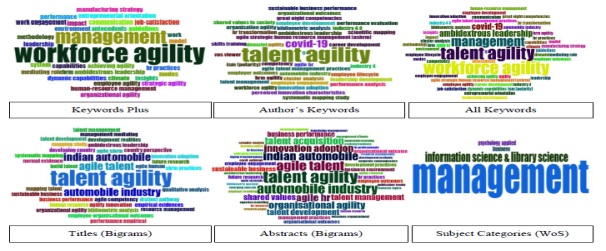
Figure 3. Perspectives in keywords analysis
Such a complex situation requires the completion of a precise exploration and comparison of the specific uses of the aforementioned two constructs within the whole text-body of the analyzed items or their available succinct descriptions (table 2). The last task indicated that: (a) both terms are used by the respective authors in four items and talent agility dominates in applications; (b) agile talent is presented as a building part of a larger construct in three items where talent agility is not applied; (c) two items contain agile talent and do not include talent agility. (d) the performed additional manual check for the use of the two constructs in the monograph by Younger & Smallwood (2016) displayed a contrasting situation – agile talent (438 mentions; incl. agile talent workforce – 3; agile talent effectiveness quotient – 10) and just one-time use of talent agility.
Conclusion
Based on the performed analysis the construct “agile talent” may be defined as a desired state of being for all the people, contributing in numerous – even non-traditional ways, in and outside the organizational boundaries, to the achievement of a competitive advantage by a target company in surmounting disruptive technological and social changes, when managers devote working time, put in efforts, and incur expenses in order to achieve the aforementioned state of being. Agile talent is characterized by basic psychological needs, appropriate and specific human attitudes, skills, abilities, behaviors and dynamic person-environment fit.
The performed theoretical and bibliometric analysis permits outlining potential directions of future research in the sphere of agile talent. First, more empirical research is required in order to disclose in a better way the forming nuances in the meaning and basic characteristics of agile talent. Second, representative samples of (business) organizations and working people for them are needful in order to ground sound conclusions and recommendations to constituencies. Third, new research is needed to thoroughly describe the relationship between agile talent and talent agility. Forth, a more careful research approach is requisite in relating agile talent with diverse and sometimes colliding people-oriented theories for the business world. Fifth, the research objects in the future research should go beyond business organizations to encompass the NGO sector, state administration and even quasi-state organizations. Sixth, behaviors of companies, opinions of managers and employees from more industries and countries in the world should be explored.
NOTES
- https://thecommonwealth.org/our-member-countries
- https://www.rbl.net/about-us/our-people/norm-smallwood
References
Aguinis, H. & Burgi-Tian, J. (2021). Talent management challenges during COVID-19 and beyond: Performance management to the rescue. BRQ Business Research Quarterly, 24(3), 233 – 240. https://doi.org/10.1177/23409444211009528.
Akande, A. (2025). Organizational behavior: Current science, models, and applications. Springer Nature.
Aria, M. & Cuccurullo, C. (2017). Bibliometrix: An R-tool for comprehensive science mapping analysis. Journal of Informetrics, 11(4), 959 – 975. https://doi.org/10.1016/j.joi.2017.08.007.
Brosseau, D., Ebrahim, S., Handscomb, C. & Thaker, S. (2019). The journey to an agile organization. McKinsey & Company. https://www.mckinsey.com/~/media/McKinsey/Business%20Functions/Organization/Our
%20Insights/The%20journey%20to%20an%20agile%20organization/The-journey-to-an-agile-organization-final.pdf.
Diamandis, P. & Kotler, S. (2015). Bold: How to go big, create wealth and impact the world. Simon & Schuster.
Ellegaard, O. & Wallin, J. A. (2015). The bibliometric analysis of scholarly production: How great is the impact? Scientometrics, 105, 1809 – 1831.
Geshkov, M. (2025). The application of social networks in contemporary human resource management. Industrial Growth Conference 2024, 290 – 299. https://doi.org/10.53656/igc-2024.34.
Gouda, G. K., & Tiwari, B. (2024a). Ambidextrous leadership: a distinct pathway to build talent agility and engagement. Human Resource Development International, 27(1), 133 – 141. https://doi.org/10.1080/13678868.2022.2163101.
Gouda, G. K. & Tiwari, B. (2024b). Modelling the barriers of talent agility in Indian automobile industry in the era of Industry 4.0. Journal of Modelling in Management, 19(4), 1343 – 1368. https://doi.org/10.1108/JM2-06-2023-0124.
Gouda, G. K. & Tiwari, B. (2022a). Mapping talent agility: a bibliometric analysis and future research agenda. Management Decision, 60(12), 3165 – 3187. https://doi.org/10.1108/MD-06-2021-0788.
Gouda, G. K. & Tiwari, B. (2022b). Talent agility, innovation adoption and sustainable business performance: empirical evidences from Indian automobile industry. International Journal of Productivity and Performance Management, 71(6), 2582 – 2604. https://doi.org/10.1108/IJPPM-02-2021-0071.
Groenewald, E., Groenewald, C.A., Kilag, O.K., Andrin, G., Pernites, M.J. & Macapaz, M.K. (2024). Talent management in the 21st century: a comprehensive review and prospects for innovation. International Multidisciplinary Journal of Research for Innovation, Sustainability, and Excellence, 1(3), 93 – 99.
Hamid, H. (2019). The strategic position of human resource management for creating sustainable competitive advantage in the VUCA world. Journal of Human Resources Management and Labor Studies, 7(2), 1 – 4.
Hanine, S. & Dinar, B. (2022). The challenges of human capital management in the VUCA era. Journal of Human Resource and Sustainability Studies, 10(3), 503 – 514.
Hedén, S. (2024). Business model innovation: How it really works. Routledge.
Ismail, S., Malone, M., van Geest, Y. & Diamandis, P. (2014). Exponential organizations: Why new organizations are ten times better, faster, and cheaper than yours (and what to do about it). Diversion books.
Lepeley, M. T. (2023). The multiplier effect of HCM. In P. Essens, M. T. Lepeley, N. J. Beutell, L. Ronnie, & A. B. Da Silva (Eds.), Human centered management and crisis: Disruptions, resilience, wellbeing and sustainability. Routledge.
Mack, O., Khare, A., Krämer, A. & Burgartz, T. (Eds.). (2015). Managing in a VUCA world. Springer.
Martínez-Falcó, J. Marco-Lajara, B., Sánchez-García, E. & Millan-Tudela. L. A. (Eds.). (2023). New perspectives and possibilities in strategic management in the 21st century: Between tradition and modernity. IGI Global.
Moh’d, S., Gregory, P., Barroca, L., & Sharp, H. (2024). Agile human resource management: A systematic mapping study. German Journal of Human Resource Management, 38(4), 345 – 374. https://doi.org/10.1177/23970022231226316.
Moher, D., Liberati, A., Tetzlaff, J., & Altman, D. G. (2009). Preferred reporting items for systematic reviews and meta-analyses: the PRISMA statement. Annals of internal medicine, 151(4), 264 – 269. https://doi.org/10.7326/0003-4819-151-4-200908180-00135.
Montgomery, J. & Van Clieaf, M. (2023). Net zero business models: Winning in the global net zero economy. Wiley.
Moovala, V. (2024). Business 5.0 perspectives and people management practices: Transform-transition-thrive for forward-thinkers who want to be future-ready. Notion Press.
Nataliia, H. & Olena, M. (2023). The key administrative competencies of managers required for company development in the Bani world. Economics, 11(1), 289 – 305.
Nigam, P. V. & Chavla, P. A. (2022). Agile talent management: Mediating the relationship between agile competency and organizational agility. International Journal of E-Adoption, 14(1), 1 – 18. https://doi.org/10.4018/IJEA.314279.
Pathomphatthaphan, S., Das, S. & Jena, L. K. (2024). Agile SHRM practices and employee-organisational outcomes during new normal: evidence from India and Thailand. Journal of Organizational Effectiveness: People and Performance, 11(2), 347 – 374. https://doi.org/10.1108/JOEPP-07-2023-0288.
Paul, J., Khatri, P. & Duggal, K. H. (2023). Frameworks for developing impactful systematic literature reviews and theory building: What, why and how? Journal of Decision Systems, 33, 537 – 550. https://doi.org/10.1080/12460125.2023.2197700.
Popova, N. & Shynkarenko, V. (2016). Personnel development at enterprises with regard to adaptation to the VUCA world. Economic Annals-XXI, 156(1-2), 88 – 91.
Schein, E. & Schein, P. (2017). Organizational culture and leadership. (5th Ed.). Wiley.
Shahriar, S. H. B. (2025). Future of work and talent development realities: a qualitative analysis from a developing country perspective. Journal of Management Development, 44(2), 178 – 193. https://doi.org/10.1108/JMD-04-2024-0119.
Silkunas, S. (2016). Agile talent: How to source and manage outside experts. Library Journal, 141(2), 85 – 85.
Snyder, H. (2023). Designing the literature review for a strong contribution. Journal of Decision Systems, 33(4), 551 – 558. https://doi.org/10.1080/12460125.2023.2197704.
Stănescu, D. F. & Romașcanu, M. C. (2022). VUCA n+1. To the infinity and beyond! LUMEN Proceedings, 17, 590 – 596. https://doi.org/10.18662/wlc2021/59.
Temur, G. T. & Bolat, H. B. (2019). Agile approaches for successfully managing and executing projects in the Fourth industrial revolution. IGI Global.
van Wee, B. & Banister, D. (2023). Literature review papers: the search and selection process. Journal of Decision Systems, 33(4), 559 – 565. https://doi.org/10.1080/12460125.2023.2197703.
Venkatesh, A. N. (2016). Global talent management strategies for organizational success in a VUCA World – A conceptual framework. UDAAN: The International Journal of Management Research, 4(2), 17 – 30.
Volberda, H. W., Hollen, R. M. A., Pereira, J. R., Sidhu, J. S. & Heij, K. (2024). Strategic management: From confrontation to transformation. SAGE Publications.
VUCA world 4.0 and the COVID-19 pandemic. (2020). Business Mirror. https://businessmirror.com.ph/2020/09/22/vuca-world-4-0-and-the-covid-19-pandemic/.
Younger, J. & Smallwood, N. (2016). Agile talent: How to source and manage outside experts. Harvard Business Review Press.
Zeitoun, A. (2024). Creating experience-driven organizational culture: How to drive transformative change with project and portfolio management. Wiley.
Zhang-Zhang, Y., Rohlfer, S. & Varma, A. (2022). Strategic people management in contemporary highly dynamic VUCA contexts: A knowledge worker perspective. Journal of Business Research, 144, 587 – 598. https://doi.org/10.1016/j.jbusres.2021.12.069.
Zhivkova, S. (2025). Оor some technology driven novelties in the international human resource management. Strategies for Policy in Science & Education, 33(3), 393 – 404. https://doi.org/10.53656/str2025-3-9-for.
Kiril Dimitrov, PhD
ORCID iD: 0000-0002-5203-1840
Industrial Business Department
University of National and World Economy
19р December 8th St.
1700 Sofia, Bulgaria
Е-mail: kiril.dimitrov@unwe.bg

Свързани статии:
 ROLE AND PLACE OF THE COMPANY MOTTO IN THE OFFICIAL CULTURE OF BUSINESS ORGANIZATIONS IN BULGARIA
KNOWLEDGE MANAGEMENT IN BUSINESS ORGANIZATIONS – AN EMPIRICAL STUDY
THE APPLICATION OF ARTIFICIAL INTELLIGENCE IN HUMAN RESOURCE MOTIVATION
ANALYSIS OF THE TRANSITION TO SUSTAINABLE DECARBONIZED ROAD TRANSPORT IN BULGARIA

