


Lachezar Rangelov, Senior Lecturer
ORCID iD: 0009-0007-5729-714X
Department of Physical Education and Sport
Technical University – Sofia
Sofia, Bulgaria
E-mail: lachezar_rangelov777@abv.bg
https://doi.org/10.53656/ctpes-2026.LR

Pages 75-87
Abstract. The present study investigates the relationship between anthropometric indicators and motor performance in university female volleyball players who completed a two-year training program implemented through different methodological approaches. Twenty-eight athletes were divided into an experimental and a control group (n = 14 each). The anthropometric profile included height, body mass, arm span, upper- and lower-limb length, and BMI, while motor performance was assessed via a 20 m sprint, vertical jump, standing long jump, an upper-body strength test (push-ups), flexibility, and jump endurance (30 s). Pearson correlation coefficients were calculated to determine the strength and structure of associations between anthropometric and motor variables within each group. The experimental group demonstrated stronger and more systematic relationships (r = 0.76 – 0.89), most notably between lower-limb length and vertical jump performance (r = 0.89) and between arm span and 20 m sprint outcome (r = 0.84). In contrast, the control group showed a less coherent correlation structure (r = 0.61 – 0.78). These findings suggest that individualized, morpho-oriented training may enhance morpho-functional consistency and improve motor efficiency in female volleyball players.
Keywords: student volleyball; sports morphology; body proportions; motor efficiency; functional relationship; individualized training
- Introduction
Volleyball is a sport that requires synergy between the athlete’s morphological base and their ability to perform motor actions with high speed, accuracy, and efficiency. Scientific literature emphasizes that body size and proportions play a significant role in sports with a dominant vertical dimension of action, such as volleyball (Ziv & Lidor, 2010; Gabbett, 2008).
Height, limb length, and reach provide biomechanical advantages in actions such as spiking, blocking, serving, and defending near the net. Previous studies confirm that morphological characteristics significantly influence jump-related performance in volleyball. Pocek et al. (2021) demonstrated that body height and lower‑limb length are strong predictors of vertical jump ability in U19 female volleyball players, substantially contributing to spike and block reach.
On the other hand, motor fitness – including speed, explosive power, coordination, and endurance – is decisive for the athlete’s ability to maintain a high level of technical performance throughout competition (Bompa & Buzzichelli, 2019). The question underlying this study is: to what extent does the morphological profile determine the level of motor efficiency in female volleyball players, and is there a difference in this interaction depending on the training methodology?
This study aims to answer these questions through a correlation analysis of the relationships between anthropometric and motor indicators in two groups: an experimental group subjected to an individualized training program and a control group that followed standard training.
- Research methodology
The study involved 28 female students, divided into two groups of 14 competitors each. The division was based on comparable anthropometric parameters to ensure initial homogeneity of the groups. The experimental group (EG) underwent a two-year training cycle with an emphasis on individual morpho‑functional characteristics. The control group (CG) followed a standard training and competition program within the framework of university volleyball training.
The participants in the study are students at the Technical University of Sofia, aged between 18 and 24. All of them have at least two years of experience in university volleyball and are clinically healthy.
2.1. Characteristics of the training process. The control group participates in the standard training program, which includes regular physical education classes and university team training sessions, held 2 – 3 times a week. The experimental group followed a two-year training plan based on the principles of individualization, progressive loading, and adaptation to the morphological characteristics of each player. The training program included (Figure 1):
– Targeted exercises for developing speed, strength, and coordination with a focus on gameplay.
– Exercises adapted to height, limb length, and individual body mass (BMI).
– Monthly monitoring of morpho-functional indicators and adaptation of training loads.
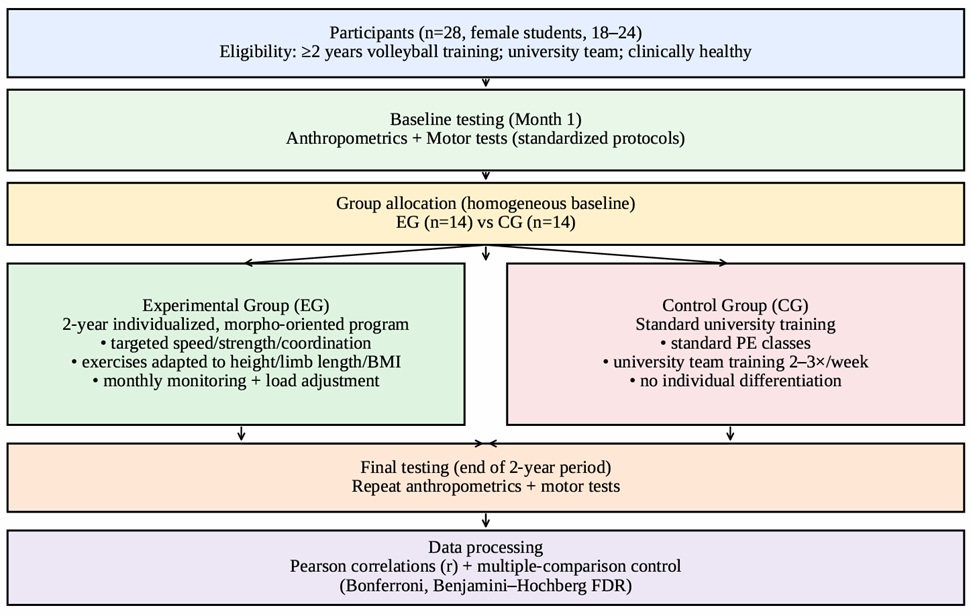
Figure 1. Flowchart of the study design and training methodology (EG vs CG)
2.2. Indicators and measurements. To examine the relationship between morphological characteristics and motor performance in female volleyball players, a set of anthropometric and motor fitness indicators was collected for each participant using standardized measurement procedures and field tests (see Tables 1–2). Anthropometric measurements followed internationally recognized standards; “ISAK has developed international standards for anthropometric assessment and an international anthropometry accreditation scheme (IAAS)”1. These indicators were selected because they capture key physical prerequisites for volleyball performance, including reach and body proportions, rapid displacement, explosive jumping ability, upper-body strength, flexibility, and repeated-effort capacity, and served as the basis for the subsequent correlation analysis. This is consistent with match demands, as “Volleyball players need to sprint and change direction during a match” (Lockie et al., 2020).
Table 1. Anthropometric indicators (measurements)
| Indicator group | Indicator | Unit | How / with what it is measured |
| Anthropometrics | Height | cm | Stadiometer (height gauge) |
| Anthropometrics | Body mass (Weight) | kg | Medical scale |
| Anthropometrics | Arm span (Wingspan) | cm | Measured from the tip of the middle finger to the tip of the middle finger with arms held horizontally |
| Anthropometrics | Upper-limb length | cm | Anthropometric segment measurement |
| Anthropometrics | Lower-limb length | cm | Anthropometric segment measurement |
| Anthropometrics | Body mass index (BMI) | kg/m² | BMI = weight (kg) / height² (m²) |
Data was analyzed using Pearson’s correlation coefficient (r) to determine linear relationships between each anthropometric and motor indicator. Correlation magnitude was interpreted using commonly applied thresholds: moderate (0.30 – 0.49), large (0.50 – 0.69), strong (0.70 – 0.89), and very strong (≥0.90). To control for multiple comparisons in a 6×6 matrix, Bonferroni correction (α = 0.05/36 ≈ 0.00139) and Benjamini–Hochberg FDR (q = 0.05) were applied. This approach controls the false discovery rate (FDR), defined by Benjamini and Hochberg (1995) as the expected proportion of falsely rejected hypotheses among all rejected hypotheses.
Table 2. Motor tests (motor fitness)
| Indicator group | Test | What it assesses | Notes/protocol |
| Speed | 20 m sprint (standing start) | Acceleration speed | Result is typically recorded as time (s); for interpretation, it may be converted to speed (m/s), e.g., speed = 20 / time |
| Jump / Plyometrics | Vertical jump | Explosive power of the lower limbs | Standardized test (Sargent test) |
| Jump / Plyometrics | Standing long jump | Explosive power of the lower limbs | Horizontal jump |
| Strength | Push-up with a 3 kg medicine ball | Upper-body strength | Medicine ball/load: 3 kg |
| Flexibility | Dynamic flexibility (forward bend from standing on a bench) | Mobility/flexibility | Bench-based forward bend test |
| Endurance (specific) | Jump endurance (30 s) | Repeatability of vertical jumps | Number of vertical jumps in 30 seconds |
- Research organization
This study is organized within the framework of a two-year experimental training and observation period, conducted between September 20, 2023, and June 10, 2025, during regular training sessions at the Department of Physical Education and Sport at the Technical University of Sofia.
- Planning and selection of the sample:
In the initial stage, 28 female volleyball players were selected who met the following criteria:
– age 18 – 24 years.
– minimum 2 years of systematic sports training.
– participation in a competitive university team.
– no injuries or chronic diseases.
A random but proportional distribution of participants in the experimental (EG) and control (CG) groups ensured the homogeneity of the initial data in terms of height, weight, and playing experience.
- Conducting an initial test block:
In the first month of the study, anthropometric measurements and motor fitness tests were performed using standardized protocols. All tests were conducted in laboratory and game conditions under the supervision of volleyball instructors from the Department of Physical Education and Sport.
- Training work:
Over two academic seasons (four semesters), the EG underwent a specially designed program that included:
– motor tasks tailored to the morpho-functional profile.
– intensity and volume adapted to individual potential.
– monthly physical condition checks and load adjustments.
The CG continued to follow the general volleyball training plan, with an emphasis on group training, without individual differentiation.
3.4. Final measurements and analysis:
At the end of the period, a reassessment was carried out using the same tests. The collected data were processed with correlation analysis using statistical software to establish the significance and stability of the relationships between morphological and motor indicators.
- Results of the research
Pearson correlation analysis was performed between the anthropometric indicators (Table 1) and the motor tests (Table 2) in the experimental (EG) and control (CG) groups (n = 14 per group). The most practically relevant relationships are summarized in Table 3 (effect size, explained variance, 95% CI, and significance after multiple‑comparison control), while Table 4 provides the corresponding full inferential output (t‑values, exact p‑values, and adjusted p‑values).
4.1. Experimental group (EG):
As shown in Table 3 (and detailed in Table 4), EG demonstrated four strong relationships (r = 0.76 – 0.89; r² = 58 – 79%) between morphology and motor performance:
– Lower‑limb length ↔ vertical jump (r = 0.89) – indicates a direct functional contribution of lower‑limb morphology to explosive power, which is critical for blocking and spiking (Table 3; Table 4). This aligns with recent biomechanical evidence: “This study reveals a close relationship between lower limb biomechanical characteristics and jump performance during SSC movements in female volleyball players” (Deng et al., 2025).
– Arm span (wingspan) ↔ 20 m sprint (r = 0.84) – shows a strong association between reach and sprint performance (Table 3; Table 4). Interpretation of direction depends on whether sprint performance is expressed as time or speed (see methodological note below).
– Height ↔ upper‑body strength (r = 0.82) – suggests that taller players may transfer force more effectively through a longer kinematic chain during the upper‑body strength task (Table 3; Table 4).
– BMI ↔ jump endurance (30 s) (r = 0.76) – indicates that relative body size/composition is associated with repeated jump performance (Table 3; Table 4). Given that BMI is an indirect anthropometric proxy and does not distinguish between fat mass and fat-free mass, volleyball-specific body-fat reference data may provide useful contextual support for interpretation. Matłosz et al. (2023) reported pooled mean body-fat values of 12.8% (95% CI: 11.9–13.8%) for male competitive volleyball players and 22.8% (95% CI: 21.9 – 23.7%) for female competitive volleyball players. Therefore, BMI-based findings should be interpreted cautiously and should not be treated as direct evidence of body composition without specific body-composition assessment.
4.2. Control group (CG):
In CG, the pattern of relationships was less coherent (Table 3). Only one association remained robust under strict control for multiple comparisons (Bonferroni/36), while the others were weaker and/or less stable (Table 3; Table 4):
– Upper‑limb length ↔ vertical jump (r = 0.78) – the only relationship that remains significant under Bonferroni/36 (Table 3; Table 4).
– Height ↔ 20 m sprint (r = 0.74) – significant under FDR but not under Bonferroni/36 (Table 3; Table 4).
– Arm span (wingspan) ↔ flexibility (r = 0.68) – indirect relationship potentially relevant to defensive actions; significant only under FDR (Table 3; Table 4).
– BMI ↔ strength (r = 0.61) – comparatively weak and not significant after multiple‑comparison control (Table 3; Table 4).
4.3. Between‑group summary
EG exhibited a clearly structured morpho‑functional pattern (Table 3), with three relationships remaining significant even after strict Bonferroni correction for 36 comparisons (Bonferroni/36), and one relationship (BMI ↔ jump endurance) remaining significant under FDR but not under Bonferroni/36 (Table 3; Table 4). This supports the thesis of higher morpho‑functional consistency under an individualized training approach.
In CG, only upper‑limb length ↔ vertical jump remained significant under Bonferroni/36, whereas the remaining relationships were significant only under FDR and showed wider confidence intervals, suggesting a less stable functional structure (Table 3; Table 4).
Table 3. Extended statistical analysis (n = 14 in each group)
| Group | Pair (variables) | r | r² | p | 95% CI | Significant (Bonferroni/36) | Significant (FDR/36) |
| EG | Lower limb length ↔ Vertical jump | 0.89 | 79% | 2.0e-05 | [0.68, 0.96] | Yes | Yes |
| EG | Arm span ↔ 20 m sprint (time) | 0.84 | 71% | 0.0002 | [0.56, 0.95] | Yes | Yes |
| EG | Height ↔ Upper-body strength | 0.82 | 67% | 0.0003 | [0.51, 0.94] | Yes | Yes |
| EG | BMI ↔ Jump endurance (30 s) | 0.76 | 58% | 0.0016 | [0.38, 0.92] | No | Yes |
| CG | Upper limb length ↔ Vertical jump | 0.78 | 61% | 0.0010 | [0.43, 0.93] | Yes | Yes |
| CG | Height ↔ 20 m sprint (time) | 0.74 | 55% | 0.0025 | [0.34, 0.91] | No | Yes |
| CG | Arm span ↔ Flexibility | 0.68 | 46% | 0.0075 | [0.23, 0.89] | No | Yes |
| CG | BMI ↔ Strength | 0.61 | 37% | 0.0205 | [0.12, 0.86] | No | No |
Notes: EG = Experimental group; CG = Control group; r² values are shown as percentages; CI = confidence interval. For each reported correlation, the explained variance (r²), two-tailed p-value, and 95% CI (Fisher z) are presented. Significance was assessed and controlled for multiple comparisons: strict Bonferroni (α = 0.05/36 ≈ 0.00139, assuming 6×6=36 possible relationships) and FDR Benjamini – Hochberg (q = 0.05; m = 36).
Methodological notes (20 m sprint). The 20 m sprint is typically recorded as time (s) (Table 2). If time is used, a positive correlation between morphology and sprint outcome means a longer time (i.e., poorer performance). For performance‑oriented interpretation, it is recommended to express sprint performance as speed (m·s⁻¹) (e.g., speed = 20 / time), so that better sprint performance corresponds to higher values (Table 4).
4.4. Interpretation along the axes „morphology ↔ motor function“
The relationships summarized in Table 3 and detailed in Table 4 indicate that the individualized program (EG) is associated with stronger and more systematic coupling between morphological advantages and motor performance, whereas the control condition (CG) shows more fragmented dependencies.
– Lower‑limb length ↔ vertical jump (EG, r = 0.89; r² = 79%) – the strongest association (Table 3; Table 4) and consistent with evidence that limb length and height explain a substantial portion of vertical‑jump variance in female volleyball players. Longer segments may increase the moment arm and allow greater momentum generation during take‑off.
– Arm span (wingspan) ↔ 20 m sprint (EG, r = 0.84; r² = 71%) – strong association (Table 3; Table 4). Interpretation should account for whether sprint performance is represented as time or speed (see methodological note above); biomechanically, upper‑limb contribution may support trunk stabilization and stride mechanics, particularly when sprint output is expressed as speed.
– Height ↔ upper‑body strength (EG, r = 0.82; r² = 67%) – suggests that greater stature may support force production via a longer kinematic chain during the upper‑body task (Table 3; Table 4).
– BMI ↔ jump endurance (EG, r = 0.76; r² = 58%) – indicates that relative body size/composition is associated with repeated jumping capacity; statistically, this effect is stable at m = 8 but does not survive the most stringent Bonferroni correction at m = 36 (Table 3; Table 4).
– CG – fragmented dependencies – upper‑limb length ↔ vertical jump is the only robust “bridge,” while the remaining relationships do not form a consistent morpho‑functional profile (Table 3; Table 4).
Table 4. Correlations, p values, CI, and adjustments
| Group | Pair | r | r² | t (df=12) | p | Bonferroni p_adj
(m=8) |
BH
p_adj (m=8) |
Bonferroni p_adj
(m=36) |
95% CI |
| EG | Lower limb length ↔ Vertical jump | 0.89 | 0.79 | 6.762 | 2.01e-05 | 1.61e-04 | 1.61e-04 | 7.24e-04 | [0.68, 0.96] |
| EG | Arm span ↔ 20 m sprint (time) | 0.84 | 0.71 | 5.363 | 1.70e-04 | 1.36e-03 | 6.80e-04 | 6.12e-03 | [0.56, 0.95] |
| EG | Height ↔ Upper-body strength | 0.82 | 0.67 | 4.963 | 3.29e-04 | 2.63e-03 | 8.77e-04 | 1.18e-02 | [0.51, 0.94] |
| EG | BMI ↔ Jump endurance (30 s) | 0.76 | 0.58 | 4.051 | 1.61e-03 | 1.29e-02 | 2.58e-03 | 5.80e-02 | [0.38, 0.92] |
| CG | Upper limb length ↔ Vertical jump | 0.78 | 0.61 | 4.318 | 1.00e-03 | 8.00e-03 | 2.00e-03 | 3.60e-02 | [0.43, 0.93] |
| CG | Height ↔ 20 m sprint (time) | 0.74 | 0.55 | 3.811 | 2.48e-03 | 1.98e-02 | 3.31e-03 | 8.93e-02 | [0.34, 0.91] |
| CG | Arm span ↔ Flexibility | 0.68 | 0.46 | 3.213 | 7.45e-03 | 5.96e-02 | 8.51e-03 | 2.68e-01 | [0.23, 0.89] |
| CG | BMI ↔ Strength | 0.61 | 0.37 | 2.667 | 2.05e-02 | 1.64e-01 | 2.05e-02 | 7.38e-01 | [0.12, 0.86] |
Notes: EG = Experimental group; CG = Control group; r² values are shown as percentages; CI = confidence interval.
Statistical note. Pearson’s r was computed using a two‑tailed test (α = 0.05; df = 12). The strength of relationships is interpreted according to Guilford and Cohen. Multiple comparisons were controlled using strict Bonferroni (m = 36) and Benjamini–Hochberg FDR (q = 0.05; m = 36), as reported in Tables 3 – 4.
- Discussion
The pattern observed in Tables 3 – 4 supports the conclusion that individualized training is associated with a more coherent morpho-functional structure compared with standard training.
The high correlation values in the experimental group indicate an effectively constructed morpho-functional structure. This corresponds to the principle of specificity in training theory – the use of morphological advantages to develop targeted motor skills (Bompa & Buzzichelli, 2019). Similar tendencies are reported in university-level female volleyball in Bulgaria, where clusters of technical indicators (serve, attack, block) co-vary with body dimensions and strength‑speed tests (Lazarova-Peeva & Rangelov, 2024; Antonova, 2019; Lazarova, 2011).
Our findings also partially replicate the relationships between anthropometric and motor indicators described for younger female players in Albania (Muka et al., 2022), as well as the relative homogeneity of specific workability indicators in highly qualified male volleyball players (Petrov, 2019). From a training‑methodology perspective, the stronger and more systematic correlations observed in the individualized program are consistent with the conclusions of Arsova (2014) that speed‑strength preparation in 17 – 19‑year‑old volleyball players must be planned regarding individual morphological and functional characteristics. According to Muka (2025), systematic training tailored to children’s age-related and psychophysical characteristics has a significant impact on the effectiveness of learning technical elements in volleyball. Volleyball players with longer limbs have better bounce, better mechanics when spiking, and effective use of the mass-inertia properties of the limbs during the initial strike.
The association between arm span (wingspan) and 20 m sprint performance may reflect overall body size and the contribution of the upper limbs to sprint mechanics (arm swing); however, because arm swing was not measured directly, this interpretation should be considered exploratory. In standard training methods (CG), the lack of individualized control over morphometric characteristics may limit the extent to which the body profile translates into motor performance. Findings from youth female volleyball indicate that morphological development should not be interpreted as sufficient evidence of comprehensive functional progress. Oliveira et al. (2025) showed that U18 players were taller, heavier, and faster in linear sprinting than younger players, but did not differ significantly in lower-limb strength, lower-limb power, or dynamic balance. In addition, Milić et al. (2024) reported significant position-related differences in key anthropometric and motor variables, including body height, body mass, standing reach, arm span, explosive power, speed, agility, and flexibility. Together, these findings support the integration of morphological assessment, functional diagnostics, and position-specific training design in youth volleyball.
The highest correlations in EG (r=0.82 – 0.89) show clearly structured morpho-functional consistency achieved through individualized planning and specificity of training (Bompa & Buzzchelli, 2019). The result for vertical jump is consistent with reviews of the determinants of jump in volleyball players (Ziv & Lidor, 2010), as well as with data on the role of functional imbalances of the lower limbs in the performance of explosive tasks (Newton et al., 2006). The interpretation of the strength of the dependencies follows the classical frameworks of Guilford (1978) and Cohen (1988), and the transfer between physical training and technical skills is supported by the principles of motor learning (Schmidt & Lee, 2011). Finally, if we consider the effect of fatigue on technique and performance, the “morphology-function” relationships must be considered in conditions as close as possible to those of a match (Gabbett, 2008).
The findings in EG testify to morpho-functional consistency achieved through individualized and specific training (Bompa & Buzzichelli, 2019; Lazarova-Peeva, 2020). The high correlation between lower-limb length and vertical jump is in line with reviews of the determinants of jump performance in volleyball players (Ziv & Lidor, 2010) and research on the role of lower-limb functional imbalances in explosive tasks (Newton et al., 2006). The observed relationship between arm span and 20 m sprint performance may also be discussed in the context of the biomechanical contribution of the upper limbs (arm swing) to stability and stride mechanics; however, because arm swing was not measured directly, this interpretation remains speculative. The impact of fatigue on technique and efficiency should also be considered – validating dependencies under match-like conditions is critical (Gabbett, 2008). The strength of the observed effects is interpreted in the context of Cohen (1988) and Guilford (1978). Notably, match-based analyses suggest that “In women’s volleyball, the impact of jump height is not as significant as in men’s volleyball” (Pawlik & Mroczek, 2023), highlighting the role of technique and tactical context. In this context, the present study extends previous Bulgarian work on student volleyball by focusing explicitly on the correlation structure between anthropometric indicators and motor skills under two different methodological training models.
- Conclusions
Significant and systematic correlations between body size and motor efficiency in EG have been established, which is an indicator of functional adaptation through a personalized methodology.
- The high correlation values between arm span, limb length, and speed/jump indicate the key role of morphology in female volleyball players.
- The lack of stable correlations in CG suggests that the traditional training model is insufficient for building a functional game structure. CG shows a fragmented structure – FDR significance prevails, but not Bonferroni significance, and a wide CI at n=14. A functional connection between physical training and technique is necessary (Schmidt & Lee, 2011).
- A personalized approach should be considered a priority in the methodological provision of training activities in university volleyball, especially when time and resources are limited.
Recommendations
Based on the analysis and results, this study offers the following practical recommendations for coaching and methodological practice in university volleyball:
- Individual morpho-functional profile: Introduce mandatory initial diagnosis of anthropometric characteristics for each player, including limb length, reach, height, and body composition. This data should be used as a basis for planning motor and technical training (Bompa & Buzzichelli, 2019).
- Morpho-oriented training programs: Based on the results of the EG, develop programs that combine the biomechanical advantages of the athletes with their volleyball roles. For example, players with long lower limbs should be included in more jumping, attacking, and blocking exercises (Ziv & Lidor, 2010).
- Functionally related training: Training should be structured so that physical qualities (speed, strength, flexibility) are developed in direct relation to technical skills. This is consistent with evidence that “targeted strength training enhances physical capabilities and improves technical and tactical performance in volleyball” (Martin et al., 2024). For example, specific acceleration exercises should be followed by passing or positioning for blocking (Schmidt & Lee, 2011).
- Continuous monitoring: Introduce periodic monitoring (e.g., every 3 months) to check morpho-functional adaptations and readjust loads. Changes in BMI or strength/mass index should be considered risk factors or potential limiting factors.
- Training of coaching staff: The methodological qualification of coaches should include skills for interpreting correlation dependencies and their application in the training process.
NoTES
- https://www.isak.global/
References
Antonova, M. (2019). Mean values and variability of indicators of sport-technical skills in students from volleyball groups at Sofia University “St. Kliment Ohridski”]. Annual of National Sports Academy “Vassil Levski”, (1), 389 – 392. [In Bulgarian]
Arsova, R. (2014). Development and Control of Speed-Strength Training in 17 – 19-Year-Old Female Volleyball Players. [Doctoral dissertation, National Sports Academy “Vasil Levski”, Sofia, Bulgaria]. [In Bulgarian]
Benjamini, Y. & Hochberg, Y. (1995). Controlling the false discovery rate: A practical and powerful approach to multiple testing. Journal of the Royal Statistical Society: Series B (Methodological), 57(1), 289 – 300. https://doi.org/10.1111/j.2517-6161.1995.tb02031.x.
Bompa, T. O., & Buzzichelli, C. A. (2019). Periodization: Theory and methodology of training (6th ed.). Human Kinetics. https://doi.org/10.5040/9781718225435.
Cohen, J. (1988). Statistical power analysis for the behavioral sciences (2nd ed.). Routledge. https://doi.org/10.4324/9780203771587.
Deng, B., Li, Y., Lin, G., Yan, R., He, J., Li, D., & Sun, J. (2025). Effects of lower limb biomechanical characteristics on jump performance in female volleyball players based on long stretch–shortening cycle movements. Frontiers in Bioengineering and Biotechnology, 13. Article 1653751. https://doi.org/10.3389/fbioe.2025.1653751.
Gabbett, T. J. (2008). Do skill-based conditioning games offer a specific training stimulus for junior elite volleyball players? Journal of Strength and Conditioning Research, 22(2), 509 – 517. https://doi.org/10.1519/JSC.0b013e3181634550
https://doi.org/10.1519/JSC.0b013e3181635a6a.
Guilford, J. P., & Fruchter, B. (1978). Fundamental statistics in psychology and education (6th ed.). McGraw-Hill.
Lazarova, M. (2011). Relationships between selected anthropometric indicators and technical proficiency among students attending volleyball classes. Kineziologiya 2011: Proceedings of the III International Scientific Conference, 214 – 218. [In Bulgarian]
Lazarova-Peeva, M. (2020). Experimental methodology of teaching volleyball to students. Makros. ISBN 978-954-561-496-5. [In Bulgarian]
Lazarova-Peeva, M., & Rangelov, L. (2024). Comparative analysis of the technical preparation of female volleyball players at university level. Annual of the National Sports Academy “Vassil Levski”, (1), 60 – 68. [In Bulgarian]
Lockie, R. G., Dawes, J. J., & Callaghan, S. J. (2020). Lower-body power, linear speed, and change-of-direction speed in Division I collegiate women’s volleyball players. Biology of Sport, 37(4), 423 – 428. https://doi.org/10.5114/biolsport.2020.96944.
Martin, Ș. A., Gavra, M. G., & Martin-Hadmaș, R. M. (2024). Analyzing targeted muscle strength: Impact on speed, endurance, and performance in female volleyball. Applied Sciences, 14(23), 10951. https://doi.org/10.3390/app142310951.
Matłosz, P., Makivic, B., Csapo, R., Hume, P., Mitter, B., Martínez-Rodríguez, A., & Bauer, P. (2023). Body fat of competitive volleyball players: A systematic review with meta-analysis. Journal of the International Society of Sports Nutrition, 20(1), 2246414. https://doi.org/10.1080/15502783.2023.2246414.
Milić, M., Vukadinović, N., Grgantov, Z., Nikolić, K., Savić, Z., Majstorović, N., & Nešić, G. (2024). Basic anthropological characteristics of elite U17 youth Serbian female volleyball players according to playing position. Applied Sciences, 14(23), 11197. https://doi.org/10.3390/app142311197.
Muka, E., Antonova, V., & Andonov, H. (2022). The correlations between anthropometric parameters and motor skills among female volleyball players at age 11 – 13 years old in Albania. In: T. Iancheva, S. Djobova, M. Kuleva (Eds.), International scientific congress “Applied sports sciences”: Proceeding book, Volume 1 (pp. 244 – 247). NSA Press. https://doi.org/10.37393/ICASS2022/43.
Muka, E. (2025). Methodology of developing technical skills in 11 – 13-year-old volleyball players in Albania. [Doctoral dissertation, National Sports Academy “Vasil Levski”, Sofia, Bulgaria].
Newton, R. U., Gerber, A., Nimphius, S., Shim, J. K., Doan, B. K., Robertson, M., Pearson, D. R., Craig, B. W., Häkkinen, K., & Kraemer, W. J. (2006). Determination of functional strength imbalance of the lower extremities. Journal of Strength and Conditioning Research, 20(4), 971 – 977. https://doi.org/10.1519/00124278-200611000-00039.
Oliveira, J. P., Marinho, D. A., Jacinto, P., Sampaio, T., & Morais, J. E. (2025). Characterization of physical performance and change of direction deficit across age groups in young female volleyball players. BMC Sports Science, Medicine and Rehabilitation, 17, 209. https://doi.org/10.1186/s13102-025-01264-6.
Pawlik, D., & Mroczek, D. (2023). Influence of jump height on the game efficiency in elite volleyball players. Scientific Reports, 13, 8931. https://doi.org/10.1038/s41598-023-35729-w.
Petrov, G. (2019). Variation of the specific workability signs of highly qualified volleyball players. Pedagogical Almanac, 27(2), 293 – 298. https://doi.org/10.54664/UEXQ1003. [In Bulgarian]
Pocek, S., Milenković, D., Lakicevic, N., Pantelic-Babic, K., Imbronjev, M., Thomas, E., Bianco, A. & Drid, P. (2021). Anthropometric characteristics and vertical jump abilities by player position and performance level of junior female volleyball players. International Journal of Environmental Research and Public Health, 18(16), Article 8377. https://doi.org/10.3390/ijerph18168377.
Schmidt, R. A., & Lee, T. D. (2011). Motor control and learning: A behavioral emphasis (5th ed.). Human Kinetics.
Stewart, A. D., Marfell-Jones, M., Olds, T., & de Ridder, J. H. (2011). International standards for anthropometric assessment (3rd ed.). International Society for the Advancement of Kinanthropometry.
Ziv, G., & Lidor, R. (2010). Vertical jump in female and male volleyball players: A review of observational and experimental studies. Scandinavian Journal of Medicine & Science in Sports, 20(4), 556 – 567. https://doi.org/10.1111/j.1600-0838.2009.01083.x.

Свързани статии:
 Correspondence between the Bulgarian and World Sport Science
Control and Assessment of the Physical Capabilities of Football Players
Innovative Systems in Physical Education Teaching at the Level of Initial Education
Long-term Trends in Endurance Running Performance in Bulgaria: Comparison with the World Elite and the Patterns of Sport Science Knowledge

