


Milena Goranova
Regional Health Inspectorate of Stara Zagora
Teodora Dimitrova,
Tsvetelina Tarpomanova
Medical University - Varna
https://doi.org/10.53656/str2026-1-9-ekr
Abstract. Technology addiction is a global issue. The increase of screen time leads to a sedentary lifestyle among young people.
The objective of this study is to identify the characteristics of screen behaviour and the level of physical activity among 8th to 12th grade students from Stara Zagora and the region. A group of 1257 students were surveyed between February and March 2024. A personalised survey, consisting of three standardised screen behaviour tests and a standard physical activity questionnaire, was conducted. The results were processed using IBM SPSS Statistic_Base-v.25.
A low level of activity was indicated by 63.6 % of students, screen addiction by 37.9%, multitasking addiction by 39.1% and video game addiction – 19.5%. Screen addiction is found to have a statistically significant correlation with lower physical activity.
It is important to raise awareness of the screen addiction risk among parents and teachers and to promote physical activity among adolescents.
Keywords: screen behaviour; physical activity; screen addiction
Introduction
The Internet is widespread in contemporary society and provokes numerous discussions about its impact on adolescents. It offers its users many advantages (Angelova, 2016). Screen devices provide a range of benefits: easy and fast access to information, development of technical skills and imagination, diversification of young people’s social life and contacts, reduction of social isolation, opportunities for communication with diverse cultural values, and the provision of new educational opportunities (Chonova, 2008).
In the 1990s, the condition of Internet addiction was described by New York psychiatrist Dr. Ivan Goldberg as a compulsive desire to go online and an inability to get off in time. Addiction to technology is growing rapidly and is now a global problem (Boncheva, 2022). Children and teenagers are more susceptible to addiction than adults due to multiple hormonal and psychological factors in the developing brain (Greenfield, 2022).
The concept of “screen time” is defined in the literature as the “total exposure to devices capable of displaying video content, including tablets, smartphones, computers, televisions, and video game consoles.” The analysis of the relationship between physical activity, quality of life, and screen time reveals that more than 2 hours of screen time is associated with lower quality of life scores. Girls and boys who spend more time in front of screens report symptoms such as nervousness and irritability, headaches, and fatigue. These symptoms are inversely related to physical activity (Santos & Reeve, 2020). Longer time spent in front of a computer is also associated with reduced sleep duration, pain in the shoulders and lower back, eye strain, impaired vision, chronic fatigue, and spinal deformities (Santos & Reeve, 2020). The negative effects of excessive screen exposure are reversible if screen time is reduced (Jourdren et al., 2023).
With the advancement of mobile media technologies, the phenomenon of multitasking has emerged. Media multitasking is the simultaneous engagement with two or more media or the use of media while engaging in non-media activities (writing homework, participating in face-to-face contacts) (Schuur et al., 2015). Such task-switching behavior may place increasing demands on the neurocognitive networks responsible for controlling and maintaining attention (Vedechkina & Borgonovi, 2021). Deficits in cognitive control interfere with academic performance and socio-emotional functioning (Schuur et al., 2015).
The increase in the time spent by young people in front of computers leads to a sedentary lifestyle and limitation of their physical activity, which has an extremely adverse impact on their physical development and upbringing (Chonova, 2008). It has been established that spending more than 2 hours a day in front of a “screen” negatively affects physical activity in both sexes (Melkevik et al., 2010).
Children and adolescents have a strong affinity for new technologies and use them in their daily lives. 80% of Germans aged 12 and over use a smartphone. This trend is also observed in the United States and in developing countries (Prescott et al., 2019). Technologies can also be seen as tools to address physical inactivity (Kerner & Goodyear, 2017). For example, increased motivation for physical activity has been observed after using pedometers and accelerometers that track step counts and other health indicators (Dankovic et al., 2023; Prescott et al., 2019). The aim of this study is to establish the characteristics of screen behavior and the level of physical activity of students from 8th to 12th grade in Stara Zagora and the region. Materials and methods
The study subjects are students from 8th to 12th grade, aged 14 to 17. The participants included 547 students from schools in Stara Zagora, 417 students from schools in Kazanlak, 215 students from a school in the town of Radnevo, and 78 students from a school in Chirpan.
An individual survey was used, which included three standardized tests for screen behavior and one standardized questionnaire for physical activity.
For the statistical processing of the results, descriptive and non-parametric analyses were applied using the statistical package IBM SPSS Statistic_Base-v.25.
The study was conducted in the period from 19 February 2024 to 27 March 2024 in the territory of Stara Zagora and the surrounding region.
Results
A total of 1257 students from Stara Zagora district were included in the study. The gender distribution is as follows: out of 1156 respondents, 679 (58.7%) were girls, 420 (36.3%) were boys, and 57 (4.9%) refused to indicate their gender.
The screen behavior test contains 11 questions. 1156 participants answered it. To the first question - “Do you lose track of time when you use the Internet or your smartphone?”, the majority of students 646 (55.9%) answered “yes”. To the question “When you are not using the Internet or your smartphone, do you still think about using it?”, 444 (38.4%) answered positively. The largest number of students answered that they spend more and more time on the Internet or on their smartphone (847, 73.3%). 722 students (62.5%) are looking for more stimulating or newer content on the Internet or their smartphone. 405 (35%) respondents made unsuccessful efforts to control, limit or reduce their Internet and smartphone use. To the question “Do you feel restless, anxious or irritable when you do not have access to the Internet or your smartphone?” 321 (27.8%) students answered “yes”. A significant number of survey participants (827, 71.5%) use the Internet or their smartphone as a way to escape, relieve negative mood (boredom, dissatisfaction, stress, anxiety, depression). The number of respondents who share that they have committed illegal acts related to the use of the Internet or smartphone is not small 194 (16.8%). The use of the Internet and smartphone has threatened or affected the work or educational opportunities of 324 students (28%). Screen addiction according to the applied tool is demonstrated by six or more positive answers. The results of the screen behavior test show screen addiction in 437 students or 37.9% of 1154 (Table 1).
Table 1. Results of the screen behavior test
| Answered "Yes" to | Number | % |
| 0 questions | 51 | 4,4 |
| 1 questions | 57 | 4,9 |
| 2 questions | 108 | 9,4 |
| 3 questions | 130 | 11,3 |
| 4 questions | 166 | 14,4 |
| 5 questions | 205 | 17,8 |
| Total without addiction | 717 | 62,1 |
| 6 | 137 | 11,9 |
| 7 | 118 | 10,2 |
| 8 | 87 | 7,5 |
| 9 | 47 | 4,1 |
| 10 | 13 | 1,1 |
| 11 | 35 | 3 |
| Total with addiction | 437 | 37,9 |
| Total | 1154 | 100 |
The multitasking distraction test contains 14 questions. 1156 participants answered it. To the first question, “Do you spend more time online or on digital screen devices (computer, laptop, tablet or smartphone) than you realize?” 688 (59.5%) students answered positively. 619 (53.5%) people regularly spend their time mindlessly staring at their smartphone, tablet or computer, even when they could have better or more productive things to do. To the question, “Do you feel like you lose track of time when you are on one of these devices?” 598 (51.7%) students answered “yes”. 203 (17.6%) students spend more time with virtual “friends” or “friends” from social networks than with real people. 410 participants (35.5%) increase the time they spend on their smartphone and on the Internet. 577 students (49.9%) secretly wish they were less connected to the internet or their devices. 561 (48.5%) regularly sleep with their smartphone turned on under their pillow or next to their bed. 698 students (60.4%) check and respond to text messages and emails at any time of the day or night - even when it means interrupting other things they are doing. 315 (27.2%) respondents text or email or surf while driving or doing other similar activities that require focused attention and concentration. A large proportion of respondents (734, 63.5%) believe that using technology sometimes reduces their productivity. Not having a smartphone or other screen device with the internet is inconvenient for nearly half of students. Almost all (992, 85.8%) carry a smartphone with them at all times. When asked "When you eat, is your smartphone always part of the table setting?" 472 (40.8%) responded positively.
Multitasking distraction according to the applied instrument is demonstrated by eight or more positive answers. The multitasking distraction reported by the test is proven in 451 students, 39.1% of the respondents (Table 2).
Table 2. Results of the multitasking distraction test
| Answered "Yes" to | Number | % |
| 0 questions | 44 | 3,8 |
| 1 questions | 26 | 2,3 |
| 2 questions | 38 | 3,3 |
| 3 questions | 64 | 5,5 |
| 4 questions | 109 | 9,4 |
| 5 questions | 133 | 11,5 |
| 6 questions | 131 | 11,4 |
| 7 questions | 158 | 13,7 |
| Total without distraction | 703 | 60,9 |
| 8 questions | 123 | 10,7 |
| 9 questions | 89 | 7,7 |
| 10 questions | 87 | 7,5 |
| 11 questions | 55 | 4,8 |
| 12 questions | 33 | 2,9 |
| 13 questions | 21 | 1,8 |
| 14 questions | 43 | 3,7 |
| Total with distraction | 451 | 39,1 |
| Total | 1154 | 100 |
The video game addiction test contains 18 questions. 1156 participants answered it. To the question “Do you feel a loss of control (inability to stop or limit the game) when using video games?” 250 (21.6%) participants answered “yes”. When not using video games, they think about them, relive past experiences, plan the next time they will play, or think about when and where they will have access to the games next, 276 students (23.9%). Of the respondents, 192 (16.6%) believe that they need to spend more and more time playing video games to achieve the same satisfaction. 369 students (31.9%) are looking for more stimulating (exciting, new or challenging) video games. About one fifth of the participants (239, 20.7%) have made repeated but unsuccessful efforts to control, limit or reduce the use of video games. They use video games as a way to escape from problems or relieve negative moods, 469 participants (40.6%). After spending an excessive amount of time playing a video game and vowing not to do it again, 292 participants (25.3%) found themselves playing again soon after. 185 participants (16%) had lied to family members and friends about the time they spent playing video games. When asked if they believed they were committing illegal, self-harming, or self-destructive acts related to their use of video games, 164 participants (14.2%) responded positively. 213 students (18.4%) reported poor work or academic performance as a direct or indirect result of playing video games. -150 respondents (13%) had health or medical problems due to their use of video games. One in three (340, 29.4%) students have lost sleep because of video games. 377 students (32.6%) lose track of time when playing video games.
According to the applied tool, video game addiction is demonstrated by nine or more positive answers. The test results show video game addiction in 225 students, or 19.5% of the students who participated in the survey (Table 3).
Table 3. Results of the video game addiction test
| Answered "Yes" to | Number | % |
| 0 questions | 296 | 25,6 |
| 1 questions | 127 | 11 |
| 2 questions | 105 | 9,1 |
| 3 questions | 83 | 7,2 |
| 4 questions | 71 | 6,2 |
| 5 questions | 74 | 6,4 |
| 6 questions | 71 | 6,2 |
| 7 questions | 55 | 4,8 |
| 8 questions | 47 | 4,1 |
| Total without addiction | 929 | 80,5 |
| 9 questions | 67 | 5,8 |
| 10 questions | 33 | 2,9 |
| 11 questions | 32 | 2,8 |
| 12 questions | 17 | 1,5 |
| 13 questions | 10 | 0,9 |
| 14 questions | 6 | 0,5 |
| 15 questions | 6 | 0,5 |
| 16 questions | 6 | 0,5 |
| 17 questions | 5 | 0,4 |
| 18 questions | 43 | 3,7 |
| Total with addiction | 225 | 19,5 |
| Total | 1154 | 100 |
Compared by gender, the results of the analysis of the screen addiction and virtual distraction tests show higher screen addiction in girls (41%) than in boys (31.4%). Girls spend more time in front of a screen and are more prone to multitasking distraction (46.1%) compared to boys (27.1%). Video game addiction is higher in boys (33.1%) than in girls (9%) (Table 4, Fig. 1).
Table 4. Gender distribution of students with screen addiction, virtual distraction, and video game addiction
| Girls | Boys | I prefer not to answer |
Total | |||||
| Number | % | Number | % | Number | % | Number | % | |
| Screen addiction
(chi-square |
278 | 41% | 132 | 31,4 | 27 | 47,4 | 437 | 37,8 |
| Virtual distraction
(chi-square 39,641 р<0.001 |
312 | 46,1 | 114 | 27,1 | 25 | 43,9 | 451 | 39,1 |
| Video game addiction (хи-квадрат 118,467 р<0.001) |
61 | 9 | 139 | 33,1 | 25 | 43,9 | 225 | 19,5 |
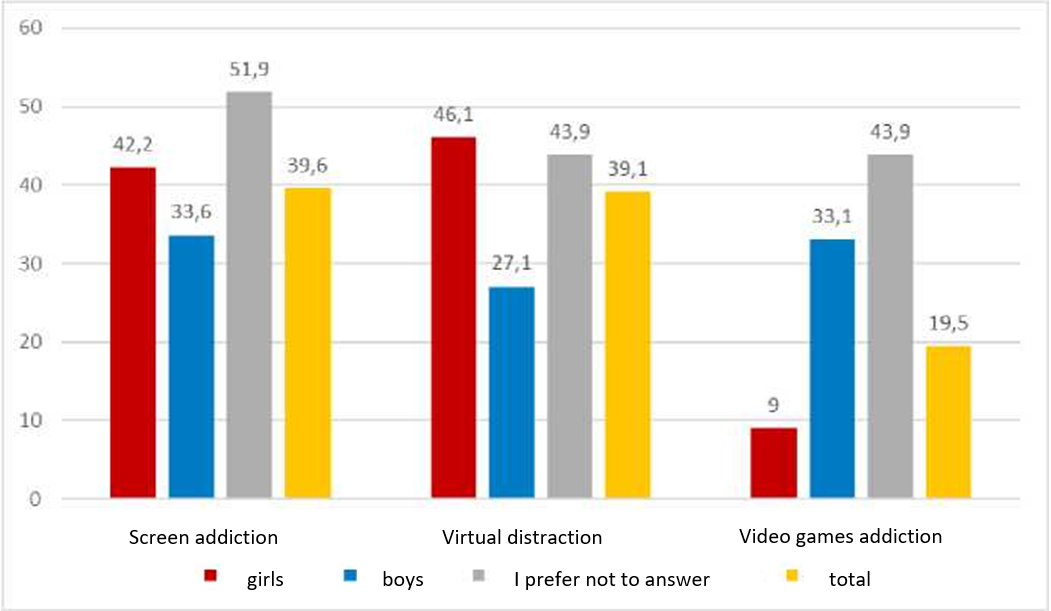
Figure 1. Gender distribution of students with problematic screen behavior
The results from the physical activity survey are as follows.
To the question: "How many times in the last week after school did you do physical activity/training such as some kind of sport, game, dance?", 1,156 students answered. Of these, 330 students (28.5%) did not do any physical activity, 202 students (17.5%) did it once, 2 or 3 times - 306 students (26.5%), 4 or 5 times - 188 students (16.3%), more than 5 times - 130 students (11.2%).
The distribution of answers to the question "How many times in the last week in the evening did you have any physical activity such as some kind of sport, game, dance?" is as follows: 504 students (43.6%) did not have any physical activity, 227 students (19.6%) did it once, 2 or 3 times - 224 students (19.4%), 4 or 5 times - 123 students (10.6%), more than 5 times - 78 students (6.7%).
From the answers to the question "How many times during the last week during the weekend (Saturday and Sunday) did you have any physical activity such as some kind of sport, game, dance?", it was found that 313 students (27%) did not have any physical activity, 360 students (31.1%) did it once, 2 or 3 times - 287 students (24.8%), 4 or 5 times - 100 students (8.7%), more than 5 times - 96 students (8.3%).
То the question "Which of the following statements best describes your activity during the following days?". The results are as follows: during most of their free time, 208 students (18.2%) did not have any activities involving physical exertion; 313 students (27.4%) had such activities 1 - 2 times; often (3 - 4 times) - 307 students (26.9%); quite often (5 - 6 times) in the last week - 186 students (16.3%); very often (7 and more times) - 128 students (11.2%).
The results of the physical activity survey show adequate physical activity (covering the norm of 60 minutes of daily high physical activity) in 32.4% and low physical activity in 63.6% of the students surveyed.
Screen addiction is most strongly associated with the level of physical activity of students. Statistically significantly fewer children with screen addiction meet the physical activity standards - only 120 respondents, or 28.5%, compared to 264, or 40.9% of those without screen addiction (Chi-square 16.912 at p<0.001) (Fig. 2).
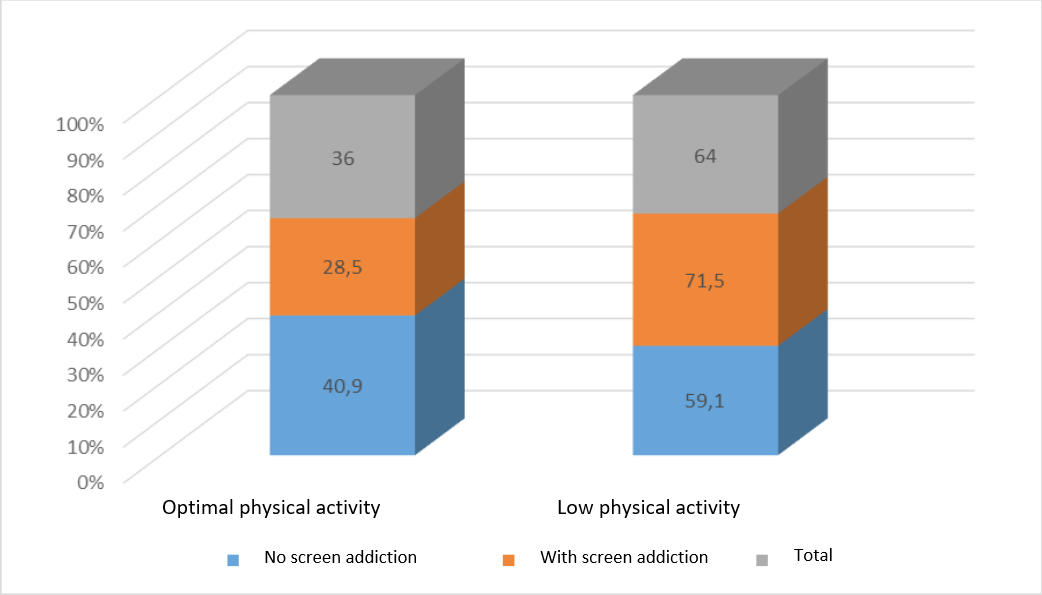
Figure 2. Physical activity and screen addiction (%)
Discussion
Internet sites and sharing channels are increasingly becoming sources of information in our time, which is why the largest number of respondents said that they spend more and more time on the internet and their smartphone.
Many respondents said they were reluctant to be without their smartphone even for a short time, and felt a loss of control when playing video games. It is likely that these adolescents find the virtual world more colorful and interesting, which is why they prefer to stay in it rather than “return” to real life.
There is also a significant number of respondents for whom the smartphone is part of the table setting when they eat, and who also regularly sleep with a smartphone under or next to their pillow, perhaps so as not to miss interesting or important information from the internet.
Some of the surveyed students avoid sharing their level of engagement with the Internet with friends and family, which means that they are aware of their problem of Internet addiction.
Most of the respondents respond to messages and emails at any time of the day or night, which displaces other more useful activities for adolescents in everyday life, hinders the fulfillment of their duties and responsibilities. The behavior of these students probably also indicates their “fear of missing out” on something very interesting that is currently happening on social networks.
A very large number of respondents said that the use of technology reduces their productivity and the opportunity for education and high academic performance. There is evidence that the use of technology during learning reduces understanding. According to the “disseminated attention” hypothesis, adolescents who are used to receiving information from several sources at once cannot filter out irrelevant information and have difficulty concentrating and maintaining their attention on the main academic task. Also, students’ time in front of screen devices can reduce the time they are engaged in academic activities.
A significant portion of the students surveyed responded that they text, email, or surf the web while doing another activity that requires their focused attention and concentration. This confirms the prevalence of multitasking in our daily lives and the unwillingness of young people to focus their attention on one activity they are currently doing.
All these results indicate the formation of an extremely serious problem among adolescents - screen addiction. Screen behavior is associated with a search for newer and more stimulating content, more exciting and more challenging video games in order to provide pleasure, which also leads to addiction. Frequent use of screen devices due to boredom or to relieve stress and anxiety also plays a role in addiction.
The Internet also poses other risks. Some respondents said they had committed illegal acts related to the use of the Internet and their smartphone.
The increase in screen time is leading to a sedentary lifestyle and a decrease in physical activity. The results of the physical activity test show that very few students meet the daily intake recommended by the WHO.
In this regard, some basic recommendations can be formulated for school management: teachers should be informed about the symptoms of Internet addictive behavior; adolescents should be informed about the harmful effects on health of prolonged exposure to screen devices; strategies for counteracting unwanted communication on the Internet should be promoted among adolescents; parents should be made more aware of the connection between screen behavior and physical activity; the role of physical education teachers should be expanded to promote physical activity among adolescents, etc.
Conclusion
Most students who participated in the study lead a sedentary lifestyle and spend a significant amount of time using various screen devices. 63.6% of the surveyed students had a risky level of physical activity, screen addiction was found in 37.9% of the participants, multitasking addiction - in 39.1% of the respondents, and video game addiction - in 19.5%.
Screen addiction is statistically significantly associated with lower physical activity. Statistically significantly fewer children with screen addiction meet physical activity standards.
It confirms both the dependence of young people on electronic devices and the low levels of physical activity, which are below the recommendations of the World Health Organization.
An important goal and priority of the entire society - state institutions and families - should be to fill the free time of adolescents with activities that are useful for their development. The challenge for schools is both to find the balance between the benefits and harms of using electronic devices in the curriculum, and to raise awareness among parents and teachers about the risks of screen addiction and to encourage physical activity among adolescents.
ЛИТЕРАТУРА
Ангелова, Н. (2016). Варненските гимназисти в интернет – полезен престой или вреден навик. Izvestia, Journal of the Union of Scientists – Varna, 2(2016), 146 – 154. https://www.su-varna.org/izdanij/2016/ikonom-2-016/p%20146-154.pdf.
Бончева, Е. (2022). Физическа активност и употреба на електронни устройства при студенти от Медицинския колеж. Варненски медицински форум, 11(Приложение 2), 79 – 84.
Грийнфилд, Д. (2022). Преодоляване на зависимостта от Интернет. Алекс Софт.
Стефанова, С. (2016). Анализ на данни от проведено анкетно проучване по темата: „Интернет зависимост“. https://www.rzi-smolyan.com/OZ/zdr_inf/analiz_internet.pdf
Чонова, Р. (2008). Свободното време на подрастващите в новата информационна среда. Научни трудове на Русенския университет, 47(5.2), 94 – 98. https://conf.uni-ruse.bg/bg/docs/cp/5.2/5.2-16.pdf
Dankovic, G., Stantic, T., Herodek, R., Stamenkovic, S., Stojiljkovic, N., Jelenkovic, B., & Sporiš, G. (2023). Effects of commercially available wearable devices on physical activity promotion and health in children and adolescents: Systematic review. Applied Sciences, 13(12). https://www.mdpi.com/2076-3417/13/12/7194
Jourdren, M., Bucaille, A., & Ropars, J. (2023). The impact of screen exposure on attention abilities in young children: A systematic review. Pediatric Neurology, 142, 76 – 88.
Kerner, C., & Goodyear, V. (2017). The motivational impact of wearable healthy lifestyle technologies: A self-determination perspective on Fitbits with adolescents. American Journal of Health Education, 48(5), 287 – 297. https://doi.org/10.1080/19325037.2017.1343161
Melkevik, O., Torsheim, T., Iannotti, R. J., & Wold, B. (2010). Is spending time in screen-based sedentary behaviors associated with less physical activity: A cross-national investigation. The International Journal of Behavioral Nutrition and Physical Activity, 7(46). https://doi.org/10.1186/1479-5868-7-46
Prescott, J., Lang, M., Ridgers, N., Kok, G., Wark, P., Böhm, B., Karwiese, S., Böhm, H., & Oberhoffer, R. (2019). Effects of mobile health including wearable activity trackers to increase physical activity outcomes among healthy children and adolescents: Systematic review. JMIR mHealth and uHealth, 7(4). https://doi.org/10.2196/mhealth.8298
Santos, L., & Reeve, R. (2020). Screen time and youth health issues. International Journal of E-Learning & Distance Education, 35(1).
Schuur, W., Baumgartner, S., Sumter, S., & Valkenburg, P. (2015). The consequences of media multitasking for youth. Computers in Human Behavior, 53, 204 – 215.
Vedechkina, M., & Borgonovi, F. (2021). A review of evidence on the role of digital technology in shaping attention and cognitive control in children. Frontiers in Psychology, Educational Psychology, 12, 611155. https://doi.org/10.3389/fpsyg.2021.611155.
REFERENCES
Angelova, N. (2016). Varna High School Students on the Internet – Helpful Time Spent or Harmful Habit?. Izvestia Journal of the Union of Scientists – Varna. Economic Sciences Series, Union of Scientists – Varna, Economic Sciences Section, issue 2, 146 – 154. https://www.su-varna.org/izdanij/2016/ikonom-2-016/p%20146-154.pdf
Boncheva, E. (2022). Fizicheska aktivnost i upotreba na elektronni ustroystva pri studenti ot Meditsinskiya kolezh. Varnenski meditsinski forum, 11(prilozhenie 2), 79 – 84.
Chonova, R. (2008). Svobodnoto vreme na podrastvashtite v novata informatsionna sreda. Nauchni trudove na rusenskiya universitet, 47(5.2), 94 – 98. https://conf.uni-ruse.bg/bg/docs/cp/5.2/5.2-16.pdf
Dankovic, G., Stantic, T., Herodek, R., Stamenkovic, S., Stojiljkovic, N., Jelenkovic, B., & Sporiš, G. (2023). Effects of commercially available wearable devices on physical activity promotion and health in children and adolescents: Systematic review. Applied Sciences, 13(12). https://www.mdpi.com/2076-3417/13/12/7194
Jourdren, M., Bucaille, A., & Ropars, J. (2023). The impact of screen exposure on attention abilities in young children: A systematic review. Pediatric Neurology, 142, 76 – 88.
Griynfild, D. (2022). Preodolyavane na zavisimostta ot Internet. Aleks Soft.
Kerner, C., & Goodyear, V. (2017). The motivational impact of wearable healthy lifestyle technologies: A self-determination perspective on Fitbits with adolescents. American Journal of Health Education, 48(5), 287 – 297. https://doi.org/10.1080/19325037.2017.1343161
Melkevik, O., Torsheim, T., Iannotti, R. J., & Wold, B. (2010). Is spending time in screen-based sedentary behaviors associated with less physical activity: A cross national investigation. The International Journal of Behavioral Nutrition and Physical Activity, 7(6). https://doi.org/10.1186/1479-5868-7-46
Prescott, J., Lang, M., Ridgers, N., Kok, G., Wark, P., Böhm, B., Karwiese, S., Böhm, H., & Oberhoffer, R. (2019). Effects of mobile health including wearable activity trackers to increase physical activity outcomes among healthy children and adolescents: Systematic review. JMIR mHealth and uHealth, 7(4). https://doi.org/10.2196/mhealth.8298
Santos, L., & Reeve, R. (2020). Screen time and youth health issues. International Journal of E-Learning & Distance Education, 35(1).
Schuur, W., Baumgartner, S., Sumter, S., & Valkenburg, P. (2015). The consequences of media multitasking for youth. Computers in Human Behavior, 53, 204 – 215.
Stefanova, S. (2016). Analiz na danni ot provedeno anketno prouchvane po temata: „Internet zavisimost“. https://www.rzi-smolyan.com/OZ/zdr_inf/analiz_internet.pdf
Vedechkina, M., & Borgonovi, F. (2021). A review of evidence on the role of digital technology in shaping attention and cognitive control in children. Frontiers in Psychology, Educational Psychology, 12, 611155. https://doi.org/10.3389/fpsyg.2021.611155
SCREEN BEHAVIOUR AND PHYSICAL ACTIVITY AMONG 8th – 12th GRADE STUDENTS FROM STARA ZAGORA AND THE REGION
Abstract. Technology addiction is a global issue. The increase of screen time leads to a sedentary lifestyle among young people.
The objective of this study is to identify the characteristics of screen behaviour and the level of physical activity among 8th to 12th grade students from Stara Zagora and the region. A group of 1257 students were surveyed between February and March 2024. A personalised survey, consisting of three standardised screen behaviour tests and a standard physical activity questionnaire, was conducted. The results were processed using IBM SPSS Statistic_Base-v.25.
A low level of activity was indicated by 63.6 % of students, screen addiction by 37.9%, multitasking addiction by 39.1% and video game addiction – 19.5%. Screen addiction is found to have a statistically significant correlation with lower physical activity.
It is important to raise awareness of the screen addiction risk among parents and teachers and to promote physical activity among adolescents.
Keywords: screen behaviour; physical activity; screen addiction
Milena Goranova
Regional Health Inspectorate of Stara Zagora
Dr. Teodora Dimitrova, Prof.
WoS ResearcherID: AFV-0629-2022
Dr. Tsvetelina Tarpomanova, Assist. Prof.
WoS ResearcherID: AAD-5298-2019
Medical College
Medical University
55, Marin Drinov St.
9002 Varma, Bulgaria
E-mail: tsvetelina.tarpomanova@mu-varna.bg
>> Download the article as a PDF file <<