


Nikolay Tonchev
Todor Kableshkov Transport University, Sofia, Bulgaria
https://doi.org/10.53656/isct-2025.27

Pages 315-323
Abstract. This study investigates hydrogen storage intermetallic alloys capable of reversibly absorbing and releasing hydrogen in the solid state. The focus is on optimizing the balance between hydrogenation/dehydrogenation kinetics and storage capacity. The effect of zirconium (Zr) substitution on the phase structure and functional properties of two base alloys—Ti₅₀V₂₅Cr₂₅ and Ti₂CrV—is analyzed. Initially exhibiting a single-phase BCC structure, these alloys develop a dual-phase structure (BCC + C15 Laves) upon Zr addition. Increasing Zr content enhances the fraction of the C15 phase, leading to improved kinetics and easier activation at room temperature, but also to a reduction in maximum hydrogen storage capacity. The study highlights the importance of phase evolution and structural modifications in achieving enhanced functional performance of hydrogen storage alloys.
Keywords: hydrogen storage alloys; zirconium; intermetallic compounds; hydrogenation kinetics; storage capacity, room-temperature activation
- Introduction
Hydrogen storage is essential for achieving a sustainable energy transition and for integrating hydrogen as a clean energy carrier. Current research considers four main storage approaches, each of which has its own advantages and limitations, as well as its own potential for scaling up.
The most common method is gas compression [1, 2], whereby hydrogen is stored at high pressure (350 – 700 bar) in dedicated tanks. Despite its widespread use, particularly in transport, this method incurs high energy costs for compression and poses safety risks due to the high pressure. Additionally, it has limited volumetric efficiency.
Cryogenic storage involves liquefying hydrogen at extremely low temperatures (-253°C), which increases its energy density to ~70 g/L compared to its gaseous form. Significant energy losses from evaporation (up to 1% per day) and high capital costs for cryogenic tanks and insulation are the main challenges here [3].
Against this background, solid-state storage using metal hydrides and intermetallic alloys emerges as a promising alternative [4]. It offers high safety standards, good volumetric efficiency, and the ability to operate at moderate temperatures and pressures. Of the various approaches to hydrogen storage, solid hydrides are notable for their high volumetric density, safety, and potential for reversible operation under moderate conditions. Examples include metallic hydrides such as LaNi₅ and complex hydrides such as MgH₂ and NaAlH₄. However, these often suffer from slow kinetics and high dehydrogenation temperatures. Recent research on high-entropy hydrides (HEH) has revealed new ways to overcome these limitations, but challenges remain regarding the stability and cost-effectiveness of the materials.
In this context, the present study aims to analyse the role of zirconium substitution in the evolution of intermetallic hydrogen storage alloys, emphasising its effects on phase structure, hydrogenation kinetics, and storage capacity. It traces how the addition of zirconium contributes to the formation of new crystalline phases, such as C15 Laves, and how it facilitates activation at room temperature and improves the functional characteristics of the alloys. The study also presents a systematic approach to designing multi-element alloys through microstructural engineering, with the aim of developing robust, efficient, and scalable solutions for solid-state hydrogen storage.
- Evolution and features of hydrogen storage alloys
The development of these alloys follows a consistent evolutionary logic, with each new generation of materials overcoming the limitations of its predecessors. Figure 1 illustrates the technological advances and milestones in this field.
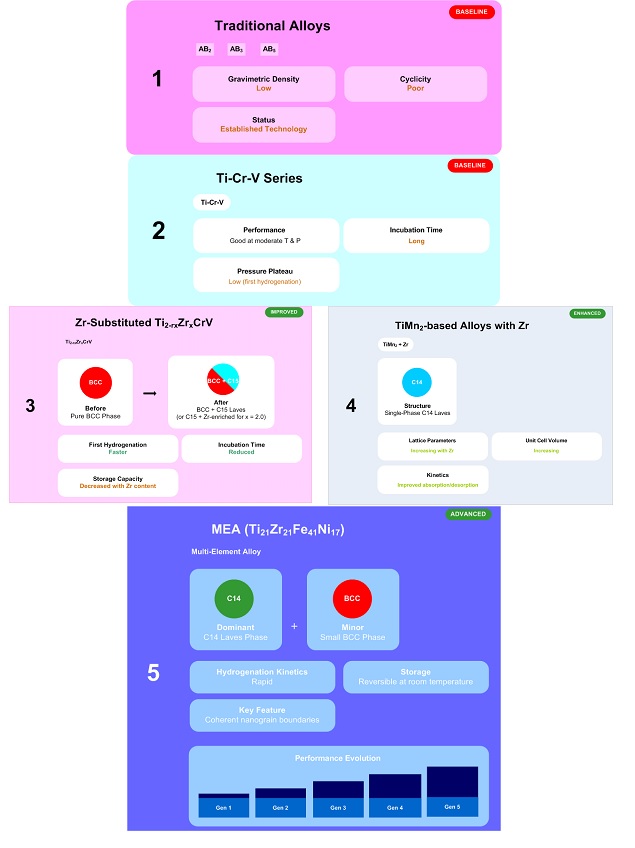
Figure 1. Milestones in technological advances in hydrogen storage alloys
Traditional hydrogen-storing alloys of the AB₂, AB₃ and AB₅ types, which were developed between the 1960s and 1980s, formed the basis for modern designs of such materials. However, these alloys have limited hydrogen storage capacity and rapidly degrade in performance under cyclic operation (hydrogen loading and release). Research into AB₂ and AB₃ type alloys intensified in the late 1970s and 1980s [5, 6].
Ti-Cr-V series alloys represent a significant improvement on previous generations of hydrogen storage materials, demonstrating better performance at moderate temperatures and pressures. However, they still suffer from long incubation times before the first hydrogenation process and the presence of a low-pressure plateau during the initial absorption of hydrogen. These alloys emerged in the 1980s as an alternative to rare earth systems, undergoing continuous development and optimisation throughout the 1990s and 2000s [7].
Ti-Cr-V systems, along with alloys such as TiMn₂, remain the focus of intensive research aimed at enhancing kinetics and cyclic stability. Since 2020, there has been increased scientific interest and progress in this area [8].
Ti-Cr-V alloys innovate the microstructure by transitioning from a single-phase body-centred cubic (BCC) structure to a two-phase system including a BCC and a C15 Laves phase. At higher zirconium content (x = 2.0), an additional Zr-enriched phase is present. Zirconium substitution occurs in this generation of Ti₂₋ₓZrₓCrV alloys, which is the subject of the present study [9].
The addition of zirconium resulted in a significant improvement in performance, expressed by faster initial hydrogenation and substantially reduced incubation time. However, this requires a trade-off – as the Zr content increases, there is a decrease in hydrogen storage capacity. The microstructure proves to be a crucial factor for the absorption efficiency: substitution with Zr leads to the formation of a C15 Laves phase alongside the BCC structure, which facilitates hydrogen diffusion and shortens the incubation time. For example, the time to reach 90% of the maximum capacity can be reduced from almost 3000 seconds to only 120 seconds at higher Zr content [10].
Additionally, nanocrystalline and fine-grained microstructures significantly accelerate the absorption process. The introduction of zirconium initiated the development of multi-element alloys (MEA), which are the focus of modern research. In the period 2024 – 2025, new alloy systems with improved microstructure and kinetics are reported [11, 12]. Although systematic studies on zirconium substitution and microstructural analysis started around 2010, it is the recent years that have marked significant progress in this direction.
The addition of zirconium resulted in a significant improvement in performance, expressed by faster initial hydrogenation and substantially reduced incubation time. However, this requires a trade-off – as the Zr content increases, there is a decrease in hydrogen storage capacity. The microstructure proves to be a crucial factor for the absorption efficiency: substitution with Zr leads to the formation of a C15 Laves phase alongside the BCC structure, which facilitates hydrogen diffusion and shortens the incubation time. For example, the time to reach 90% of the maximum capacity can be reduced from almost 3000 seconds to only 120 seconds at higher Zr content [10].
Additionally, nanocrystalline and fine-grained microstructures significantly accelerate the absorption process. The introduction of zirconium initiated the development of multi-element alloys (MEA), which are the focus of modern research. In the period 2024 – 2025, new alloy systems with improved microstructure and kinetics are reported [11, 12]. Although systematic studies on zirconium substitution and microstructural analysis started around 2010, it is the recent years that have marked significant progress in this direction.
Fourth-generation TiMn₂-based alloys have been known since the 1970s, but their active development through the incorporation of zirconium (Zr) to create multicomponent systems only began after the year 2000 and continues to this day [13]. These alloys are characterised by a single-phase C14 Laves structure. The addition of Zr increases the lattice parameters and unit cell volume. This structural expansion improves the kinetics of hydrogen absorption and desorption, leading to better practical storage efficiency. The main challenges with these alloys relate to synthesis complexity, phase composition control, and potential capacity reduction at high zirconium content.
The latest generation of high-performance alloys for hydrogen storage includes nanostructured multi-element alloys (MEAs), such as Ti₂₁Zr₂₁Fe₄₁Ni₁₇. These alloys belong to the intermediate-entropy and multi-element class of systems, which are dominated by the C14 Laves phase and contain a small amount of the BCC phase. These alloys are characterised by rapid hydrogenation kinetics and the ability to reversibly store hydrogen at room temperature. They also have coherent nanograin boundaries that facilitate efficient hydrogen diffusion.
Despite their promising properties, these alloys have two main drawbacks: the complexity and high cost of synthesis, and the fact that their industrial scalability has not yet been fully demonstrated.
High-entropy alloys (HEAs) with a nanocrystalline structure exhibit extremely fast hydrogenation kinetics, reaching 90% saturation in around 100 seconds at room temperature – approximately five times faster than conventional body-centred cubic (BCC) alloys [14]. This is due to the high density of grain boundaries and defects in the nanostructure, which provide multiple diffusion pathways and active sites for hydrogen nucleation. Further improvements can be achieved by introducing defects or refining the microstructure using methods such as ball milling, or by adding catalysts. For instance, TiFe-based alloys treated with transition metals (V, Ni and Pd) demonstrate a notable decrease in particle size, an increased surface area, and the formation of new catalytically active centres. This results in accelerated hydrogen absorption. Some of these composites reached over 96% saturation in only 100 seconds [15].
In conclusion, a review of the development of hydrogen storage alloys reveals a clear evolution from classical AB₅ and Ti-Cr-V systems to modern, multi-element, high-entropy alloys with an advanced microstructure. Modern TiMn₂ alloys containing Zr, as well as MEA/HEA systems, demonstrate high energy efficiency during absorption and desorption cycles thanks to their fast kinetics, low activation energy and excellent cyclic stability.
- Optimisation of water-scavenging alloys and the effect of zirconium addition.
The main objective in developing new hydrogen-conserving alloys is to increase their energy efficiency during absorption and desorption cycles. This includes accelerating kinetics, reducing activation energy, and ensuring stability during repeated use.
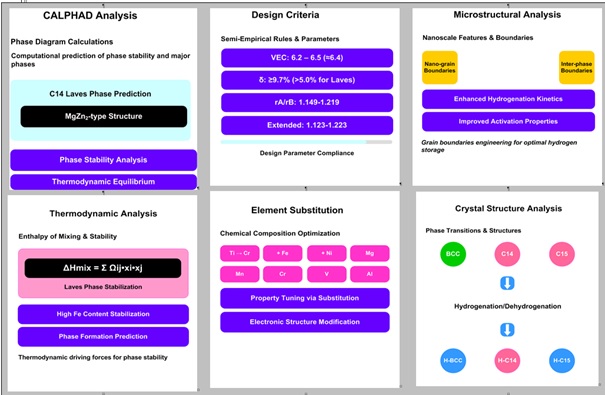
Figure 2. Process flow diagram for designing a hydrogen-containing alloy
Fig. 2 presents a workflow diagram of the design of such alloys, where each step is directed towards a specific goal.
The optimisation process begins with the application of semi-empirical criteria, such as valence electron concentration (VEC), atomic size mismatch (δ), and radius ratio. The phase stability of the alloys is then predicted using thermodynamic calculations and the CALPHAD method. Particular attention is paid to the microstructure, since nanograin structures and interfacial boundaries can greatly enhance hydrogenation kinetics. The composition of the alloys is tailored to the specific application by monitoring the effect of replacing titanium (Ti) with zirconium (Zr) or adding iron (Fe) or nickel (Ni). The enthalpy of mixing (ΔH_(mix)) is also employed to evaluate thermodynamic stability, particularly for C15 Laves phases that are rich in iron (Fe).
One of the most striking examples of effective optimisation is the addition of zirconium (Zr) to Ti₅₀V₂₅Cr₂₅ and Ti₂CrV alloys. Although these alloys have good potential, they suffer from slow activation and low initial kinetics, which limits their application, particularly in transport. Adding Zr creates a second crystalline C15 Laves phase, improving kinetics and facilitating activation at room temperature [10, 11].
For Ti₂₀₋ₓZrₓCrV alloys with x = 0.5 – 2.0, significant improvements in activatability are observed: absorption begins immediately at room temperature and pressure of around 20 atmospheres. With the lowest Zr content (x = 0.5), a short incubation period is evident; however, at higher values (x ≥ 1.0), this disappears completely. This is a significant advantage over the pure Ti₂CrV alloy, which requires preheating to 400 °C for activation [10].
Conversely, a decrease in hydrogen storage capacity is observed as Zr content increases, from 4.4 wt.% at x = 0 to 2.3 wt.% at x = 2.0. This is due to the larger atomic mass of zirconium and the lower hydrogen-binding capacity of the C15 phase. A similar trend is observed for Ti₅₀₋ₓV₂₅Cr₂₅Zrₓ alloys, where the capacity initially increases to 2.7 wt% at x = 7, but then decreases to 2.27 wt% at x = 9 due to the dominance of the C15 phase [10].
Furthermore, adding Zr improves desorption kinetics, shortening the time taken to reach equilibrium upon hydrogen release and increasing the desorption ratio (e.g. up to 47% for Ti₄₃V₂₅Cr₂₅Zr₇ versus 43% for an alloy without Zr) [10].
In summary, zirconium substitution has been shown to be an effective method of optimising hydrogen-conserving alloys. While it improves kinetics and facilitates activation, careful balancing with respect to storage capacity is required. This highlights the need for a systematic approach to designing new alloys that combines microstructural control, thermodynamic stability, and functional efficiency.
Conclusion
Zirconium substitution and nanostructuring are emerging as key strategies to increase efficiency, but they require careful balancing to avoid a significant reduction in storage capacity. Optimising these parameters in the latest generation of alloys lays the foundation for developing reliable, safe, and scalable solid-state hydrogen storage solutions that can meet the demands of energy applications. From here, more important conclusions can be drawn Zirconium (Zr) significantly improves hydrogen storage efficiency by tailoring phase composition, lattice parameters, and binding energies.
- Moderate additions of zirconium (Zr) (5 – 15 at%) optimise the kinetics, thermodynamics, and cycle stability of Zr-modified alloys, making them superior to conventional systems such as LaNi₅ and TiFe.
- However, excessive Zr reduces storage capacity, although it remains useful for applications that prioritise rapid hydrogen cycling over maximum storage.
- Zirconium alloying influences phase transformations during hydrogen uptake by stabilising secondary phases (Laves phases/hydrides), accelerating kinetics through refined microstructures and modulating thermodynamic stability.
- The Ti₄₃V₂₅Cr₂₅Zr₇ alloy is an example of optimum zirconia content, demonstrating rapid hydrogen uptake (230 s) while maintaining cyclic stability.
- In nuclear alloys, zirconium (Zr) plays a dual role in hydride formation and α/β phase shifts, highlighting its impact on performance and degradation.
REFERENCES
[1] RIVARD, E., TRUDEAU, M., ZAGHIB, K., Hydrogen Storage for Mobility: A Review. Materials (Basel). 2019 Jun 19;12(12):1973. doi: 10.3390/ma12121973. PMID: 31248099; PMCID: PMC6630991.
[2] ABDIN, Z., TANG, C., LIU, Y., CATCHPOLE, K., Large-Scale Stationary Hydrogen Storage Via Liquid Organic Hydrogen Carriers. Iscience. 2021 Aug 9;24(9):102966. doi: 10.1016/j.isci.2021.102966. PMID: 34466789; PMCID: PMC8382998.
[3] RAMPAI, M., MTSHALI, C., SEROKA, N., KHOTSENG, L. Hydrogen Production, Storage, and Transportation: Recent Advances. RSC Adv. 2024 Feb 23;14(10):6699-6718. doi: 10.1039/d3ra08305e. PMID: 38405074; PMCID: PMC10884891.
[4] SU, J., LIU. J.. Catalysis Process Development for Hydrogen Storage/Generation With LOHCS. Top Catal. 2021;64(7-8):469. doi: 10.1007/s11244-021-01466-5. Epub 2021 Jul 2. PMID: 34230789; PMCID: PMC8250554.
[5] VOLODIN, A., DENYS, R., WAN, C., WIJAYANTI, I., SUWARNO, TARASOV, B., ANTONOV, V., YARTYS, V., Study of Hydrogen Storage and Electrochemical Properties of AB2-Type 15Zr0.85La0.03Ni1.2Mn0.7V0.12Fe0.12 Alloy, Journal of Alloys and Compounds, Volume 793, 2019, pages 564 – 575, ISSN 0925-8388, https://doi.org/10.1016/j.jallcom.2019.03.134.
[6] KOHNO, T., YOSHIDA, H., KANDA, M., Hydrogen Storage Properties of La(Ni0.9M0.1)3 Alloys, Journal of Alloys and Compounds, Volume 363, Issues 1 – 2, 2004, pages 254 – 257, ISSN 0925-8388, https://doi.org/10.1016/s0925-8388(03)00429-8.
[7] KAZAKOV, A., BLINOV, D., BODIKOV, V., MITROKHIN, S., VOLODIN, A., Hydrogen Storage and Electrochemical Properties of Annealed Low-Co AB5 Type Intermetallic Compounds, International Journal of Hydrogen Energy, Volume 46, Issue 25, 2021, pages 13622 – 13631, ISSN 0360-3199, https://doi.org/10.1016/j.ijhydene.2020.12.071.
[8] LIU, J., SUN, L., YANG, J., GUO, D., CHEN, D., YANG, L., XIAO, P., Ti-Mn Hydrogen Storage Alloys: From Properties to Applications. RSC Adv. 2022 Dec 14;12(55):35744-35755. doi: 10.1039/d2ra07301c. PMID: 36545097; PMCID: PMC9748650.
[9] BANERJEE, S., RUZ, P., KUMAR, A., Evaluation of Ti₂CrV Alloy for Solid State Hydrogen Storage Applications. BARC Newsletter, Jan.–Feb. 2020, p. 31. ISSN 0971-3559.
[10] ZENG, Q., WANG, F., LI, Z., RONG, M., WANG, J., WANG, Z., Influence of ZR Addition on the Microstructure and Hydrogenation Kinetics of Ti50-xV25Cr25Zrx (x = 0, 5, 7, and 9) Alloys. Materials (Basel). 2024 Mar 16;17(6):1366. doi: 10.3390/ma17061366. PMID: 38541521; PMCID: PMC10972261.
[11] MONSALVE, D., ULATE-KOLITSKY, E, MARTÍNEZ-AMARIZ, A.-D,, HUOT, J., Effects of TI Substitution By Zr, on the Microstructure and Hydrogen Storage Properties of Ti2-xZrxCrV (x = 0.5, 1, 1.5, 2) Alloys. Heliyon. 2024 Aug 3;10(15):e35739. doi: 10.1016/j.heliyon.2024.e35739. PMID: 39170160; PMCID: PMC11336814.
[12] ANDRADE, G., EDALATI, P., DANGWAL, S., EDALATI, K., FLORIANO, R., Microstructural Characterization and Hydrogen Storage Properties at Room Temperature of TI21ZR21FE41NI17 Medium Entropy Alloy – appl. Energy mater.,2025, vol. 8, 4, doi: 10.1021/acsaem.4c02468.
[13] RUI, X., CHENG, T., LI, C., YANG, X., RONG, J., Properties of Ti-Based Hydrogen Storage Alloy, Journal of Power And Energy Engineering, vol.12 No.3, 2024.
[14] LUO, L., HAN, H., FENG, D,, LV, W., CHEN, L., LI, L., ZHAI, T., LIU, S., SUN, S., LI, Y., PEI, W., CUI, J., LI, Y., Nanocrystalline High Entropy Alloys With Ultrafast Kinetics and High Storage Capacity for Large-Scale Room-Temperature-Applicable Hydrogen Storage, Renewables, 2(1), 2024, pp. 24 – 41, ISSN 2751-2401 (Online). doi 10.1002/rew2.15.
[15] HAN, Z., ZHAI, T., YUAN, Z., SUN, H., LI, T., ZHANG, L., ZHENG, C., ZHANG, Y., Influence on Microstructure and Hydrogen Storage Properties of Tife-based composites with transition metals v, ni, and pd by mechanical milling, SSRN Electronic Journal, 2024, ISSN 1556-5068, doi: 10.2139/ssrn.4803425.
Prof. Nikolay Tontchev, DSc.
ORCID iD: (0000-0002-9110-2488)
Department of Machine Elements and Chemistry
Todor Kableshkov University of Transport
158, Geo Milev St., 1574 Sofia, Bulgaria
E-mail: tontchev@vtu.bg

Свързани статии:
 The Place and Role of AI in Transport Systems Management
Implementation of Sustainable Indicators for Effective Evaluation and Monitoring of Transport Projects
Job Displacement Due to Favoritism: an Analysis of Challenges for the Employment
Project-based Approach to Risk Management of Transport Company Information Systems
The Place and Role of AI in Transport Systems Management
Implementation of Sustainable Indicators for Effective Evaluation and Monitoring of Transport Projects
Job Displacement Due to Favoritism: an Analysis of Challenges for the Employment
Project-based Approach to Risk Management of Transport Company Information Systems