

Stefan Yordanov, PhD student
Corresponding Author
ORCID iD: 0009-0002-8223-016X
Theory and Methodology of Physical Education Department
St. Cyril and St. Methodius of Veliko Tarnovo
Veliko Tarnovo, Bulgaria
Е-mail: stefan98yordanov@gmail.com
Prof. Dr. Stefaniya Belomazheva-Dimitrova
ORCID iD: 0000-0003-1718-024X
Theory and Methodology of Physical Education Department
St. Cyril and St. Methodius of Veliko Tarnovo
Veliko Tarnovo, Bulgaria
Е-mail: stefania@ts.uni-vt.bg
https://doi.org/10.53656/ctpes-2026.SY

Pages 110-119
Abstract. Orienteering is a sport that integrates physical endurance, spatial awareness, and rapid decision-making in diverse environments. This paper explores the communicative dimensions of orienteering, focusing on how the sport builds interpersonal connections, promotes positive attitudes, and enhances psychological resilience. The study is based on a structured survey conducted among 280 participants with varying experience levels in orienteering. The collected data were statistically processed using a one-dimensional frequency distribution and subjected to graphical analysis. The results reveal that orienteering not only strengthens social bonds and friendships but also encourages emotional balance, stress reduction, and cognitive engagement. Furthermore, the findings highlight the importance of media visibility and public events in promoting the sport and expanding its social impact. Overall, orienteering emerges as an activity that unites people through shared experiences, communication, and a collective sense of belonging within the sporting community.
Keywords: orienteering; competitors; communication
- Introduction
Orienteering is a sport that integrates physical endurance, mental concentration, and quick decision-making in various natural and urban environment. Recent data from elite sprint competitions further highlight that performance in orienteering is due to the continuous interplay between physical exertion, cognitive processing, and rapid decision-making under competitive pressure, highlighting the multidimensional nature of the sport (Sirakov, 2026a). In modern settings, orienteering becoming a mean of social interaction and community building. It unites individuals with different life experience and professional orientation, encouraging active communication and the creation of lasting friendships (Shandurkova, 2021a). Specialized orienteering training for students results in increased sense of belonging and communication between participants (Vladimirov, 2025a; Vladimirov, 2025b). This is exemplified by the sustained success of university teams, where long-term athlete engagement fosters a deeply rooted culture and a stable social environment within the sport (Sirakov, 2025). Orienteering classes for adolescents and adults contribute to improving their psycho-emotional and psycho-physical state, thus increasing the quality of life and personal satisfaction (Galan et al., 2016: Blagii et al., 2018; Minoiu et al., 2024). This communicative function of the sport makes it a valuable tool for personal development, social adaptation, and building a positive sport culture.
Modern technologies are entirely transforming the sport, making it more accessible, spectacular, and analytical. The introduction of GPS tracking and specialized software not only revolutionizes the training process, allowing for detailed analysis of route selection and technical errors, but also significantly increases viewer interest due to the possibilities for live coverage of competitions. Thus, orienteering is transformed from an isolated sport into an attractive media product contributing to its popularization and recruitment of new followers (Shandurkova, 2021b; Sirakov & Belomazheva-Dimitrova, 2021). In this context of constant improvement, studies among the elite orienteering competitors confirmed that high physical fitness remains a fundamental prerequisite for quality technical performance under load (Sirakov & Belomazheva-Dimitrova, 2018; Minoiu & Minoiu, 2019; Pedev et al., 2022).
In addition to technological progress, orienteering turns out to be a powerful platform for personal development. Systematic training, especially in technical aspects and map work, has a positive impact on mental functions and decision-making ability under stress (Zsheliaskova-Koynova, 1993; Robazza et al., 2018; Batista et al, 2021). Recent studies also show that elite orienteers use individualized neuromuscular strategies to cope with competitive stress, demonstrating the adaptive nature of performance management in this sport (Sirakov, 2026b). The unique synthesis between intense physical and mental activity makes orienteering not only a competitive discipline, but also a valuable tool in education contributing to the development of life skills among young people and students (Vaskan et al., 2019; Sirakov & Ivanova, 2023; Baytaş et al., 2024).
The aim of this study is to research the communicative aspects of orienteering through the analysis of empirical data from a survey among active competitors.
The survey examines how orienteering promotes social interaction, friendship building, and positive attitudes among participants, as well as how communication and public visibility contribute to the popularity of the sport.
- Methods
The study was conducted through a structured online survey among 280 active orienteers – professional and amateur competitors of different age groups. The survey included 16 questions that covered demographic characteristics, social and communicative aspects of the sport, motivation, and perceived effects on mental and emotional state.
The data were processed quantitatively by using a one-dimensional frequency distribution and presented through graphs to illustrate the main trends in socio-communicative relationships in the community of orienteers.
- Results and Discussion
The study confirmed that orienteering is characterized by balanced participation between the sexes. 55,7% of the respondents were males and 44,3% were females. The distribution of the answers and the small difference of 10 percent between males and females shows emphasizes sex equality in the sport and demonstrates that orienteering offers equal opportunities for development and social engagement to all participants.
The age distribution of the respondents shows that orienteering has a wide social reach. The largest share (41,8%) was that of the participants aged over 45, followed by young people under 18 and between 18 and 24 (14,3% each) (Fig. 1). These data show that the sport attracts representatives of different generations and stimulates intergenerational interaction and exchange of experience. Also, the massive representatives of veterans (over 45) highlight that orienteering is highly popular as a lifelong sport and hobby. At the same time, a trend towards stable performance by young groups is visible. This indicates a steady influx of young talent and effective development programs within sports clubs.
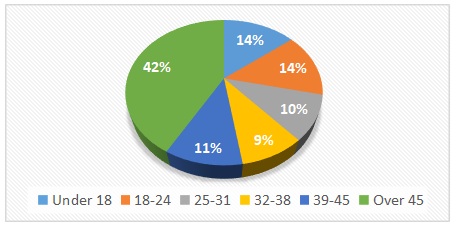
Figure 1. Distribution of respondents by age
In terms of sports experience, 78% of the participants were involved in orienteering for more than five years (Fig. 2). The predominant share of highly qualified competitors shows that orienteering has high levels of persistence in the sport. This demographic profile is typical of a social sport, in which active members maintain their physical fitness and social connections for decades. This shows that the sport of orienteering contributes to creating long-term relationships in the community.
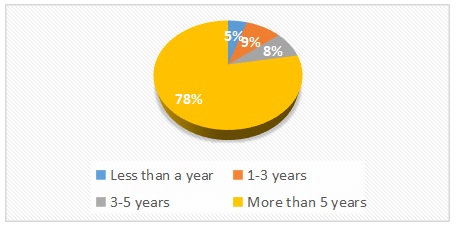
Figure 2. Distribution of respondents by sports experience (in years)
The social climate in orienteering is immensely positive. 87,5% of the respondents described the relationships between competitors as friendly, and only a small part of respondents defined them as competitive (7%) or neutral (6%) (Fig. 3). This result confirms that, despite its competitive nature, orienteering develops a culture of mutual assistance and respect. Often considered an individual discipline, orienteering also leads to the building of lasting relationships between competitors and even friendships. In the process, relationships are built, and experience, knowledge, and strategies are exchanged, thus creating prerequisites for cooperation and mutual assistance in the sport community.
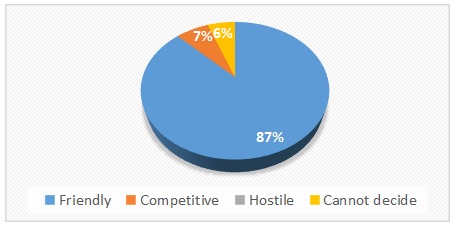
Figure 3. Relationships between orienteering competitors
A similar trend was observed in the attitudes of the participants to other competitors – 95,4% responded that they perceived other orienteers positively (Fig. 4). This emphasizes that the communicative ties built in the community go beyond purely sport relationships and contribute to a positive social identity among orienteers. Communication in orienteering is not just verbal, but also includes non-verbal elements: expressions of trust, respect, and shared emotions in a competitive or training environment. Thus, the sport develops social skills, such as tolerance, empathy, and responsibility that go beyond the sports field.
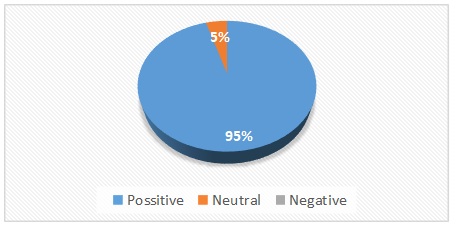
Figure 4. Attitude towards other orienteers
The data from the next statement show that orienteering is a significant source of friendships and social connections – 98,9% of the respondents confirmed that they had made friends thanks to the sport (Fig. 5). This confirms the understanding of orienteering as a communicative platform that unites people with similar values and interests.
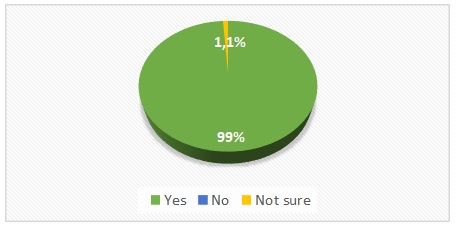
Figure 5. Orienteering contributes to making friends
The responses related to the impact of the sport on mental health show a high level of perceived benefits, too. 79,3% of the respondents believe that orienteering increased the stability of mental processes (attention, concentration, memory), 72,5% indicated that it improved mood, and 63,2% – that it reduces stress (Fig. 6). These results corresponds to data from international studies (Galan et al., 2016; Minoiu, et al., 2024), according to which orienteering has a positive effect on the mental health and emotional balance of athletes. Furthermore, research results show that regular participation in orienteering has been associated with improved regulation and lower levels of physiological stress, further confirming participants’ perceptions of better emotional balance and stress reduction (Minoiu et al., 2026).
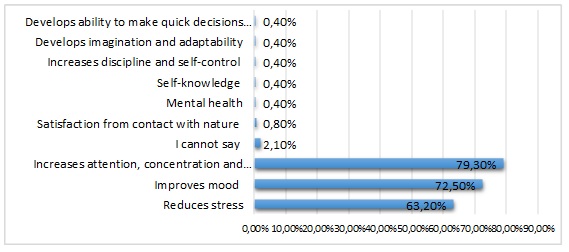
Figure 6. Impact of orienteering on mental and physical fitness (more than one statement is possible)
The motivation for participating in orienteering competitions is complex. The most frequently cited motive was physical activity and movement (83,6%), followed by adventure and challenge (66,1%), while 45,7% sought social contacts and 44,6% developed skills (Fig. 7). These results show that orienteering combines sporting, emotional, and social motivation, which makes it particularly stable over time
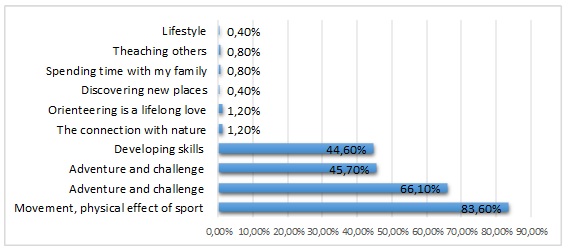
Figure 7. Main motives for practicing orienteering (more than one statement is possible)
As regards promoting the sport, the respondents identified media coverage (77,9%) and open training and events (76,1%) as the most important factors (Fig. 8). These were followed by youth programs (62,9%), friends and acquaintances (48,2%), and family environment (32,5%). The data show that orienteering relies on both formal communication channels (media, institutions) and informal social connections that contribute to its spread and popularity.
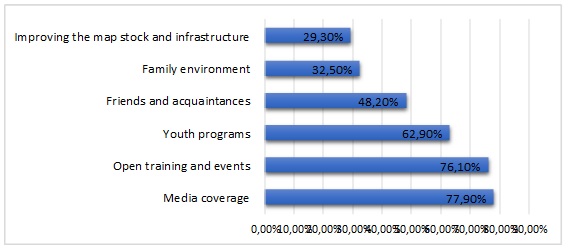
Figure 8. What is important for promoting orienteering? (more than one answer is possible)
- Conclusion
The results of the study undoubtedly show that orienteering has prominent communicative and social dimensions that go beyond the framework of sport activity. The sport not only provides an opportunity for physical performance, but also functions as a social environment for exchange, support, and friendship. The high levels of positive relationships, the stable participation, and long-term commitment of orienteers testify to an established culture of community, mutual assistance, and equality.
Sport orienteering attracts representatives of different generations and stimulates intergenerational interaction and exchange of experience. The survey showed that orienteering contributed not only to the physical and mental well-being of the participants, but also to their social development and communicative competence. The participants perceived the sport as a source of personal growth, new contacts, and positive emotions. This confirms that orienteering has the potential to serve as a socialization and integration tool among people.
From the results, it can be concluded that the future development of orienteering should accentuate communication and publicity – through increased media coverage, open events, and youth programs. This direction is supported by organizational research, which shows that participant satisfaction and the overall attractiveness of orienteering competitions are strongly influenced by the quality of pre-event communication, transparent information, and well-managed logistics like Sirakov & Minoiu (2025) mentioned. Thus, orienteering will continue its establishment not only as a sport, but also as a socially significant phenomenon that unites generations and cultures.
REFERENCES
Batista, M. M., Paludo, A. C., DA Silva, M. P., Martins, M. V., Pauli, P. H., Dal’maz, G., Stefanello, J. M., & Tartaruga, M. P. (2021). Effect of mental fatigue on performance, perceptual and physiological responses in orienteering athletes. The Journal of Sports Medicine and Physical Fitness, May; 61(5), 673 – 679. doi: 10.23736/S0022-4707.21.11334-9. Epub 2021 Feb 15. PMID: 33586924.
Baytaş, E., Şahan, A., Erman, K. A., & Toktaş, N. (2024). Analysis of cognitive characteristics and some factors affecting sprint and memory course performance of orienteers. Kinesiologia Slovenica: Scientific Journal on Sport, 29(3), 87 – 100. https://doi.org/10.52165/kinsi.29.3.87-100.
Blagii, О., Berezovskyi, V., Balatska, L., Kyselytsia, O., Palichuk, Y., & Yarmak, O. (2018). Optimization of psychophysiological indicators of adolescents by means of sport orienteering. Journal of Physical Education and Sport, 18(Suppl. 1), 526 – 531. https://doi.org/10.7752/jpes.2018.s175.
Galan, Y., Zoriy, Y., Briskin, Y., & Pityn, M. (2016). Orienteering to optimize the psychophysical wellbeing of young teens (13 to 14-year-old). Journal of Physical Education and Sport, 16(Suppl. 3), 914 – 920. https://doi.org/10.7752/jpes.2016.03144.
Minoiu, G. E., Sirakov, I., & Minoiu, V. (2026). Rolling-Window Heart Rate Variability, Internal Training Load and Performance Consistency in Elite Orienteering: A 5-Year Longitudinal Case Study. GYMNASIUM, 27(1), 18 – 31. https://doi.org/10.29081/gsjesh.2026.27.1.2
Minoiu, G. E., Orțănescu, D., & Minoiu, V. (2024). The impact of orienteering on the development of cognitive skills and mental health: an analysis of student perceptions. Journal of Sport and Kinetic Movement, No. 44, Vol. II, 40 – 45. https://doi.org/10.52846/jskm/44.2024.1.4
Minoiu, V., & Minoiu, G. E. (2019). Analysis of performance indices in urban sprint orienteering in relation to track running performance. Journal of Sport and Kinetic Movement, No. 34, Vol. II, 86 – 90.
Pedev, T., Mladenov, L., Gochkov, A., & Shandurkova, S. (2022). Oxygen saturation and heart rate variability during orienteering races. International Scientific Congress “Applied Sports Sciences” 2 – 3 December 2022, Sofia, Proceedings book, Volume 2, 45 – 50. https://doi.org/10.37393/ICASS2022/80.
Robazza, C., Izzicupo, P., D’Amico, M. A., Ghinassi, B., Crippa, M. C., Di Cecco, V., Ruiz, M. C., Bortoli, L., & Di Baldassarre, A., (2018). Psychophysiological responses of junior orienteers under competitive pressure. PLOS ONE. 2018 Apr 26;13(4):e0196273. doi: 10.1371/journal.pone.0196273. PMID: 29698498; PMCID: PMC5919653.
Shandurkova, S. (2021a). Implementation of the GPS-tracking system in Bulgarian military orienteering championships. Strategies for Policy in Science and Education, Volume 29, Number 4s, 2021, 84 – 89. https://doi.org/10.53656/str2021-4s-9-orient
Shandurkova, S. (2021b). Introducing wood sculpture orienteering courses as a way of increasing interest in family outdoor activities. Annual of National Sports Academy „Vasil Levski”, 1, 314 – 319.
Sirakov, I. (2025). A performance analysis of Bulgarian university orienteering: The sustained male dominance of St. Cyril and St. Methodius University of Veliko Tarnovo, problems and prospects of physical education and sports in the conditions of globalization, Volume 6, 31 – 39.
Sirakov, I. (2026a). Comparative analysis of running power and heart rate responses in elite male orienteers during national and european sprint championships. Journal of Physical Education and Sport, Vol. 26, issue 5, Art 97, 960 – 966. https://doi.org/10.7752/jpes.2026.05097
Sirakov, I. (2026b). Mechanical efficiency and neuromuscular regulation in elite sprint orienteering: A high-resolution competition case analysis. Physical Education and Sport Through the Centuries, 13(1), 81 – 91.
Sirakov, I., & Belomazheva-Dimitrova, S. (2021). Effect of the training program on mental qualities in elite orienteers. Journal of Physical Education and Sport, Vol. 21 (3), Art 190, 1498 – 1504. https://doi.org/10.7752/jpes.2021.03190.
Sirakov, I., & Belomazheva-Dimitrova, S. (2018). Value of technical trainings, their analysis and effects оn the preparation process of world elite orienteering competitors. Journal of Physical Education and Sport, Vol. 18, Supplement issue 5, Art. 321, 2127 – 2133, DOI: 10.7752/jpes.2018.s5321, 2018.
Sirakov, I., & Ivanova, K. (2023). Orienteering as a new sport practice at St. Cyril and St. Methodius University of Veliko Tarnovo, Problems and prospects of physical education and sports in the conditions of globalization, Volume 1, 101 – 108. [In Bulgarian]
Sirakov, I., & Minoiu, V. (2025). Evaluating the Organization of the 2024 Bulgarian Orienteering Championships: A Focus on Forest Distances. Sport, Science, Education, Volume I, Issue 2, 150 – 157. https://doi.org/10.54664/YLDP8162.
Vaskan, I., Koshura, A., Kurnyshev, Y., Moseychuk, Y., Tsybanyuk, O., Yarmak, O., & Galan, Y. (2019). Orienteering in the system of recreational and health-improving activity of student youth. Journal of Physical Education and Sport, Vol 19 (Supplement issue 2), Art 71, 489 – 494. DOI:10.7752/jpes.2019.s2071
Vladimirov, D. (2025a). Analysis of the existing statistically significant difference between the indicators of the initial and final measurement after the implementation of a comprehensive programme of sport improvement in orienteering for students from the Technical University of Sofia, Plovdiv Branch. Strategies for Policy in Science and Education, Volume 33, Number 2s, 2025, 134 – 146. https://doi.org/10.53656/str2025-2s-11-dan [In Bulgarian]
Vladimirov, D. (2025b). Study of connections concerning the physical and technical training of students from Technical University – Sofia, Branch Plovdiv, participating in sports improvement in orienteering. Modern trends of Physical Education and Sport, 203 – 208.
Zsheliaskova-Koynova, Z. (1993). The relationships between diferent personality characteristics and styles of coping with stress in elite orienteers. Scientific Journal of Orienteering, 1993/9, 43 – 48.

Свързани статии:
 Foreword
Innovative Systems in Physical Education Teaching at the Level of Initial Education
Long-term Trends in Endurance Running Performance in Bulgaria: Comparison with the World Elite and the Patterns of Sport Science Knowledge
Correlation between Anthropometric Indicators and Motor Skills in Female Volleyball Players

