


Todor Lalev, Martina Tomcheva, Detelina Pavlova
Todor Kableshkov University of Transport, Sofia, Bulgaria
https://doi.org/10.53656/isct-2025.20

Pages 245-255
Abstract. This paper presents the results of an experimental study on the energy performance of thyristor rectifiers used in traction substations for supplying trolleybus and tram electric transport. The purpose of the study is to assess the efficiency of thyristor traction units that were introduced in the 1990s and are still part of the urban electric transport infrastructure in Sofia.
The paper includes results from experimental measurements of key electrical parameters under various operating modes of thyristor rectifier units. The study was conducted in real operational conditions in a traction substation equipped with such devices. The measured parameters include input values such as voltage, current, ripple, harmonic distortions, power factor, cos φ, as well as active and reactive energy.
Power losses, current ripple levels, and the behavior of the rectifiers under different operating regimes were analyzed. The obtained results provide a basis for a well-founded evaluation of the technical suitability of the systems in relation to modern requirements and for formulating guidelines for improving their energy efficiency. This paper contributes to a deeper understanding of the operational characteristics of thyristor rectifiers and their role in the sustainable functioning of the electric transport network.
Keywords: rectifier substation; thyristor rectifier; energy efficiency
- Introduction
The municipal company Sofia Public Electrical Transport Company JSC is the primary operator of electric urban transport in Sofia, the capital of Bulgaria. With over 100 years of history, its infrastructure utilizes various types and generations of Traction rectifier stations (TRS), used to supply power to the trolleybus and tram networks. Until 2012, the company played a key role as the backbone of urban transport in Sofia, before the significant expansion of the Sofia metro. Despite the changes in the transportation structure, electric transport still plays a crucial role in the city’s mobility. After the introduction and expansion of the metro, the importance of trams and trolleybuses has not diminished – on the contrary, they remain an indispensable element of connectivity between metro lines and ensure transportation accessibility in areas where the metro does not reach. Due to their lower construction and operational costs, as well as greater flexibility in route changes, electric transport continues to be an effective and eco-friendly alternative, easily adaptable to future developments in the urban transport network.
In the context of Bulgaria’s membership in the European Union, sustainability, energy efficiency, and environmental standards are leading priorities in the development of transport infrastructure [2]. This is where electric transport plays a strategic role in building a sustainable and interconnected urban transport system.
Despite various challenges – financial, organizational, and technological – Sofia Public Electrical Transport Company JSC has succeeded in not only modernizing its infrastructure but also maintaining older facilities in excellent technical condition. Thanks to this, its network includes and operates different generations of technologies, which provide an excellent foundation for conducting experimental research and practical analysis. This includes a variety of technical solutions related to rectifier units and traction power supply systems, which are still used in a real operational environment.
- General
The subject of study in this paper is the rectifier substation Hadji Dimitar, located in the northeastern part of Sofia. The station is equipped with thyristor rectifiers, making it a highly interesting object for analysis regarding its performance under real operational conditions. This is why it was selected for the study, focusing on the energy characteristics of TRUs operating in TRS.
2.1. Description of the object of study
The Hadji Dimitar TRS was commissioned in 1995. It is located in the eastern part of Sofia and serves the electric urban transport in this area, providing power to electric vehicles along two of the main boulevards in this part of the city. The construction of the substation was driven by the need to expand the traction network due to the growing route network of the tram and trolleybus transport.
As with other rectifier substations operated by Sofia Public Electrical Transport Company JSC, the Hadji Dimitar TRS is built according to a standard single-line principle diagram shown in fig. 1. The substation is supplied by the electrical grid through two incoming high-voltage connections (Incomer 1 and 2) at 10 kV. The medium voltage switchgear (MV SwG) is equipped with SF6 gas circuit breakers, which, at the time of their implementation, represented a modern technical solution with high reliability. However, in the current context of environmental standards and sustainable development, the use of SF6 (sulfur hexafluoride) gas is considered incompatible with future requirements for minimal environmental impact [1, 6, 7, 8].
The MV SwG feeds three traction transformers (T-TR), manufactured in Bulgaria by Elprom Energo E.T. Sofia, with identical technical characteristics summarized in Table 1. Each transformer steps down the primary input voltage of 10 kV to a secondary voltage of 520 V. Through a three-phase busbar system, this voltage is supplied to thyristor rectifier modules, which provide the required output voltage of 660 V DC, used for powering the traction network.
Table 1. Technical Parameters of TT Type TMI 2500/10
| Technical Parameters of TT – Manufacturer: Elprom Energo E.T. Sofia | |||
| No. | Parameter | High Voltage Side | Low Voltage Side |
| 1 | Nominal Voltage, kV | 10 +/-5% | 0,515 |
| 2 | Nominal Current, A | 126 | 2455 |
| 3 | Nominal Power, kVA | 2190kVA | |
| 4 | Cooling Type | ONAN | |
| 5 | Frequency, Hz | 50 | |
| 6 | Weight, kg | 7705 | |
| 7 | Connection Group | Dy-5 | |
| 8 | Voltage Regulation | 10,46 | |
| 9 | Coil Material | Cu | Cu |
As shown in fig. 1, the Thyristor Rectifier Unit (TRU) consists of a total of 13 RU (rectifier units) cabinets, functionally divided into two main groups: common cathode (RU1 – RU6), which is used to supply positive voltage to the catenary network, and common anode (RU11 – RU13), which is connected to the return line feeders of the system. The TRU is manufactured by the Czech company ČKD Praha.
Modules RU1 to RU6 are constructed with NVP-type thyristor blocks, whose anodes are connected to the AC three-phase busbar at a voltage of 515 V AC. Each NVP module contains the positive thyristor half-bridge, forming one half of the three-phase controlled rectifier. The thyristor blocks include three power thyristors (TV978-1600-20), a cooling system (either natural or with forced circulation air), protective and control electronic circuits, as well as visual indicators of their status. The controlled thyristor modules also function as electronic circuit breakers, providing reliable protection and fast disconnection in case of fault conditions. In this type of technical solution, high speed circuit breakers (HSCB) are not used, simplifying the system and reducing the need for complex mechanical protection.
Each NVP-type cabinet supplies two independent sections of the contact network, with a nominal output current of 2×1500 A at 660 V DC.
The RU11 to RU13 cabinets are constructed with NVZ-type thyristor blocks, where the cathodes are connected to the AC three-phase busbar at 515 V AC, forming the second half of the three-phase controlled rectifier. The NVZ modules are the negative thyristor half-bridge, forming the second half of the TRU. The NVZ modules are connected to the return feeders through a current-limiting reactor, whose main function is to limit currents during short-circuit conditions. Each NVZ cabinet is functionally similar to the NVP, containing two thyristor modules rated for a nominal current of 3000 A. Through a system of disconnectors, the thyristor modules are connected to the return bus (- minus).
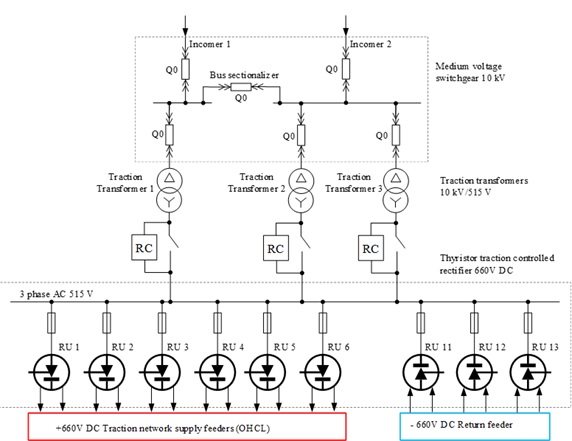
Figure 1. Single-line diagram of Hadji Dimitar TRS
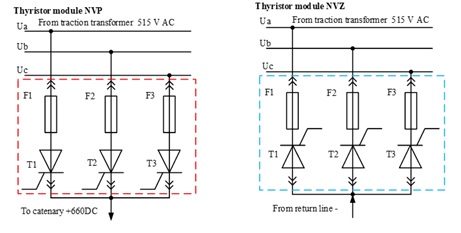
The structure of the power section and the wiring diagram of the NVP/NVZ thyristor blocks are shown in fig. 2.
2.2. Description of the NVP/NVZ Thyristor Block
Figures 2a and 2b show the structural diagrams of two types of thyristor modules used in the TRU of the Hadji Dimitar R.S. – NVP-type module and NVZ-type module. Together, they form a six-pulse thyristor rectifier circuit.
a). b).
Figure 2. Single-line diagram of the NVP/NVZ thyristor block
The NVP module (Fig. 2a) is designed for the positive pole of the contact network (+660 V DC). It is powered by 515 V three-phase voltage from the traction transformer. The module consists of three thyristors (T1, T2, T3) with their anodes connected to the alternating current bus, and the cathodes short-circuited to the output. Each thyristor is protected by a fuse (F1, F2, F3).
The NVZ module (Fig. 2b) is intended for connection to the return line (-660 V DC). In this case, the cathodes of the thyristors are connected to the three-phase AC circuit, while the anodes, short-circuited, and are connected to the return feeders. The configuration is a mirror image of the NVP, but functionally equivalent.
Together, the modules provide complete rectification of the three-phase voltage and generate a bipolar DC supply for the electric transport network.
- Experimental Measurement and Obtained Results
The experimental measurements were conducted on June 15, 2025 (Sunday) at the Hadji Dimitar TRS. The aim of the measurements was to investigate the energy efficiency and operational parameters of the system under real operational conditions.
During the measurement, were operating two traction transformers No. 1 and No. 3. The power supply was provided from Incomer 1 – the intermediate electrical connection with rectifier station Levski. The measurements were taken on a weekend, so it can be assumed that the load on the contact network was lower than usual, especially during the peak hours of a typical weekday. This fact was taken into account when analyzing the obtained values, as the measured parameters did not reach their maximum operational values.
An additional influence on the energy characteristics comes from the current-limiting reactor connected to the -660V bus of the rectifier system.
The measurements were conducted using a Janitza UMG 604 network analyzer [5], which allows simultaneous monitoring and recording of a wide range of electrical parameters. The monitoring was performed simultaneously on all three phases, and the following key parameters were recorded: P, kW – Active power of phase L1, Q, kvar – Reactive power of phase L1, Phase angle of L1, cosϕ of L1, P, kW – Active power for L1÷L3 (summed value for all three phases), Q, kvar – Reactive power for L1÷L3, cosϕ L1÷L3, Power Factor (PF).
The obtained data allows for the evaluation of the energy performance and the efficiency of the thyristor rectifier in specific operating conditions. Below, the report presents summarized results from some of the measurements which characterize the behavior of the rectifier station under limited load conditions.
- Analysis of Results
Figure 3 presents the graphs of active and reactive power measured at the power input of the Hadji Dimitar Rectifier Substation. These graphs reflect the typical behavior of the power supply when operating trams or trolleybuses. Active power P varies dynamically over time, with clearly visible peaks during acceleration and lower values during coasting or idle periods. The measured minimum momentary value is approximately 13,0 kW (no-load power), and the maximum reaches approximately 544,9 kW.
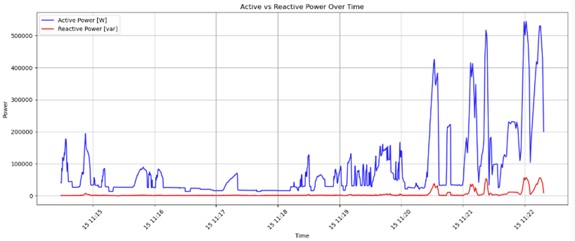
Figure 3. Active and reactive power at the incomer TPSS Hadzhi Dimitar
Reactive power Q also changes according to the load but remains in significantly lower ranges – from about 0,7 kvar (in no-load mode) to 57,0 kvar. Increases in reactive power coincide with moments of higher active consumption, suggesting the presence of inductive elements in the system, such as reactors, transformers, and others.
Figure 4 shows the time dependence of the measured power factor (PF) and cosφ, obtained from the power input of the Hadji Dimitar Rectifier Substation. The measured cosφ remains almost constant in the range from 0,994 to 0,99, which indicates minimal phase displacement between the current II and the voltage U. This corresponds to the expected behavior in an electrical supply with a predominantly active load.
In contrast, the actual PF varies significantly from 0,394 to 0,952, sometimes falling below 0,5. This is a strong indicator of the presence of a nonlinear load, where the current is significantly distorted by higher harmonics. Such values are characteristic of thyristor control, as is the case with the TRU in the TRS Hadji Dimitar.
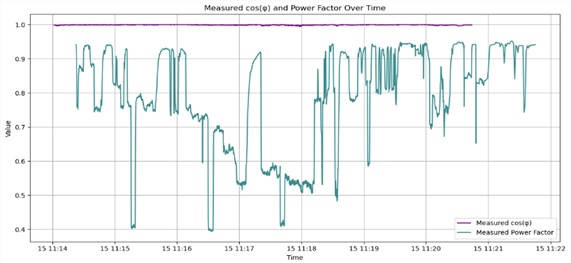
Figure 4. Time variation of measured cos φ and Power Factor at the input of the TPSS Hadzhi Dimitar
The difference between the high cosφ and the low PF clearly indicates that the problem lies not in the phase shift, but in the distortions of the current waveform, which lead to a decrease in the efficiency of the TRU.
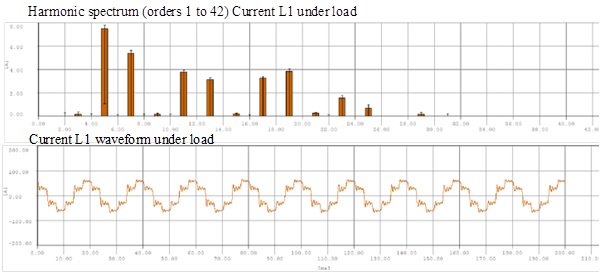
Figure 5. Harmonic Spectrum and Current Waveform of Phase L1 Under Load
Figure 5 shows the spectral composition of the current harmonics and its waveform in phase L1 under load operation of the TRU at the TRS Hadji Dimitar Rectifier Substation. The upper part displays the harmonic spectrum up to the 42nd harmonic order, with the most prominent being the 5th and 7th harmonics, with amplitudes of approximately 7,8 A and 6,0 A, respectively. These are followed by the 11th, 13th, 17th, and 19th harmonics, with amplitudes ranging from 3,5 to 3,9 A. Clearly, higher odd-order harmonics of low order are typical for the operation under load of the TRU. Under this load, the total harmonic distortion (THDi) of the current is approximately 20.5%, indicating the presence of significant higher harmonic components and confirming the characteristic behavior of the TRU under load conditions.
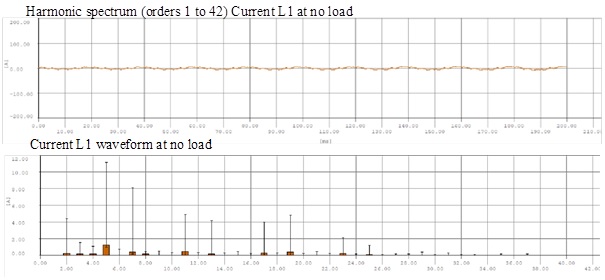
Figure 6. Harmonic Spectrum and Current Waveform of Phase L1 at no Load
When operating without load (figure 6), the most pronounced harmonics are the 3rd (1,2 A), 5th (1,7 A), and 7th (1,1 A), while harmonics from the 9th to the 19th have lower amplitudes – below 1 A. The measured total harmonic distortion (THD) coefficient is approximately 25%, which confirms the presence of significant harmonic pollution even under low load. This indicates that thyristor-driven traction units maintain high levels of harmonic distortion and unfavorable energy parameters even with small loads, in contrast to diode rectifiers, where this phenomenon is much less pronounced.
Conclusion
During the experimental study, real measurements were performed on the main electrical parameters of the TRU installed at the Hadji Dimitar Rectifier Substation. The measured quantities included voltage, current, pulsations, harmonic distortions, cos φ, active and reactive power, as well as the power factor. Based on the obtained data, an analysis was conducted on the current waveforms and the spectral content of the harmonics, both under load operation and in no-load conditions.
The results showed that, despite the good design and the indisputable positive effect of the TRU in stabilizing the output voltage, the system demonstrated unfavorable energy characteristics. The measured total harmonic distortion (THDi) values, reaching up to 20–25%, and the low PF with high cos φ, confirm the presence of significant nonlinear distortions. This leads to additional losses and reduced energy efficiency.
A comparison with diode rectifier devices [3, 4], particularly 12-pulse schemes, shows that the latter offer significantly better energy performance, especially under low and partial loads. In this context, it is both technically and economically justified to consider the phased modernization of existing thyristor-based units with diode or more modern solutions that meet the requirements for energy efficiency and reduced harmonic pollution.
REFERENCES
[1] REGULATION (EU) 2024/573 of the European Parliament and of the Council of 7 February 2024 on fluorinated greenhouse gases, amending Directive (EU) 2019/1937 and repealing Regulation (EU) No 517/2014, Official Journal of the European Union, L 20, 20 Feb. 2024, pp. 1 – 130. Available: https://eur-lex.europa.eu/eli/reg/2024/573/oj.
[2] REGULATION (EU) 2024/1610 of the European Parliament and of the Council of 14 May 2024, amending Regulation (EU) 2019/1242 as regards strengthening the CO₂ emission performance standards for new heavy-duty vehicles, including specific sales targets of 90 % zero‑emission new urban buses by 2030 and 100 % by 2035. Available: https://eur-lex.europa.eu/legal-content/EN/TXT/?uri=OJ:L_202401610.
[3] KALUNTA, F., AKINBULIRE, T., OKAFOR, F., Modelling and Analysis of Three Phase Controlled Rectifiers Using Pivotal Function Technique, UNILAG Journal of Medicine, Science and Technology, 2024, vol. 3, no. 1, pp. 82 – 95, ISSN: 2630-693X, https://ujmst.unilag.edu.ng/article/view/130.
[4] LALEV, T., Opportunities for Improving the Energy Performance of the Traction Power Supply System for Surface Urban Electric Transport [Online], Sofia: Author’s publication, 2025, 114 p., ISBN 978-619-04-0390-6.
[5] JANITZA ELECTRONICS GmbH, UMG 604 User Manual, Lahnau, Germany. [Online]. Available: https://www.janitza.com/files/download/manuals/current/UMG604/janitza-bhb-umg604ul-en.pdf.
[6] PAVLOV, G., SEKULOV, L., STOITSEV, R., MIHAILOV, L., BODUROV, P., Experimental testing of the recuperative modes of tram motrices PESA 120NaSf along the track segment powered by the ‘Emil Markov’ and ‘Shiroka Laka’ feeders of the ‘motopista’ current-rectifier station in Sofia VI International Scientific Conference – TEIT 2022”, Scientific Journal Mechanics Transport Communications, Sofia, Issue 3/2022, art. ID: 2279, pp. X-85 – X-90, ISSN 2367-6620 (online), https://mtc-aj.com/library/2279.pdf.
[7] DODOV, E., PAVLOV, G., Research and analysis of the energy parameters of traction substations of the underground urban electric transport, VI International Scientific Conference – TEIT 2022, Scientific Journal Mechanics Transport Communications, Sofia, Issue 3/2022, art. ID: 2274, pp. X-54 – X-59, ISSN 2367-6620 (online), https://mtc-aj.com/library/2274.pdf.
[8] TARPOV, I., Trends and forecasts in the development of transport concepts for the cities of the future, XXVI international scientific conference TRANSPORT 2023, Scientific Journal Mechanics Transport Communications, Sofia, Issue 3/2023 г., art. ID: 2423, pp. X-1 – X-5, ISSN 2367-6620 (online), https://mtc-aj.com/library/2423.pdf.
Dr. Todor Lalev, Assoc. Prof.
ORCID iD: 0009-0006-4214-7942
Department of Electrical Equipment in Railway Transport
Todor Kableshkov University of Transport
158, Geo Milev St., 1574 Sofia, Bulgaria
E-mail: tlalev@vtu.bg
Dr. Martina Tomcheva, Assoc. Prof.
ORCID iD: 0009-0008-8584-4689
Department of Electrical Equipment in Railway Transport
Todor Kableshkov University of Transport
158, Geo Milev St., 1574 Sofia, Bulgaria
E-mail: mtomcheva@vtu.bg
Eng. Detelina Pavlova, PhD Student
ORCID iD: 0009-0008-1660-9167
Department of Electrical Equipment in Railway Transport
Todor Kableshkov University of Transport
158, Geo Milev St., 1574 Sofia, Bulgaria
E-mail: didaip@vtu.bg

Свързани статии:
 Classification and Evaluation of Methods for Determining Railway Infrastructure Capacity
Integrating the Valorization of External Transport Costs into the Efficiency Assessment of Road Infrastructure Investment Prioritization
Performance Management in Automotive Companies: Trends, Technologies, and Workforce Strategies in 2025
Prediction of Train Derailment Locations Using Artificial Neural Networks
Classification and Evaluation of Methods for Determining Railway Infrastructure Capacity
Integrating the Valorization of External Transport Costs into the Efficiency Assessment of Road Infrastructure Investment Prioritization
Performance Management in Automotive Companies: Trends, Technologies, and Workforce Strategies in 2025
Prediction of Train Derailment Locations Using Artificial Neural Networks