


Dimitar Dimitrakiev
Nikola Vaptsarov Naval Academy, Varna, Bulgaria
Christiana Atanasova
Nikola Vaptsarov Naval Academy, Varna, Bulgaria
Svetoslav Tsonev
Nikola Vaptsarov Naval Academy, Varna, Bulgaria
https://doi.org/10.53656/igc-2025.30

Pages 326-335
Abstract. Driven by the central goal of environmental protection, the maritime industry, guided by the International Maritime Organization (IMO), has established specific Emission Control Areas (ECAs) to reduce air pollution from ships. Effective May 1, 2025, the Mediterranean Sea is being added to this regulatory framework. This change leads to a substantive rise in operational costs, since vessels are now required to use fuels with a very low sulfur content. These higher expenditures will be passed on as an emissions surcharge for every commercial transaction within the Mediterranean ECA. In line with other regulations, the effect of these supplementary costs will be a price increase for end consumers. Consequently, the present article is dedicated to exploring the economic ramifications of the new sulphur emission regulations in the Mediterranean Sea, with a particular focus on their impact on operational costs and the economic structure of the shipping market.
Keywords: Sulphur Emission Control Areas (SECAs); Emission Control Areas (ECAs); operational costs; transport economics; maritime transport
JEL: R41, Q53, Q52
Introduction
Initially, Emission Control Areas (ECAs) were primarily focused on limiting sulfur oxides (SOx) and were designated as Sulphur Emission Control Areas (SECAs). The concept for creating SECAs arose with the IMO Protocol of 1997, which amended MARPOL 73/78 by adding Annex VI – Regulations for the Prevention of Air Pollution from Ships, which entered into force on May 19, 2005. On August 1, 2006, the Baltic Sea became the first fully implemented SECA. One year later, on August 11, 2007, the North Sea and the English Channel became the second SECA under European Commission Directive 2005/33.
Almost immediately after Annex VI came into force in 2005, the International Maritime Organization began a review with the “goal of significantly tightening emission limits based on technological progress and accumulated experience from their application”. This process was completed and adopted by the IMO in 2008, and the revised Annex VI with the accompanying NOx Technical Code entered into force in July 2010.
A key change was the transition from the term „Sulphur Emission Control Area“ (SECA) to the broader term „Emission Control Area“ (ECA). An ECA is defined as a geographical area where special mandatory measures are applied to limit emissions from ships – including NOx, SOx, and particulate matter – with the aim of reducing air pollution and the associated risks to human health and the environment. As a result, SOx emissions and related particulate matter in ECAs were further reduced by lowering the permissible sulfur content in fuel – from „1.00%“ (introduced in July 2010) to „0.10%“ on January 1, 2015 (Sainteny et al., 2022).
In December 2022, following amendments to MARPOL Annex VI adopted by the IMO, an Emission Control Area was established in the Mediterranean Sea, which came into force on May 1, 2025. This makes the Mediterranean Sea the fifth ECA, following the Baltic Sea, the North Sea, North America, and the Caribbean region (Fig. 1).
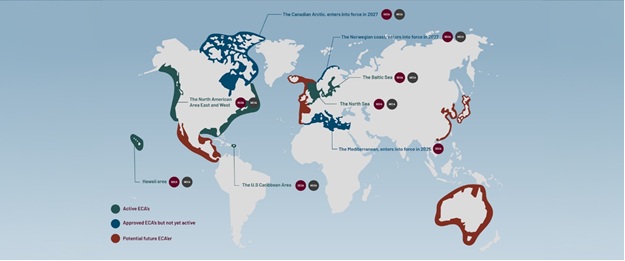
Figure 1. Map of Emission Control Areas (EGCSA, 2025)
Despite representing less than 1% of the world’s oceans, the Mediterranean Sea remains one of the busiest maritime areas globally. It handles 20% of seaborne trade, 10% of the world’s container traffic, and over 200 million passengers annually. The ships operating in the Mediterranean consume approximately 19 million tons of marine fuel each year, at an estimated cost of around $10 billion (ShipUniverse, 2025).
With the new environmental regulations for the Mediterranean Sea, shipowners face additional financial pressure. The extra costs associated with compliance—such as installing a scrubber system or using low-sulfur fuel – will be passed along the supply chain (Ship operation and management, 2011; Dimitrakieva et al., 2025). This will lead to higher freight rates, impacting the market structure for the transportation of goods. Shipowners will bear the primary burden of compliance costs, as marine fuel constitutes between 30% and 50% of the total expenses for a sea voyage.
Low-sulfur fuel regulations compliance
Shipowners have several options for complying with the new sulfur content requirements (Moreno-Gutiérrez et al., 2019). Each of these methods presents distinct economic advantages and disadvantages.
The use of fuel with a sulfur content not exceeding 0.10%
The most direct and frequently utilized compliance option is for a vessel to carry two or more types of fuel on board. This is the most readily accessible alternative as it requires virtually no initial capital investment from shipowners. Upon entering an ECA, the vessel switches to compliant fuel with a sulfur content not exceeding 0.10%. Such fuels are typically distillate fuels like Marine Gas Oil (MGO) or Marine Diesel Oil (MDO). This method is favored by many shipowners because it avoids the need for major vessel modifications or capital expenditures and involves a relatively simple process for fuel changeover (Yan et al., 2022).
However, the primary drawback of this approach is the significantly higher cost of distillate fuels. In 2025, marine fuel prices continue to fluctuate due to global market pressures and regulatory shifts. The price of Marine Gas Oil (MGO) remains substantially higher, often exceeding $900 per metric ton, whereas high-sulfur fuel oil (HSFO) costs between $450 and $550 per metric ton, but can only be used on ships equipped with a scrubber system.
This price dynamic creates challenges for shipowners, who must adapt to rising costs without compromising ship operations (Koritarov & Dimitrakieva, 2025). Factors such as changes in oil prices, sulfur content requirements, and the introduction of alternative fuels influence how the industry plans its fuel supply1.
The use of EGCS
Another option for meeting IMO regulatory requirements is to use an Exhaust Gas Cleaning System (EGCS), also known as a scrubber. This system allows for the continued use of cheaper high-sulfur fuel. There are three main types of scrubber systems – Open-Loop scrubbers, Closed-Loop scrubbers and Hybrid scrubbers.
The main reason for using scrubber systems is the cost savings on fuel, but their impact on the environment remains controversial. A recent analysis led by Chalmers University of Technology in Sweden shows that over 95% of ships equipped with scrubbers achieve a return on investment within five years of installation. Nevertheless, the harm to the marine ecosystem from the discharge of scrubber water is significantly greater than the economic benefit to shipowners, with the study concluding that „private economic interests are being achieved at the expense of damage to the marine environment“ (Bisht, 2024).
The use of alternative fuels (liquefied natural gas – LNG, biofuel, ammonia, hydrogen, methanol)
To comply with ECA requirements, shipowners are turning to the use of alternative fuels such as liquefied natural gas (LNG), biofuels, ammonia, hydrogen, methanol, and other types of fuels. Each of these options offers specific advantages while also posing certain disadvantages.
Liquefied Natural Gas (LNG) is one of the most popular alternative fuels, attracting increasing attention in the maritime industry. The use of LNG reduces SOx emissions by over 90%, NOx by about 80%, and CO₂ by approximately 20%, making it an extremely effective means of achieving compliance with Emission Control Area requirements (Biolcheva & Valchev, 2023). Many new ships are already being designed to operate on LNG, and existing vessels can also be adapted to use this type of fuel.
However, the primary challenge with using LNG is related to infrastructure. The construction of adequate bunkering terminals and ensuring the necessary supply of LNG remains a serious obstacle that must be overcome to facilitate its wider adoption. Ports need to invest in LNG storage and bunkering facilities, which can be a financial strain on infrastructure. Additionally, the price of LNG can be unstable and susceptible to fluctuations dictated by global market conditions. These fluctuations can affect the economic viability of LNG as a long-term solution. Ship operators must conduct a thorough cost-benefit analysis to determine if LNG is the right choice for their vessels.
Biofuels are another important alternative to traditional marine fuels. They are produced from renewable resources such as vegetable oils, animal fats, and biomass, and have a significantly lower carbon footprint compared to conventional fuels. Depending on the method of production and use, biofuels can reduce CO₂ emissions to almost zero.
Although biofuels are a promising alternative to traditional fuels in the maritime industry, a major challenge in their use is that many have a high production cost and limited supplies, which hinders their widespread adoption. Furthermore, the need to maintain specialized engines for operating with biofuels also leads to additional costs, creating further difficulties for shipowners.
Other types of fuels are also gaining popularity in the maritime sector. Methanol, produced from renewable sources, offers a low-emission alternative but requires engine modifications. Hydrogen and ammonia, both promising near-zero emissions, face challenges with storage, handling, and currently high production costs. Hydrogen also offers the potential for zero-emission operation, but it requires storage in bulky fuel tanks, which impacts vessel design and cargo capacity. The use of liquefied petroleum gas (LPG) requires specialized pressurized storage equipment and has a limited energy density compared to traditional marine fuels.
The optimal fuel depends on the type of vessel and the shipowner’s operational needs. When considering a transition to alternative fuels, costs play a critical role (Sasa et al., 2015). These include not only the price of the fuel but also the investment in potential vessel modifications and their maintenance (Velinov, 2024). While alternative fuels can reduce emissions, they require significant capital expenditures, which remains a major challenge for shipowners.
Analyzing the economic impact of new regulations on sulphur emissions in the mediterranean sea
Methodology
A comparison of the costs for a sea voyage from Montreal, Canada, to Piraeus, Greece, which includes transit through the Mediterranean Sea, was conducted using specialized voyage cost simulation software.
Two main scenarios were examined:
– Before the introduction of the ECA zone in the Mediterranean Sea: Using fuel with a sulphur content not exceeding 0.50% (VLSFO).
– After the introduction of the sulphur regulations in the Mediterranean Sea: Using fuel with a sulphur content not exceeding 0.10% (LSMGO) in the Mediterranean region.
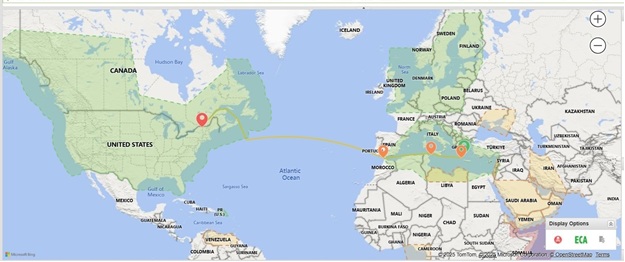
Figure 2. Map of the route (AXSMarine)
The obtained results were used to assess the economic impact of the new regulations on the total operational costs for the specific maritime route.
Route description and calculation parameters
The sea voyage covers a route from Montreal, Canada, to Piraeus, Greece, passing through the Atlantic Ocean and the Mediterranean Sea. The total route length is approximately 4,940 nautical miles (nm). The voyage includes transit through two ECA zones – one in the initial segment (North America) and a second in the Mediterranean Sea.
At an average vessel speed of 12 knots, the total travel time amounts to approximately 17 days, of which 3.5 days are within an ECA zone. For the purpose of the simulation, a dry cargo vessel (bulk carrier) with standard technical and operational characteristics of a Handymax type, 52,000 DWT, was chosen. The average fuel consumption is:
– 28 tons/day when using heavy fuel oil (VLSFO)
– 24 tons/day when using distillate fuel (MGO)
Given these parameters, we examine the fuel costs for the following two scenarios:
Scenario 1. Before the introduction of the Mediterranean ECA zone (until May 1, 2025): The vessel uses LSMGO in the North American ECA zone (as required) and VLSFO for the rest of the route.
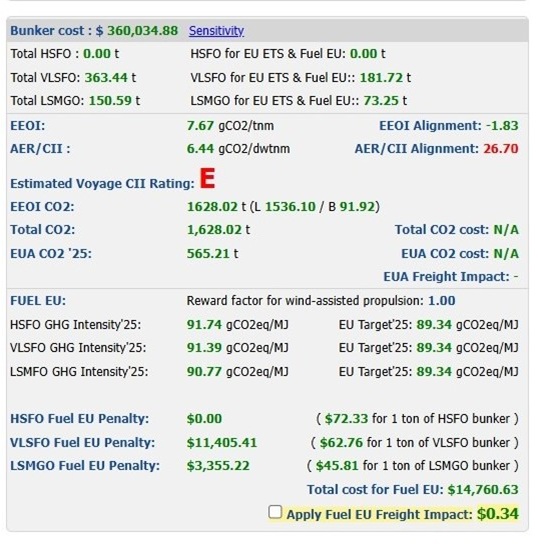
Figure 3. Fuel costs before the introduction of the Mediterranean ECA zone (AXSMarine)
Scenario 2. After the introduction of the Mediterranean ECA zone (after May 1, 2025): The vessel uses LSMGO in both the North American and Mediterranean ECA zones, and VLSFO outside of them.
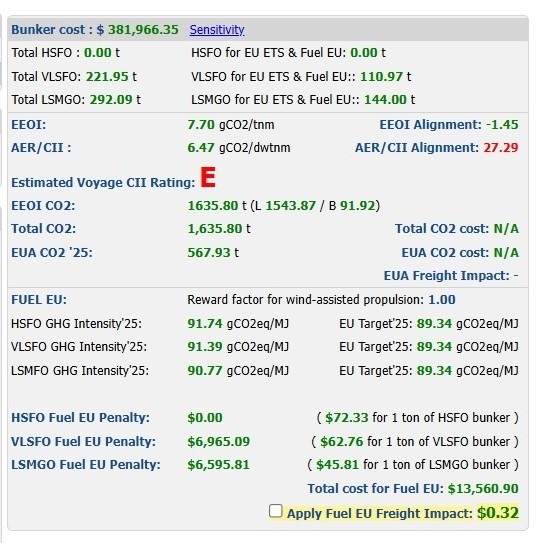
Figure 4. Fuel costs after the introduction of the Mediterranean ECA zone (AXSMarine)
The results show a 6.09% increase in fuel costs when using low-sulfur fuel in the Mediterranean Sea, which also increases the total operational costs for the voyage.
The conducted analysis confirms that the introduction of new requirements for maximum sulfur content in fuels in the Mediterranean leads to an increase in a shipowner’s operational costs. The increased cost of the voyage stems from the need to use more expensive distillate fuel (LSMGO) in the regulated zones. From the calculations for the specific Montreal-Piraeus route, fuel costs account for 43.7% of the total operational costs, which further emphasizes the key role of the fuel component in a sea voyage.
Conclusion
The costs resulting from the new environmental regulations inevitably reflect on the price of maritime transport. To compensate for the increased cost of fuel and operations, shipowners and operators are often forced to raise freight rates, which ultimately impacts clients. This leads to an increase in the cost of goods being transported, exerting upward pressure on the entire price chain—from logistics to final consumer prices.
The rising cost of fuel, which represents a significant share of total operational expenses, poses new challenges for shipowners. To remain competitive, they will be forced to optimize their routes, bunkering planning, and commercial strategies. Furthermore, volatile fuel markets complicate voyage planning by creating additional financial uncertainty.
NOTES
- https://dieselnet.com/news/2024/05egcs.php
References
Biolcheva, P., & Valchev, E., (2023). Safety through artificial intelligence in the maritime industry. Strategies for policy in science & education, 31(3), 270 – 280. https://doi.org/10.53656/str2023-3-3-saf.
Bisht, D. (2024, August 12). Alternative fuel for ships: The complete guide (2026). ShipFinex. https://www.shipfinex.com/blog/alternative-fuel-in-maritime-industry.
Dimitrakieva, S., Koritarov, T., & Velinov, S. (2025). The effect of advertising and public relations initiatives on the socio-economic development of the port region. German International Journal of Modern Science, (101), 41 – 45. https://doi.org/10.5281/zenodo.15119233.
EGCSA. (2025), Regulations and guidelines, The International Maritime Organization – MARPOL Annex VI. https://www.egcsa.com/regulatory/.
Koritarov T., & Dimitrakieva S. (2025). Analysis of communication strategies in port services with a view to sustainable development and the green transition. Proceedings of Knowledge, Science, Innovation, Technology Conference, 1(1), 1280 – 1300.
Moreno-Gutiérrez, J., Pájaro-Velázquez, E., Amado-Sánchez, Y., Rodríguez-Moreno, R., Calderay-Cayetano, F. & Durán-Grados, V. (2019). Comparative analysis between different methods for calculating on-board ship’s emissions and energy consumption based on operational data. Science of The Total Environment, 650, 575 – 584. https://doi.org/10.1016/j.scitotenv.2018.09.045.
Sainteny, G., Simon, P., Tode, L., Gonzalez, G., & Lauwers, F. (2022). Costs and benefits of establishing a low sulphur emission zone in the Février 2022 Mediterranean. Zoom on Plan Bleu. https://planbleu.org/wp-content/uploads/2022/02/ZOOM-ON-Med-SOX-ECA-English.pdf.
Sasa, K., Terada, D., Shiotani, S., Wakabayashi, N., Ikebuchi, T., Chen, C., Takayama, A., & Uchida, M. (2015). Evaluation of ship performance in international maritime transportation using an onboard measurement system – in case of a bulk carrier in international voyages. Ocean Engineering, 104, 294 – 309. 10.1016/j.oceaneng.2015.05.015
Ship operation and management. (2011). Witherby Seamanship International.
ShipUniverse. (2025, February 25). Marine fuel prices in 2025: What’s driving the costs and how shipowners are adapting? ShipUniverse. https://www.shipuniverse.com/news/marine-fuel-prices-in-2025-whats-driving-the-costs-and-how-shipowners-are-adapting/.
Velinov, S. (2024). Decarbonization of maritime industry. Morsko pravo i industriya, (2), 183 – 191.
Yan, R., Wang, S., & Psaraftis, H. N. (2021). Data analytics for fuel consumption management in maritime transportation: Status and perspectives. Transportation Research, Part E: Logistics and Transportation Review, 155, 102489. https://doi.org/10.1016/j.tre.2021.102489.
Prof. Dimitar Dimitrakiev, PhD
ORCID iD: 0000-0002-9960-2372
Web of Science ResearcherID: E-3595-2012
Nikola Vaptsarov Naval Academy
73, Vasil Drumev St.
9002 Varna, Bulgaria
E-mail: dimitar.dimitrakiev@nvna.eu
Assoc. Prof. Christiana Atanasova, PhD
ORCID iD: 0000-0003-2102-037X
Web of Science Researcher ID: ABC-1889-2021
Nikola Vaptsarov Naval Academy
73, Vasil Drumev St.
9002 Varna, Bulgaria
E-mail: k.atanasova@nvna.eu
Svetoslav Tsonev, PhD student
Nikola Vaptsarov Naval Academy
73, Vasil Drumev St.
9002 Varna, Bulgaria
E-mail: s.tsonev@abv.bg

Свързани статии:
 THE IMPACT OF THE CONFLICT IN UKRAINE ON TRADE AND MARITIME TRANSPORT. THE NEGATIVE EFFECT ON THE LABOR MARKET FOR MARITIME PERSONNEL
ANALYSIS OF THE TRANSITION TO SUSTAINABLE DECARBONIZED ROAD TRANSPORT IN BULGARIA
IMPLEMENTATION OF MULTI-CRITERIA ANALYSIS IN MUNICIPAL INVESTMENT PROGRAMMES FOR SUSTAINABLE DEVELOPMENT AND URBAN REGENERATION
AI AND EMPLOYER BRANDING: OPPORTUNITIES AND ETHICAL DILEMMAS IN TALENT ATTRACTION

