


Krasimir Petkov
University of National and World Economy, Sofia, Bulgaria
https://doi.org/10.53656/igc-2025.29

Pages 315-325
Abstract. This study examines the impact of various alternative finance (AF) mechanisms – equity crowdfunding, reward-based crowdfunding, peer-to-peer lending, angel investment, and impact investing – on entrepreneurial outcomes such as venture creation, growth, innovation, and survival across industries. Synthesizing insights from recent empirical studies, it offers a comparative framework that identifies the distinct ways in which each type of financing influences entrepreneurship. The study concludes that an integrated AF ecosystem, sequencing different funding types according to venture stage and sectoral needs, optimizes capital access and strategic resources. Policymakers should foster diversified, transparent, and robust AF environments to catalyze innovation, growth, and resilience across industries.
Keywords: alternative finance; equity crowdfunding; reward-based crowdfunding; peer-to-peer lending; angel investment; impact investing
JEL: L26, M13, G32
Introduction
Alternative finance (AF) has emerged as a vital driver of entrepreneurial ecosystems, addressing the capital gaps left by traditional banking and venture capital channels. The rise of digital platforms and social investment paradigms has expanded the financing landscape, introducing models such as equity- and reward-based crowdfunding, P2P lending, angel investment, and impact investing. These mechanisms differ in terms of investor motivation, governance involvement, and risk-return expectations, which in turn influence entrepreneurial outcomes such as venture creation, growth, innovation and survival (Eldridge et al., 2019; Drover et al., 2017).
Understanding the impact of the emerging and growing AF industry on entrepreneurial activities is crucial. Thus, this study aims to explore how the main types of alternative finance and investment affect entrepreneurial outcomes across industries.
This study conducts a comprehensive qualitative review of recent empirical studies exploring the impact of alternative finance on entrepreneurial outcomes. While individual studies have examined aspects of AF, a holistic comparative analysis integrating diverse AF types, entrepreneurial outcomes, and industry contexts is lacking. Thus, this study addresses this gap by synthesizing the findings and deriving and discussing the key observed outcomes for enterprises.
Theoretical Background
Alternative finance operates under distinct institutional logics compared to traditional ones. Crowdfunding channels rely on social validation, network effects, and digital trust, whereas angel and impact investors emphasize mentorship, governance, and long-term social or technological impacts (Bessière et al., 2020). Resource-based and signaling theories help explain these dynamics: funding types not only provide capital but also signal venture quality and enable access to intangible resources such as expertise, networks, and legitimacy (Roma et al., 2017).
Industrial context
Across countries, alternative finance tends to follow two patterns:
- it is used heavily by SMEs that are constrained in bank or capital-market access, and
- it clusters in sectors whose assets are intangible, risky, or misaligned with bank collateral models (creative, tech, green, social, and some bio/medical niches).
At a cross-country level, non-bank, non-market “alternative finance” (family and trade credit, microfinance, community credit, P2P, crowdfunding, etc.) provides an equally important or even dominant share of external funding to firms in fast-growing economies, especially outside large listed corporates (Allen et al., 2012; Qian & Allen, 2024). Sectorally, research repeatedly highlights:
– Manufacturing & industrial SMEs – use informal finance, trade credit, customer advances, rotating savings (ROSCAs), P2P and other schemes to overcome bank credit constraints (Casey & O’Toole, 2014; Fanta, 2015; Yiu et al., 2013).
– Cultural & creative industries (CCI) – rely strongly on crowdfunding, incubators, accelerators, tokenized and pooled digital funding (Lazzaro & Noonan, 2020; Rijanto, 2021; Loots et al., 2022; Handke & Chiesa, 2022).
– Agri-food & bio-related MSMEs – increasingly adopt alternative sources (equity, crowdfunding, direct lending, mini-bonds, venture/angel capital) to finance innovation and sustainability when bank funding shrinks (Paoloni et al., 2023).
– Green/low-carbon manufacturing, renewable energy and related green industries – use green credit, green bonds and other green finance as alternative channels, with sector-specific patterns (e.g., strong support to communication and electronic equipment manufacturing, and to renewable energy, while constraining high-energy industries) (Wang & Wang, 2021; Hu & Zhang, 2022; Chen et al., 2024).
– Service and social/impact sectors – SMEs in services often seek angels and venture capital, while social and green businesses use alternative local banks, microfinance and social investment funds (Butticè & Vismara, 2021; Wright & Siegel, 2020).
– Tech and young high-growth firms – draw on venture capital, angels, equity crowdfunding and P2P as core “alternative” entrepreneurial finance (Sahut et al., 2020; Butticè & Vismara, 2021).
Medical and biotech are mentioned mainly in relation to equity/angel finance and Islamic instruments (Mudarabah) for knowledge-intensive projects, but they are less prominent in the empirical sector-wide adoption data than the sectors above (Rahma & Elfaki, 2025).
Overall, the sectors where alternative finance is “mostly used” are those with SME dominance, high innovation or sustainability needs, and weaker fit with bank collateral.
Further, from an industry perspective, the impact of AF is shaped by capital intensity, innovation cycles and consumer proximity. For example, reward-based crowdfunding thrives in consumer
and creative industries, whereas angel investment flourishes in technology-intensive sectors with high asymmetric information (Drover et al., 2017; Wang et al., 2019).
The landscape of alternative finance (AF) has expanded significantly, offering diverse funding mechanisms that address the gaps left by traditional financial institutions in entrepreneurial ecosystems. Each type of AF operates under distinct institutional logics and has unique implications for entrepreneurial outcomes (Eldridge et al., 2019; Drover et al., 2017).
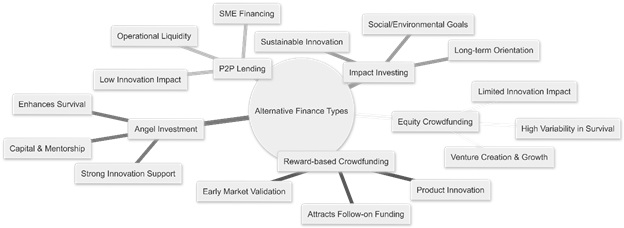
Figure 1. Key alternative finance types and their main characteristics
Source: Created by the author.
Building on these theoretical underpinnings, the following sections detail the specific characteristics and observed impacts of each primary alternative finance type on entrepreneurial outcomes.
Equity crowdfunding (ECF)
Equity crowdfunding (ECF) democratizes capital access for SMEs and startups. While platforms like Seedrs and Crowdcube have expanded funding opportunities, evidence shows ECF’s limited impact on innovation outputs (Eldridge et al., 2019). The democratization of investment introduces quality variance, with many firms failing post-funding due to insufficient investor oversight (Blaseg et al., 2020). ECF performs better in digital consumer and technology sectors where product-market fit is quickly validated (Yaşar, 2021).
However, the effectiveness of ECF is heavily dependent on the institutional context. In countries with robust financial regulations and investor protection, ECF contributes to sustainable growth; in weaker regulatory environments, moral hazard and information asymmetry risks are higher (Rejeb et al., 2024).
Reward-based crowdfunding (RCF)
Reward-based crowdfunding (RCF) primarily serves as an early-stage capital formation and market validation tool, and is particularly effective in the creative and consumer product industries. It supports product innovation and acts as a signaling mechanism to attract professional investors, although it offers limited long-term funding (Cornelius & Gokpinar, 2020; Roma et al., 2017; Roma et al., 2021).
In this type of AF, projects that leverage intellectual property and social capital achieve better outcomes (Cornelius & Gokpinar, 2020). RCF is particularly effective in creative industries – film, design, and consumer technology – where tangible rewards build trust with backers.
P2P lending
P2P lending addresses critical liquidity gaps for established SMEs and facilitates operational continuity and growth. However, its transactional nature limits its contribution to innovation and precludes strategic or mentoring support, thereby restricting its influence on venture development beyond financial liquidity (Fraser et al., 2015; Yaşar, 2021). Nevertheless, for established SMEs with limited collateral, P2P loans reduce their dependence on traditional credit channels and improve their survival rates during financial downturns.
Angel investment
Angel investment distinguishes itself by combining financial capital with mentorship, governance, and strategic guidance, fostering innovation and enhancing venture survival, especially in technology-intensive sectors such as biotechnology and medical technology (Drover et al., 2017; Grebennyk & Bratuta, 2024).
Evidence indicates that angels play a crucial role in bridging early stage funding gaps, especially in high-tech, biotech, and medtech ventures (Grebennyk & Bratuta, 2024). Their involvement enhances survival probabilities by professionalizing operations and facilitating access to follow-up venture capital (Wang et al., 2019). Unlike ECF, angel networks often perform due diligence and strategic guidance, yielding more sustainable growth trajectories.
Impact investing
Impact investing targets ventures with social or environmental objectives and financial returns. Impact funds prioritize long-term stakeholder engagement over rapid exits, promoting sustainable innovation. Evidence shows impact investing’s importance in circular economy and social enterprise sectors where traditional financiers are risk-averse. Challenges remain in impact measurement and return expectations (Rejeb et al., 2024).
Industry context and regulations shape alternative financing efficacy. Tech sectors benefit from angel investments and equity crowdfunding due to scalability, while consumer industries align with reward-based crowdfunding. Social enterprises match impact investing, and SMEs benefit from P2P lending (Drover et al., 2017; Eldridge et al., 2019; Roma et al., 2021; Wang et al., 2019).
An integrated entrepreneurial finance ecosystem that sequences alternative finance types by venture stage optimizes capital access and resources. Policies enhancing regulation, tax incentives, and partnerships can catalyze innovation through alternative finance channels (Bessière et al., 2020; Rejeb et al., 2024).
Comparative Analysis of Alternative Finance Types
The following table synthesizes the empirical findings on the effects of major alternative finance types on entrepreneurial outcomes.
Table 1. Effects of different alternative finance types on entrepreneurial outcomes by industrial grouping
| Finance Type Industrial | Broad Sector Group | Venture
Creation & Growth |
Innovation & Follow-on | Survival Funding | Industry/ Contextual Factors | Key
References |
| Equity
Crowdfunding |
Creative/Cultural; General SMEs (incl.
manufacturing, craft, retail); Agri-Food/Bio-related |
It has a strong positive
impact on growth and democratizes access to finance for SMEs and startups |
Limited
impact on innovation. |
High variability in survival; both high-and low- quality ventures are funded | It is effective in the tech and consumer
sectors, and regulation is critical |
Eldridge et al. (2019);
Yaşar (2021); Blaseg et al. (2020); Rejeb et al. (2024) |
| Reward-based
Crowdfunding |
Creative/Cultural | It enables
early-stage capital formation and market validation for creative ventures |
Supports
product innovation and market signaling. |
Attracts follow-on VC/angel
funding |
It is effective
in product-based and consumer industries, among others |
Roma et al.
(2017, 2021); Cornelius & Gokpinar (2020) |
| P2P Lending | General SMEs
(incl. manufacturing, craft, retail); Agri-Food/Bio-related |
It fills SME
Financing gaps and provides liquidity |
Limited
innovation impact |
Lacks non-
financial mentoring or support |
This is suited
for established SMEs, not for high-risk startups |
Fraser et al.
(2015); Yaşar (2021) |
| Angel
Investment |
Agri-Food/Bio-related | It provides
growth capital, mentoring, and governance |
Strong
innovation support also provided |
Enhances
survival through strategic guidance |
Valuable in
the high-tech and medical innovation sectors |
Drover et
al. (2017); Wang et al. (2019); Grebennyk & Bratuta (2024) |
| Impact Investing | Social / Impact enterprises | Supports
social and environmental ventures |
It drives social innovation and sustainability | Long-term orientation: less focus on exits | This is
relevant to the sustainability and social sectors |
Rejeb et al. (2024) |
Table 1 shows how alternative finance supports entrepreneurial ventures across stages. Equity and Reward Crowdfunding are effective in early startup phases, enabling capital acquisition and market validation. These mechanisms help test product-market fit while securing funds, though their impact on long-term innovation and firm survival remains limited due to their transactional nature.
Angel investment provides financial resources alongside mentorship, industry connections, and strategic guidance crucial for innovation and business success. Angels typically maintain long-term engagement with startups, offering expertise for growth challenges. This complements ECF and RCF’s role as initial capital sources, while angel investment delivers sustained support for entrepreneurial success.
Discussion
The various forms of alternative finance exhibit distinct strengths and limitations that shape entrepreneurial trajectories differently amongst different industries.
These AF types indicate that no single financing mechanism works across all contexts. The strategic sequencing of funding sources – leveraging crowdfunding’s democratization, P2P lending’s liquidity, angel investment’s guidance, and impact investing’s sustainability focus – can optimize outcomes. This approach aligns funding with venture stages and environments, maximizing commercial and social value.
Industry structure moderates the relationship between alternative finance and entrepreneurial outcomes. Technology-intensive sectors benefit from angel and equity crowdfunding due to knowledge spillovers (Wang et al., 2019), while consumer sectors thrive with reward-based crowdfunding (Roma et al., 2021). Social enterprises align with impact investing (Rejeb et al., 2024), and traditional SMEs succeed through P2P lending (Fraser et al., 2015).
Given that technological changes require new entrepreneurial approaches, including academic (Sterev & Yordanov, 2024), integrating alternative funding forms is crucial for economic growth. Since entrepreneurship drives economic growth and well-being of communities and economies (Varamezov et al., 2025), access to alternative finance is vital. In a context where artificial intelligence can enhance economic competitiveness and social goals (Biolcheva & Sterev, 2024), alternative finance can strengthen entrepreneurial outcomes.
Regulatory environments further shape outcomes: stringent investor protection frameworks enhance platform trust and attract institutional co-investment, while underregulated ecosystems risk adverse selection and venture underperformance (Eldridge et al., 2019; Yaşar, 2021).
Limitations and Future Research
This study’s main limitation is its reliance on literature review methodology. While it synthesizes existing knowledge, it generates no new empirical data. The findings are limited by the methodologies and data quality of the included primary studies.
The empirical studies reviewed are from developed economies with mature alternative finance landscapes. Their applicability to emerging markets with different institutional and regulatory contexts may be limited, suggesting the need for diverse regional research.
The alternative finance landscape is dynamic and rapidly evolving through innovation and regulation. While this paper reviews empirical studies, some emerging AF models may not be fully captured, and conclusions reflect the research state up to the included literature’s publication.
Future research should address geographical bias by studying alternative finance mechanisms in emerging markets with distinct institutional and regulatory contexts. Comparative studies could examine how equity crowdfunding effectiveness differs between nascent and mature financial systems, or how cultural factors influence reward-based crowdfunding participation across economies.
Future research should explore how regulatory frameworks (e.g., investor protection laws, platform licensing) moderate the success of AF types, such as equity crowdfunding regulations’ impact on venture survival post-funding.
Future research should expand beyond these five AF types to examine emerging forms like revenue-based financing and niche crowdfunding models. Investigating their impacts on entrepreneurial outcomes across industries would enhance understanding of the AF landscape and its entrepreneurship implications.
Policy and Managerial Implications
For policymakers and practitioners, the implications are clear: fostering a diversified and transparent AF ecosystem supported by robust regulations and incentives can enhance capital accessibility and strategic resource allocation across various economic sectors.
Policymakers should design financial ecosystems with diverse funding channels. Regulatory transparency in crowdfunding markets builds investor confidence. Tax incentives for angel investors can boost innovation funding. Public-private partnerships and co-investment models can reduce early-stage venture risks. Entrepreneurs can optimize capital access by sequencing funding sources, from crowdfunding to angel investment (Bessière et al., 2020).
Entrepreneurs can benefit from tailoring their financing strategies to leverage the complementary advantages of each AF type, thereby improving growth, innovation, and survival prospects.
Conclusion
The different forms of alternative finance exert heterogeneous but complementary effects on entrepreneurial outcomes. Equity- and reward-based crowdfunding democratizes access to capital and fosters early-stage growth and market validation, particularly benefiting SMEs and creative ventures. Angel investment plays a pivotal role in driving innovation, providing strategic guidance, and enhancing venture survival, especially in technology-intensive sectors. Peer-to-peer lending addresses the liquidity needs of established SMEs, supporting operational continuity, although it lacks strategic or mentoring contributions. Impact investing promotes sustainability and social innovation by targeting ventures with measurable social or environmental objectives and emphasizing long-term value creation over rapid financial returns.
The optimal entrepreneurial finance ecosystem integrates diverse funding models in a strategic sequence aligned with venture stages, industry characteristics, and regulatory contexts. This integrated approach maximizes both commercial success and social value by leveraging the different strengths of the various alternative finance types. Policymakers and practitioners must cultivate diversified, transparent, and well-governed alternative finance ecosystems to enhance capital accessibility, strategic resource allocation, and foster innovation, growth, and resilience.
References
Allen, F., Qian, J., Carletti, E., & Valenzuela, P. (2012). Financial intermediation, markets, and alternative financial sectors. SSRN. https://doi.org/10.2139/ssrn.2029082.
Bessière, V., Stéphany, E. & Wirtz, P. (2020). Crowdfunding, business angels, and venture capital: An exploratory study of the concept of funding trajectory. Venture Capital, 22(2), 135 – 160. https://doi.org/10.1080/13691066.2019.1599188.
Biolcheva, P., & Sterev, N. (2024). A model for calculating the indirect added value of AI for business. Strategies for Policy in Science and Education, 32(3s), 9 – 17. https://doi.org/10.53656/str2024-3s-1-mod.
Blaseg, D., Cumming, D. & Koetter, M. (2020). Equity crowdfunding: high-quality or low-quality entrepreneurs. Entrepreneurship Theory and Practice, 45(3), 505 – 530. https://doi.org/10.1177/1042258719899427.
Butticè, V., & Vismara, S. (2021). Inclusive digital finance: the industry of equity crowdfunding. The Journal of Technology Transfer, 47, 1224 – 1241. https://doi.org/10.1007/s10961-021-09875-0.
Casey, E., & O’Toole, C. (2014). Bank lending constraints, trade credit and alternative financing during the financial crisis: Evidence from European SMEs. Journal of Corporate Finance, 27, 173 – 193. https://doi.org/10.1016/j.jcorpfin.2014.05.001.
Chen, W., Arn, G., Song, H., & Xie, Y. (2024). The influences of digital finance on green technological innovation in China’s manufacturing sector: The threshold effects of ESG performance. Journal of Cleaner Production, 467, 142953. https://doi.org/10.1016/j.jclepro.2024.142953.
Cornelius, P. & Gokpinar, B. (2020). The role of customer investor involvement in crowdfunding success. Management Science, 66(2), 452 – 472. https://doi.org/10.1287/mnsc.2018.3211.
Drover, W., Busenitz, L., Matusik, S., Townsend, D., Anglin, A. & Dushnitsky, G. (2017). A review and road map of entrepreneurial equity financing research. Journal of Management, 43(6), 1820 – 1853. https://doi.org/10.1177/0149206317690584.
Eldridge, D., Nisar, T. & Torchia, M. (2019). What impact does equity crowdfunding have on SME innovation and growth? Small Business Economics, 56(1), 105 – 120. https://doi.org/10.1007/s11187-019-00210-4.
Fanta, A. (2015). Informal finance as alternative route to SME access to finance: Evidence from Ethiopia. Journal of Governance and Regulation, 4, 94 – 102. https://doi.org/10.22495/jgr_v4_i1_c1_p1.
Fraser, S., Bhaumik, S. & Wright, M. (2015). What do we know about entrepreneurial finance and its relationship with growth? International Small Business Journal, 33(1), 70 – 88. https://doi.org/10.1177/0266242614547827.
Grebennyk, N. & Bratuta, S. (2024). Role of venture financing in stimulating the innovative enterprise development. Scientific Bulletin of Odessa National Economic University, 126 – 137. https://doi.org/10.32680/2409-9260-2024-1-2-314-315-126-137.
Handke, C., & Chiesa, C. D. (2022). The art of crowdfunding arts and innovation: The cultural economic perspective. Journal of Cultural Economics, 46, 249 – 284. https://doi.org/10.1007/s10824-022-09444-9.
Hu, J., & Zhang, H. (2022). Has green finance optimized the industrial structure in China?. Environmental Science and Pollution Research, 30, 32926 – 32941. https://doi.org/10.1007/s11356-022-24514-3.
Lazzaro, E., & Noonan, D. (2020). A comparative analysis of US and EU regulatory frameworks of crowdfunding for the cultural and creative industries. International Journal of Cultural Policy, 27(5), 590 – 606. https://doi.org/10.1080/10286632.2020.1776270.
Loots, E., Betzler, D., Bille, T., Borowiecki, K., & Lee, B. (2022). New forms of finance and funding in the cultural and creative industries. Introduction to the special issue. Journal of Cultural Economics, 46, 205 – 230. https://doi.org/10.1007/s10824-022-09450-x.
Paoloni, M., Tutino, M., Paoloni, N., & Santolamazza, V. (2023). Financing innovation in agri-food industries: an analysis of the Italian micro, small and medium enterprises. British Food Journal, 125(13), 183 – 204. https://doi.org/10.1108/bfj-04-2022-0342.
Qian, M., & Allen, F. (2024). Alternative finance in the international business context: A review and future research. Journal of International Business Studies, 56, 43 – 61.
Rahma, A. T. M., & Elfaki, M. A. E. (2025). Islamic finance as a catalyst for sustainable and inclusive industrial development: A comparative analysis of Islamic and conventional financing models over 20 years. Journal of Posthumanism, 5(1), 621 – 654. https://doi.org/10.63332/joph.v5i1.2826.
Rejeb, A., Rejeb, K., Appolloni, A., Treiblmaier, H. & Iranmanesh, M. (2024). Uncovering the themes and trends in crowdfunding research using Latent Dirichlet Allocation. Management Review Quarterly, 75(6), 2033 – 2066. https://doi.org/10.1007/s11301-024-00427-y.
Rijanto, A. (2021). Creative industries project financing through crowdfunding: The roles of fund target & backers. Creative Industries Journal, 15, 79 – 96. https://doi.org/10.1080/17510694.2021.1899489.
Roma, P., Petruzzelli, A. & Perrone, G. (2017). From the crowd to the market: The role of reward-based crowdfunding performance in attracting professional investors. Research Policy, 46(9), 1606 – 1628. https://doi.org/10.1016/j.respol.2017.07.012.
Roma, P., Vasi, M. & Kolympiris, C. (2021). On the signaling effect of reward-based crowdfunding. Research Policy, 50(6), 104267. https://doi.org/10.1016/j.respol.2021.104267.
Sahut, J., Dana, L., & Teulon, F. (2020). Corporate governance and financing of young technological firms: A review & introduction. Technological Forecasting and Social Change, 163, 120425. https://doi.org/10.1016/j.techfore.2020.120425.
Sterev, N., & Yordanov, D. (2024). Academic entrepreneurship: Practical results and training. Strategies for Policy in Science and Education, 32(6s), 150 – 162. https://doi.org/10.53656/str2024-6s-12-aca.
Varamezov, L., Panteleeva, I., & Nikolov, E. (2025). A survey of entrepreneurial behaviour of students in economics. Industrial Growth Conference 2024, 22 – 33. https://doi.org/10.53656/igc-2024.01.
Wang, W., Mahmood, A., Sismeiro, C. & Vulkan, N. (2019). The evolution of equity crowdfunding: Insights from co-investments of angels and the crowd. Research Policy, 48(8), 103727. https://doi.org/10.1016/j.respol.2019.01.003.
Wang, X., & Wang, Q. (2021). Research on the impact of green finance on the upgrading of China’s regional industrial structure from the perspective of sustainable development. Resources Policy, 74, 102436. https://doi.org/10.1016/j.resourpol.2021.102436.
Wright, M., & Siegel, D. (2020). Alternative investments, new organizational forms, and corporate governance. Academy of Management Perspectives, 35(1). https://doi.org/10.5465/amp.2018.0182.
Yaşar, B. (2021). The new investment landscape: Equity crowdfunding. Central Bank Review, 21(1), 1 – 16. https://doi.org/10.1016/j.cbrev.2021.01.001.
Yiu, D., Su, J., & Xu, Y. (2013). Alternative financing and private firm performance. Asia Pacific Journal of Management, 30, 829 – 852. https://doi.org/10.1007/s10490-012-9303-y.
Assist. Krasimir Petkov, PhD
ORCID iD: 0009-0005-5356-9182
Department of Industrial Business
Business Faculty
University of National and World Economy
19, December 8th St.
1700 Sofia, Bulgaria
E-mail: krasi.petkov@unwe.bg

Свързани статии:
 DIGITAL CHALLENGES IN ONLINE RETAILERS: IDENTIFYING BARRIERS TO SUSTAINABLE TRANSFORMATION
PROSPECTS AND CHALLENGES FOR THE BULGARIAN ECONOMY IN THE CONTEXT OF FULL MEMBERSHIP IN THE EUROZONE
APPLICATION OF HUMAN-CENTERED APPROACH IN INDUSTRY 5.0 ‒ THE ROLE OF SMART LEARNING FOR SUSTAINABLE ECONOMIC GROWTH
METHODOLOGY FOR INVESTIGATING BUSINESS ADAPTATION TO EMERGING RISK FROM SINGLE INNOVATION DISRUPTING MULTIPLE INDUSTRIES

